The right tire for a 10-inch wheel isn't one fixed width, it depends on the rim's internal bead-seat width, the tire's load rating, and the terrain, with heavy-duty wagons often landing in the 3 to 5 inch width range. If the rim, load, and surface don't line up, the tire may fit the diameter but still handle poorly.
Last Updated: October 2026
Dragging a loaded wagon through soft sand or across gravel is the kind of job that makes a morning feel longer than it should. One bad wheel choice turns a simple haul into a slow, exhausting pull that leaves you wishing you'd made one more trip back to the car instead of trusting the cart.
The fix starts with fitment, not guesswork. A 10-inch wheel diameter does not lock you into one tire width, because the actual answer depends on bead-seat width, load rating, and where the wagon has to roll. If you want a quick practical shortcut for a heavy-duty utility wagon, 3 to 5 inches is the range that usually makes sense, but the final call still has to match the actual rim and the manufacturer's approved fitment range.
Solving the Heavy-Duty Wagon Tire Dilemma
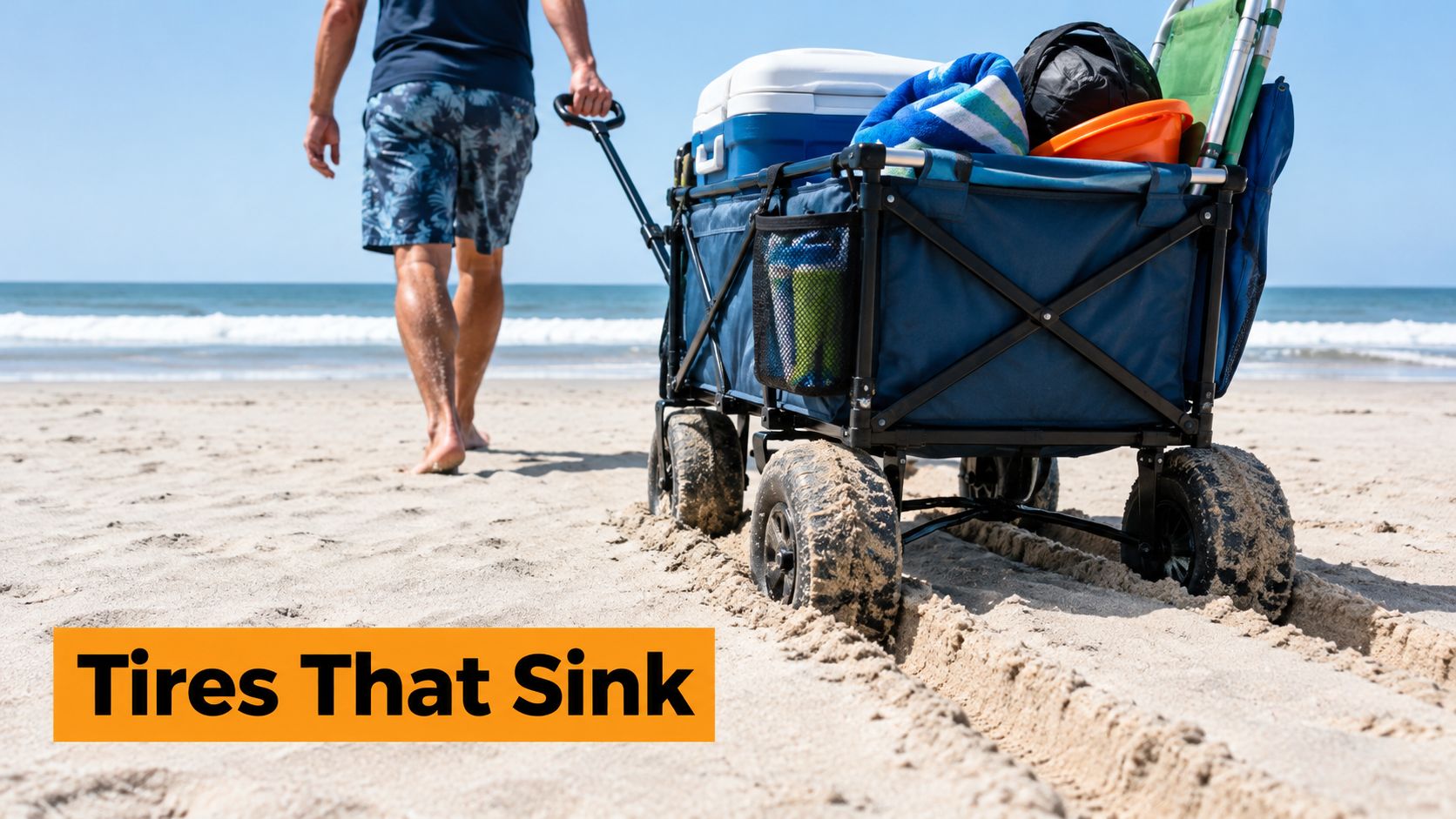
The frustration is familiar to anyone who's pushed a wagon through wet grass at a youth complex or tried to cross dry beach sand with a full load. The cart feels fine on the driveway, then bogs down the moment the surface turns soft, uneven, or loose. That's when a wheel that looked “close enough” starts acting like an anchor.
A practical answer helps more than a generic size chart. Measure the rim's internal bead-seat width, check the tire's load rating, and choose width based on the surface you use, not just the number printed on the sidewall. For utility wagons, that means looking for a tire that supports the load without forcing the sidewalls into an awkward shape or letting the tread fold under stress.
A tire that's right on paper can still fail in the field if the rim support is wrong.
For buyers trying to avoid the trial-and-error cycle, a purpose-built wagon like the Heavy-Duty Wagon Wheels guide is the kind of reference that shows why matched components matter. It's the difference between a wagon that glides and one that digs in, especially when the day includes sand, gravel, and a full cooler.
Best first check: confirm the actual rim width before you shop.
Best practical width range: think in terms of a broad, stable footprint rather than a single magic number.
Best fitment rule: choose the tire that stays inside the maker's approved rim-width range.
Decoding Tire Sizing and Rim Compatibility
A 10-inch wheel label tells you the bead-seat diameter, not the whole fit story. Two tires can both mount on a 10-inch rim and still behave very differently once they are loaded with gear and pushed across sand, grass, or gravel. Sizing standards make that distinction clear, and U.S. rules require tires to follow recognized standards such as those described in the National Academies tire sizing reference.
The old habit of treating one number as the full answer misses how tire width, rim width, and load support work together. A tire marked for a 10-inch rim can still be a poor match if the bead support is off. Too wide, and the sidewalls can sit poorly on the rim. Too narrow, and the tread can crown and lose useful contact with the ground.
What the sidewall number means
A size like 4.80-10 signals an approximate 4.80-inch nominal section width intended for a 10-inch rim, but that does not mean every 10-inch wheel is right for it. The tire maker's approved rim-width range still decides the actual fit, because mounted width changes with rim width.
For wagon owners, that is the practical test. Measure the rim, read the maker's chart, and match the tire to the load and terrain you expect to face. See our complete guide to tires for wagon for approved rim-width charts and fitment ranges.
Storage and inventory systems for mounted assemblies follow the same rule. Commercial tire racking systems, such as commercial tire racking systems, are built around the fact that rims and tires work as a matched pair, not interchangeable parts.
The number on the sidewall is a starting point, not a guarantee.
Diameter: the rim size the tire is built around.
Section width: the tire's nominal body width.
Fit range: the approved rim-width window that keeps the tire supported correctly.
Choosing the Right Width for Sand Grass and Gravel
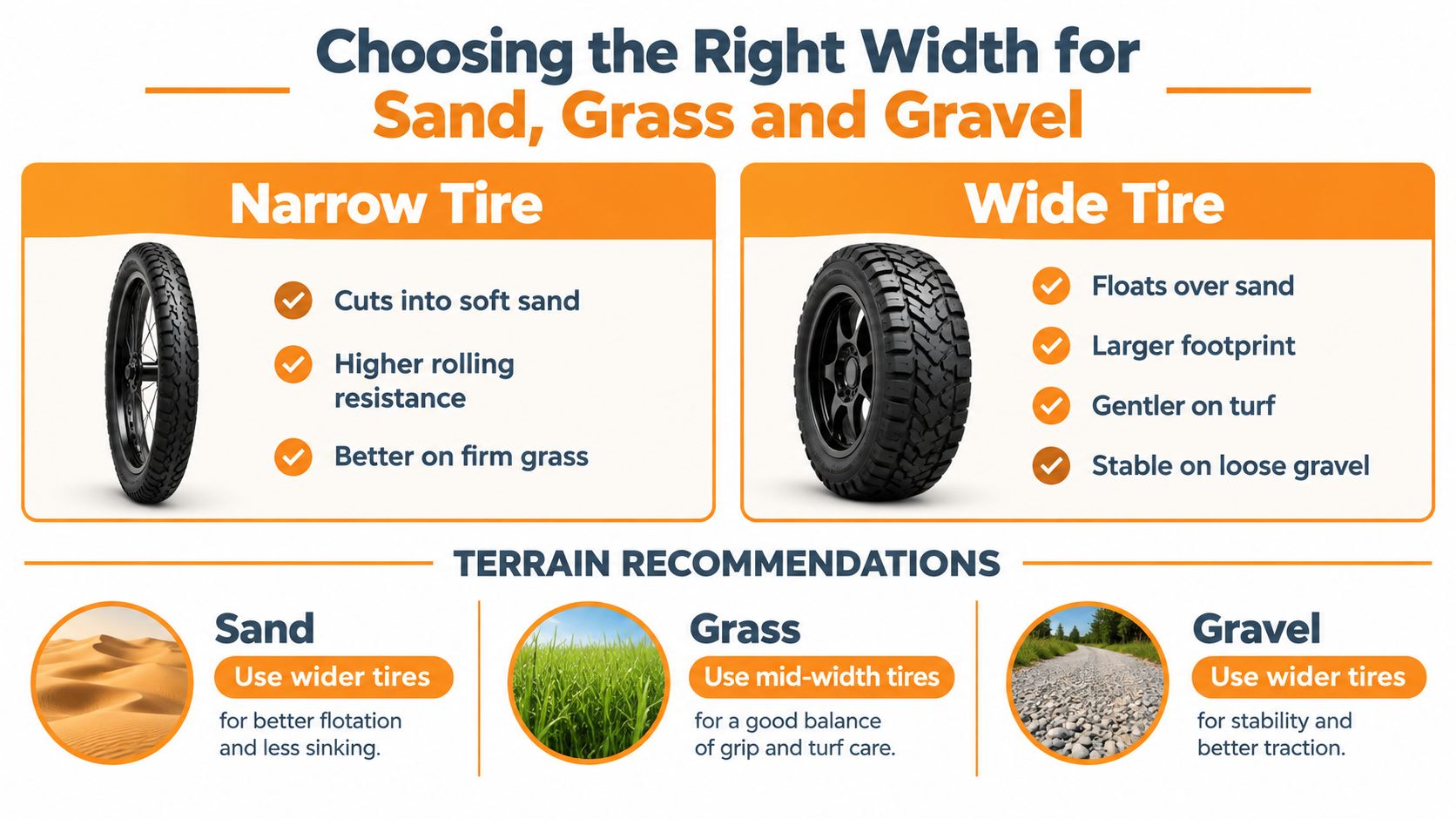
Soft sand rewards flotation, but width alone doesn't guarantee a good ride. A wider tire can spread load across a larger contact patch and reduce sinking, yet actual performance also depends on inflation pressure, tire stiffness, tread pattern, wheel load, and moisture in the surface (Vittoria ETRTO-related guidance). That's why a beach tire and a youth-sports tire aren't the same decision.
The trade-off is control versus flotation. On sand, broader contact usually helps the wagon stay up on top instead of trenching. On firm grass or packed gravel, a width that's too aggressive can make steering feel heavier than it needs to be, even if the wagon still rolls fine.
Surface-by-surface guidance
For deep sand, favor the wider compliant option that still fits the rim correctly. For compact grass, a mid-width setup often keeps the wagon stable without feeling sluggish. For loose gravel, width helps with lateral steadiness, but the tire still has to stay supported at the rim and within the load range.
A practical gear-first approach is to match the tire to the worst surface you expect to cross regularly. That's why families going from parking lot to beach, or tournament parents moving between fields and gravel lots, usually get better results from a balanced all-terrain choice than from an extreme one.
When you're comparing setup ideas for a wagon haul, the Carts with Big Wheels guide is a useful reminder that bigger contact patch and better flotation are not the same thing as universal best performance.
Deep sand: wider, compliant, and correctly inflated.
Grass and turf: mid-width for stability without excess drag.
Gravel paths: enough width to calm side-to-side wiggle, but not so much that steering gets vague.
Why Load Rating Matters More Than Raw Width
Width gets all the attention, but load rating is what keeps the tire honest under real use. For a wagon rated around 500 lb, tire choice should be based on aggregate load capacity, not width alone, because U.S. tire rules define load rating as the maximum load a tire can carry at a specified inflation pressure (49 CFR tire load rating reference). If four wheels share the load evenly, that's 125 lb per tire in a static ideal, and real life is never that neat.
Cargo shifts. Curbs happen. Side loads show up when someone turns too sharply on uneven ground. That's why margin matters more than squeezing on the widest-looking tire you can find.
What wider does and doesn't do
A wider tire can improve flotation and spread the load, but only if the carcass, bead support, and rim are all rated for it. It does not automatically increase safe carrying capacity. If the load range is wrong, you can end up with steering that feels lazy or a tire that deforms in ways the wagon chassis wasn't built to tolerate.
That's where a well-matched wagon becomes more than a hauler. A wagon with 500 lb capacity and 2-in-1 seating is only useful if the wheels and tires were selected around the whole job, not just the diameter. The best setups carry team coolers, tents, and the people who are tired of standing, then still roll cleanly over the rough ground between parking and field.
The strongest-looking tire isn't the safest choice if the load rating doesn't match the wagon.
For readers comparing towing and carry expectations, the wagon towing capacity guide helps frame the same idea from another angle, capacity first, width second.
Start with capacity: confirm the tire's maximum load at the stated pressure.
Then check support: rim width and bead shape have to match the tire.
Then choose width: pick the widest compliant option that clears the frame and still handles well.
How to Measure Your Rim and Verify Fitment
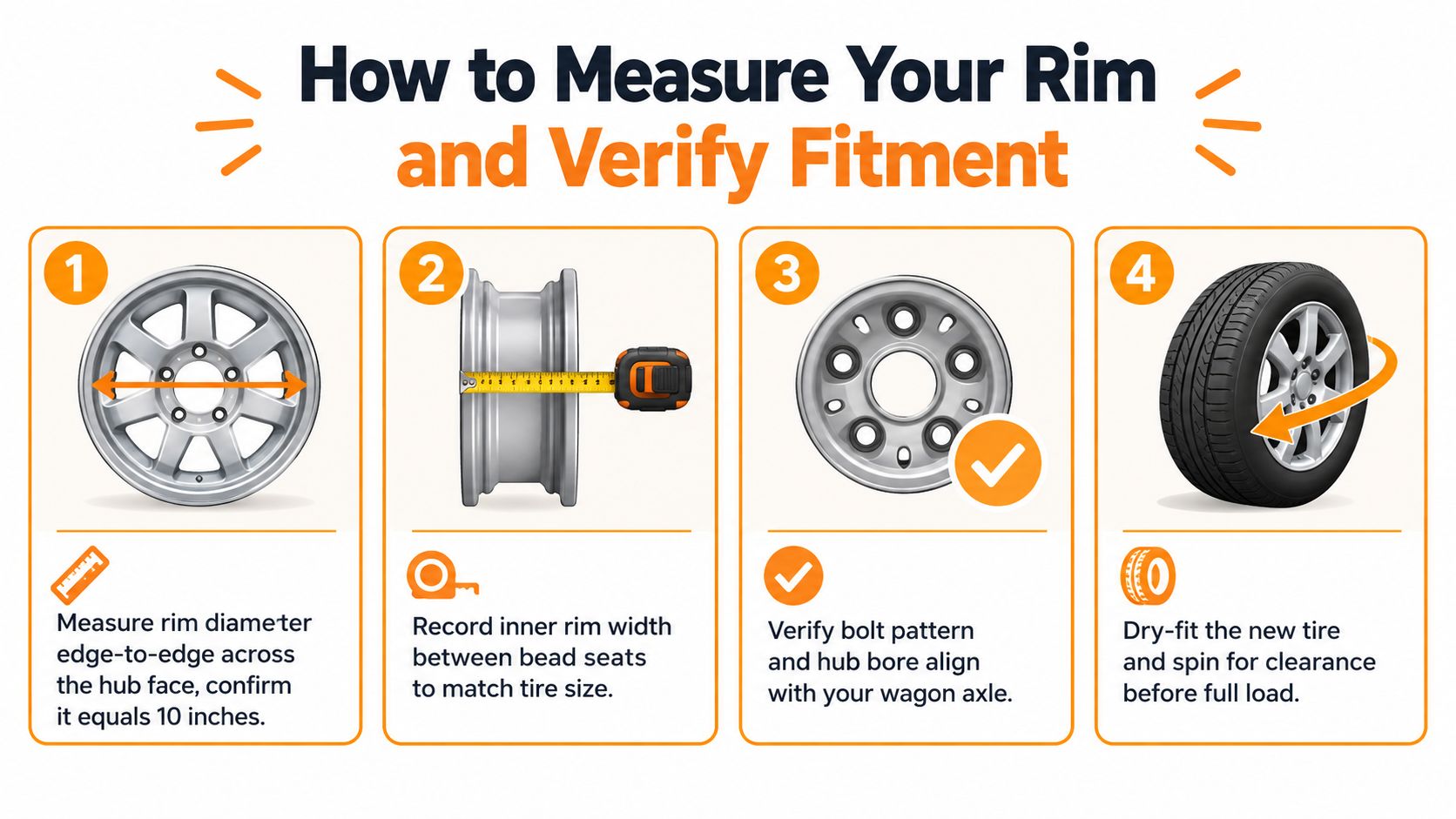
Start with the bare rim, not the old tire's sidewall guess. Measure the inside bead-seat width and confirm the bead-seat diameter is 10 inches, because the label on the wheel doesn't tell you everything you need to know. Then compare those measurements with the tire maker's approved rim-width range before you buy.
The industry rule of thumb matters here because rim width changes section width. Tire Rack notes that changing rim width by 0.5 inch changes section width by about 0.2 inch (Tire Rack fitment guide). That means a tire that looks close on paper can mount narrower or wider than expected once it's on the actual wheel.
Fitment checks that save money
Measure the bead seats: use the rim's internal width, not the outside lip-to-lip number.
Read the approved range: pick a tire whose spec sheet includes your measured rim width.
Check clearance: make sure the tire won't rub the frame, fender, or axle hardware under load.
Dry-fit before full use: spin the wheel by hand before trusting it with a full haul.
The point is simple. A tire can be technically “for” a 10-inch wheel and still be the wrong tire for your exact wagon. If you want to skip the guesswork, the all-terrain cart wheels guide is a smart place to compare fitment logic before you order.
Measure first, buy second. It's cheaper than returning a mounted tire.
Upgrade to the Ultimate All-Terrain Hauler
The cleanest buying checklist is short. Match the bead-seat diameter. Verify the approved rim-width range. Choose width for the surface, not the sidewall ego. Confirm the load rating for the actual payload, especially if the wagon is carrying 500 lb worth of gear, snacks, and people who want a place to sit.
That's why the best wagon setups feel calm instead of twitchy. They roll across sand without trenching, stay composed on gravel, and don't punish you for using the wagon the way families and tournament parents use it. A useful hauler does two jobs well, carrying gear and giving you a place to rest when the day runs long.
If you're tired of making extra trips and dragging a cart that fights you every step, choose gear that's built around the load-and-terrain match, not just a wheel number. Haul more, sit better, and stay out longer with Lounge Wagon.
Choosing a selection results in a full page refresh.
This pad is perfect for kids or dogs to be comfortable inside the moving wagon, and very nice after you set everything up and want to sit for extra padding.
Having the umbrella this summer has been easy to use and a must to make sitting and watching the parade so nice when there isn't any shade. My dogs laid on the wagon padding and enjoyed the day without getting too hot. I enjoyed the shade too.