TL;DR: Heavy duty wagon wheels succeed or fail according to diameter, width, tire construction, bearing fit, and load rating. Small hard wheels dig into soft sand, while larger wheels distribute weight and roll more easily across beaches, grass, and gravel. For mixed outdoor use, prioritize compatible hubs, reliable bearings, puncture resistance, and a frame rated for your real cargo.
The exhausting three-trip walk from the car to the shoreline usually starts with an innocent-looking wagon. You load the cooler, umbrella, towels, toys, and chairs, then watch small plastic wheels sink into soft sand or wedge against uneven grass. By the time you return for the forgotten bag, the morning has already become a workout.
The same problem appears at a youth soccer complex. A cart that rolls acceptably across a garage floor can drag badly over turf, packed dirt, and gravel once the team cooler and shade tent are inside. The fix isn't just a stronger handle or a larger storage compartment. The wheel system determines whether the wagon carries the load or makes you carry it.
The Real Problem With Standard Wagon Wheels
Small, hard wheels fail on soft ground because they concentrate the wagon's weight into a small contact patch. That pressure pushes the wheel down instead of forward. On loose sand, the wheel starts to plow a groove, increasing resistance with every foot.
A narrow wheel can perform perfectly well on pavement and still become nearly useless at the waterline. Packed sand offers more support, but dry sand gives way under the same load. Grass creates a different problem. Small wheels catch in divots, roots, and uneven turf, transferring jolts through the frame and into whatever you've packed.
Why the load changes everything
An empty cart hides weak wheel design. Add a cooler, beach chairs, sports equipment, or a child's supplies, and the contact patch has to support much more weight without sinking. The result is familiar: the front wheels dig in, the handle rises awkwardly, and the person pulling has to use short, forceful movements instead of a steady walk.
That struggle gets worse when the wagon is turned. Turning creates side loads at the hub and bearing, particularly on uneven surfaces. A wheel may have a respectable advertised capacity, but the wagon can still feel unstable if the axle, hub, and bearing interface aren't matched.
Practical rule: Judge a wagon by how its wheels behave under your actual load, not by how smoothly they roll when empty.
The useful benchmark is a wheel with enough diameter and surface area for the terrain, plus a hub that can tolerate repeated turning. Heavy duty wagon wheels aren't decorative upgrades. They're the working connection between the cargo and the ground.
The beach and sports-complex test
At a Florida Gulf Coast beach, a small solid wheel can dig into loose sand before you've reached the shoreline. At a crowded sports complex, that same wheel may rattle across a gravel access path and catch on the edge of a field. In both cases, the problem is mechanical rather than cosmetic.
Puncture resistance also matters because a flat wheel can end a trip even when the frame and handle remain sound. For a practical look at why flat-free designs matter outdoors, review puncture-proof wagon wheels. The right wheel won't eliminate every difficult surface, but it can turn a dead stop into a manageable pull.
Evolution and Construction of Heavy Duty Wheels
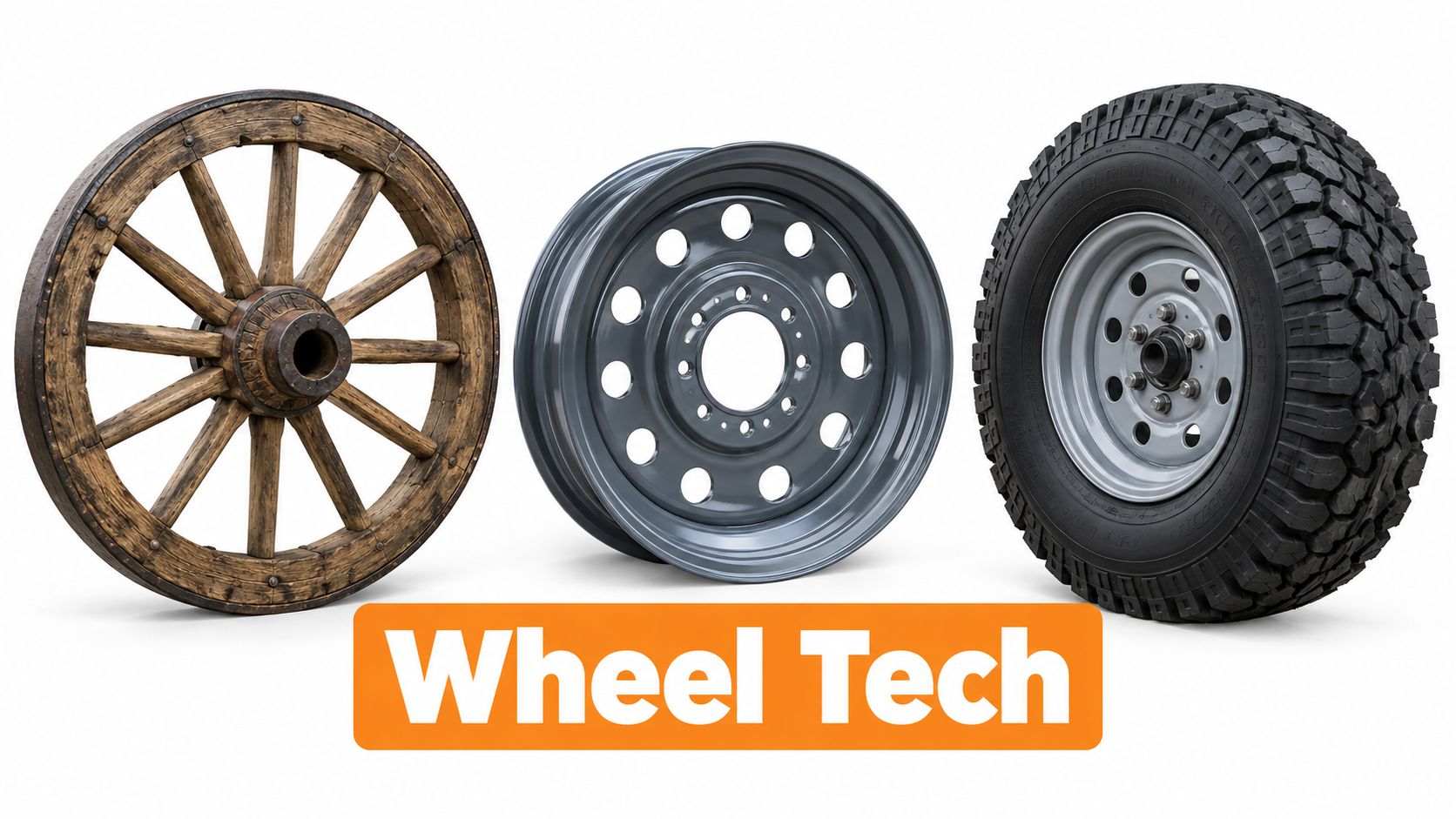
Heavy-duty wheel design has followed the demands placed on transport. Early wagon wheels used wood, sometimes protected with iron rims. Archaeological and historical references place the origins of the wheel around 3500 BC, while spoked wheels later offered a lighter and more efficient alternative to solid disks, as documented in this history of antique wagon wheels.
Iron rims were in use by around 100 CE, protecting wooden wheels from wear. As industrial manufacturing matured, steel construction became more practical for demanding service. By the 19th and early 20th centuries, steel rims were increasingly common because manufacturers could produce them more consistently for heavy applications.
Why steel changed heavy transport
A 1900 technical paper on truck wheels argued that the “strenuous modern conditions” of heavy-duty trucking made steel wheel substitution imperative, reflecting the move away from wood for high-load transport in the SAE technical paper. The important lesson for today's buyer is simple. Heavy loads punish materials and joints that work fine in light service.
Steel helps provide a rigid foundation for the hub and frame, but steel alone doesn't make a wheel suitable for sand. A rigid, narrow steel wheel can still sink. Modern performance comes from combining structural strength with the correct tire width, diameter, tread, and pressure.
A recent market analysis estimates that freight wagon wheels represented 32.7% of global wheel demand and steel wheels represented 62.4% of total market value in 2025, according to the referenced market source. Those figures indicate the continuing importance of steel-based systems in heavy-load transport, though commercial freight wheels aren't direct substitutes for recreational wagon wheels.
Hub design matters more than appearance
A stamped hub may be adequate for light, occasional use. A machined hub with properly fitted bearings offers better control of the axle interface and can reduce friction under repeated loading. Sealed bearings also help limit the intrusion of dust and moisture, both common around beaches, fields, and muddy parks.
The wheel should therefore be evaluated as a system:
Steel construction: Supports a rigid connection between tire and axle.
Machined hub: Creates a more controlled bearing interface.
Sealed bearings: Help maintain smooth rolling in dusty or wet outdoor use.
Appropriate tire design: Determines whether the wheel floats, grips, or digs into the surface.
Pneumatic vs Foam-Filled vs Solid Rubber
Tire construction determines how a wagon reacts to sand, grass, and gravel. There isn't one perfect option for every route. The practical choice depends on whether your priority is flotation, puncture resistance, low maintenance, or compact storage.
Pneumatic tires
Air-filled tires are usually the strongest choice for loose sand because lower pressure and a wider footprint spread the load. Independent beach-gear guidance identifies 9 to 12 inch pneumatic or balloon-style tires as much better suited to loose sand than small solid wheels, and notes that wheels under 10 inches tend to dig in and require substantially more pulling effort, as described in this heavy-duty wheel guidance.
The benefit is noticeable on a long walk from the parking lot to the beach. The tire absorbs small impacts, conforms to uneven ground, and reduces the sharp jolts that travel through the handle. The trade-off is maintenance. You have to check inflation, and a puncture can leave the wagon unusable until repaired.
Foam-filled and puncture-proof tires
Foam-filled wheels remove the flat-tire problem while retaining some cushioning. Puncture-proof designs are especially useful for mixed routes that include grass, gravel, packed dirt, and sand. They won't float over deep dry sand as effectively as a properly aired balloon tire, but they offer predictable performance without carrying a pump or worrying about sharp debris.
A product example lists 7 x 4 inch puncture-proof all-terrain wheels, anti-slip treads, and a 480 lb capacity, as shown in this puncture-proof wagon example. Treat that listing as an example of how wheel construction and capacity are presented together, not as a universal specification.
Solid rubber wheels
Solid rubber wheels are durable and don't require inflation. They can work well on hard pavement, packed paths, and firm grass. Their weakness appears when the ground gives way. Because the tire can't deform and spread its footprint in the same way, it tends to transmit more impact and dig more readily into loose sand.
For a mixed-use wagon, solid rubber is often a compromise that favors simplicity over comfort. If your route is mostly pavement and packed surfaces, that may be sensible. If your day includes deep beach sand, large air-filled or balloon-style wheels are the more forgiving benchmark.
Terrain decision: Choose pneumatic tires for maximum sand flotation, puncture-proof or foam-filled tires for dependable mixed-terrain use, and solid rubber for hard surfaces where simplicity matters most.
The choice becomes easier when you focus on the surface you cross. Lounge Wagon's guide to wagon tires is useful when comparing the trade-off between smooth operation and flat resistance.
A visual demonstration can help clarify how wheel design affects outdoor hauling:
Sizing, Load Ratings, and Bearing Compatibility
Wheel diameter, tire width, axle bore, bearing fit, and load rating must be matched as one system. Diameter alone is a poor buying shortcut. A larger wheel can roll over loose sand and gravel more easily, while a smaller wheel with the correct hub may still struggle when its narrow footprint sinks.
For soft sand and loose gravel, buying guidance places the practical wheel-diameter range at 10 to 12 inches. 8 to 10 inch wheels remain common for mixed all-terrain use, according to this camping-wagon buying guide. Larger diameter improves obstacle clearance and reduces the approach angle at bumps, but it also raises the wagon and takes more storage space.
Wheel Size and Terrain Guide
Wheel Diameter
Best Terrain
Pros
Cons
8 to 10 inches
Grass, packed dirt, mixed all-terrain routes
Easier to store and maneuver
Less forgiving on loose sand
10 to 12 inches
Soft sand and loose gravel
Better clearance and load distribution
More bulk and possible storage demands
Larger specialty designs
Very soft surfaces or specialized hauling
Can provide greater flotation
May be harder to transport and match to a frame
Tire pressure also changes the result. A pneumatic tire run at lower pressure spreads its contact patch across soft sand, while a firm tire rolls more cleanly on packed gravel. The trade-off is greater puncture exposure and less predictable handling if pressure drops too far. For more examples of wheel dimensions and terrain use, review these all-terrain cart wheels.
Capacity needs the same careful reading. Many utility wagons fall in the 150 to 250 lb range, while heavier models can exceed 300 lb and reach the 500 lb class, according to this utility-wagon capacity guide. A wheel's rating applies to that wheel and its mounting hardware, not automatically to the frame, axle, brakes, or complete wagon.
Match the hub to the axle
One industrial-style wagon wheel uses a steel hub machined for 1 1/4-inch, 1 1/2-inch, and 1 3/4-inch roller-bearing axles. Another heavy-duty steel wheel specifies a 5/8-inch axle bore, two sealed 5/8-inch ID bearings, and a 4-inch-long hub, according to this heavy carriage wagon wheel specification.
Before ordering, verify axle diameter, hub length, bearing inner diameter, frame clearance, and the manufacturer's complete load rating. A correctly sized wheel still fails as a replacement if the bearing or hub interface does not match.
Installation, Maintenance, and Compatibility Tips
Replacing a wheel isn't difficult, but compatibility errors can turn a simple repair into a loose or unsafe setup. Measure the existing axle before ordering, and compare the replacement's bore, hub width, bearing style, and overall diameter.
A wheel that fits the axle can still rub against the frame or change the wagon's balance. Keep the replacement within the frame manufacturer's intended dimensions unless you're deliberately rebuilding the entire wheel system.
A field checklist
Measure first: Confirm axle diameter, hub length, and bearing inner diameter before purchase.
Check the frame: Make sure the tire clears the side rail, brake hardware, and folding joints.
Secure the fastener: Tighten the axle nut firmly without binding the bearing.
Inspect the seal: Look for grit, moisture, cracking, or visible bearing damage.
Watch the tread: Uneven wear can indicate poor alignment, overloaded use, or a bent axle.
Rinse after beach use: Remove salt and sand before storing the wagon.
Store tires properly: Keep the wagon out of prolonged heat and direct sunlight when possible.
Puncture-proof and foam-filled tires reduce downtime from flats, but they still need inspection. Anti-slip tread can wear down, bearings can collect grit, and a bent frame can make even a new wheel roll poorly.
For a routine that covers cleaning, storage, and basic checks, use this wagon maintenance guide. Integrated wheel systems can also simplify ownership because there are fewer improvised parts to match after a failure.
Why the Lounge Wagon Solves the Heavy-Duty Problem
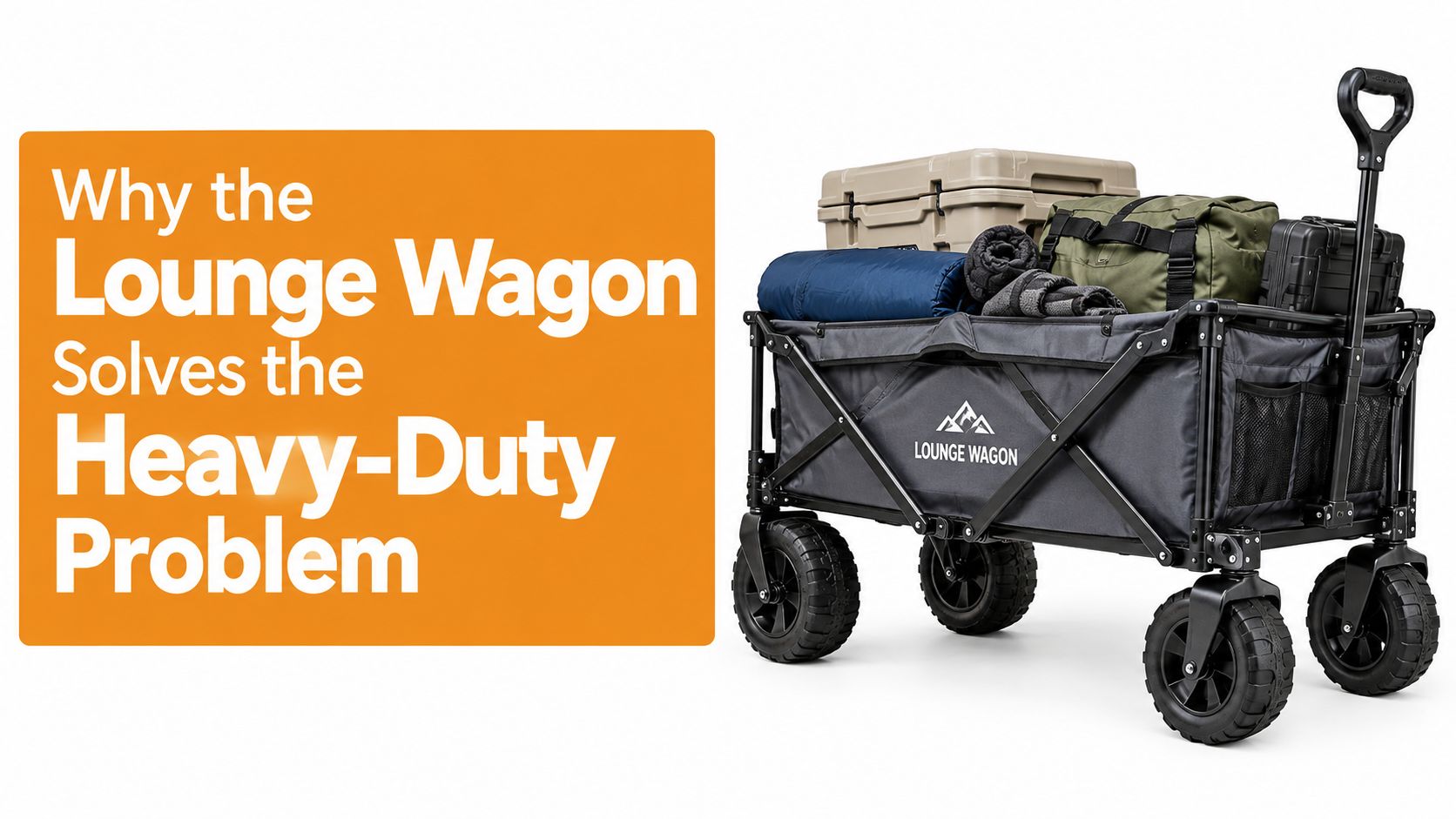
The Lounge Wagon combines the two specifications that matter most for a parent hauling real outdoor gear: a 500 lb capacity and 10-inch puncture-proof wheels. The capacity gives you room for coolers, sports bags, shade equipment, blankets, and supplies, while the wheel size provides more useful clearance than small cart wheels on grass, gravel, and firmer sand.
Its reinforced steel frame supplies the structure, but the value comes from the complete system. The wheels are puncture-proof, so a sharp piece of gravel or beach debris is less likely to turn the walk back to the car into an emergency repair. The design also supports a 2-in-1 seating configuration, allowing the wagon to carry equipment on the way in and become a padded double-seater bench once you arrive.
Where the design earns its space
At a soccer complex, the 500 lb capacity can accommodate the equipment that otherwise gets divided among several bags and trips. Once the match starts, the 2-in-1 seating means parents don't need to pack a separate bench for the sideline.
At the beach, the 10-inch puncture-proof wheels provide a more dependable platform for towels, toys, umbrellas, and refreshments than small hard wheels. For especially soft sand, Lounge Wagon also offers an optional Sand Wheels add-on, described as wider wheels intended for beach environments.
The trade-off is that larger, heavier-duty equipment may take more room in a vehicle than a minimalist folding cart. That's a reasonable exchange when the alternative is dragging a loaded wagon through sand or carrying separate chairs for every outing.
You can review the available configuration and product details in the Lounge Wagon collection. If your outdoor routine includes tournaments, shoreline walks, festivals, camping, or long days at parks, match the wheel setup to the softest surface and heaviest realistic load you expect.
The wheel isn't an afterthought. It controls how much effort reaches your arms, how safely the load moves, and whether the wagon remains useful after the pavement ends.
Ready to stop hauling and start lounging? Lounge Wagon combines a 500 lb capacity, 10-inch puncture-proof wheels, and 2-in-1 seating for beach days, sports complexes, festivals, and family outings. Visit Lounge Wagon to choose a gear hauler that can carry the load and give you a comfortable place to sit when you arrive.
Choosing a selection results in a full page refresh.
This pad is perfect for kids or dogs to be comfortable inside the moving wagon, and very nice after you set everything up and want to sit for extra padding.
Having the umbrella this summer has been easy to use and a must to make sitting and watching the parade so nice when there isn't any shade. My dogs laid on the wagon padding and enjoyed the day without getting too hot. I enjoyed the shade too.