TL;DR, a folding camp chair with table is worth buying only when the chair, table, and terrain work together. Choose it for short, flat, solo sits, sideline use, or quick meals. Skip it if you need all-day comfort, soft-sand stability, or room for kids, cooler, and gear.
The headache starts in the parking lot, not at the campsite. You grab a chair in one hand, a separate table in the other, then make the slow extra walk back for the drinks, the snacks, and the thing you forgot on the first trip. That second haul ruins the morning before you've even sat down. For a better one-piece option, see the how to haul heavy gear to the beach alone guide.
A folding camp chair with table is the cleanest fix when your day is simple. One carry, one setup, one place for a drink, a phone, or lunch. If your outing is more about moving gear than sitting still, though, the smarter move is a fuller system, not a gimmick chair.
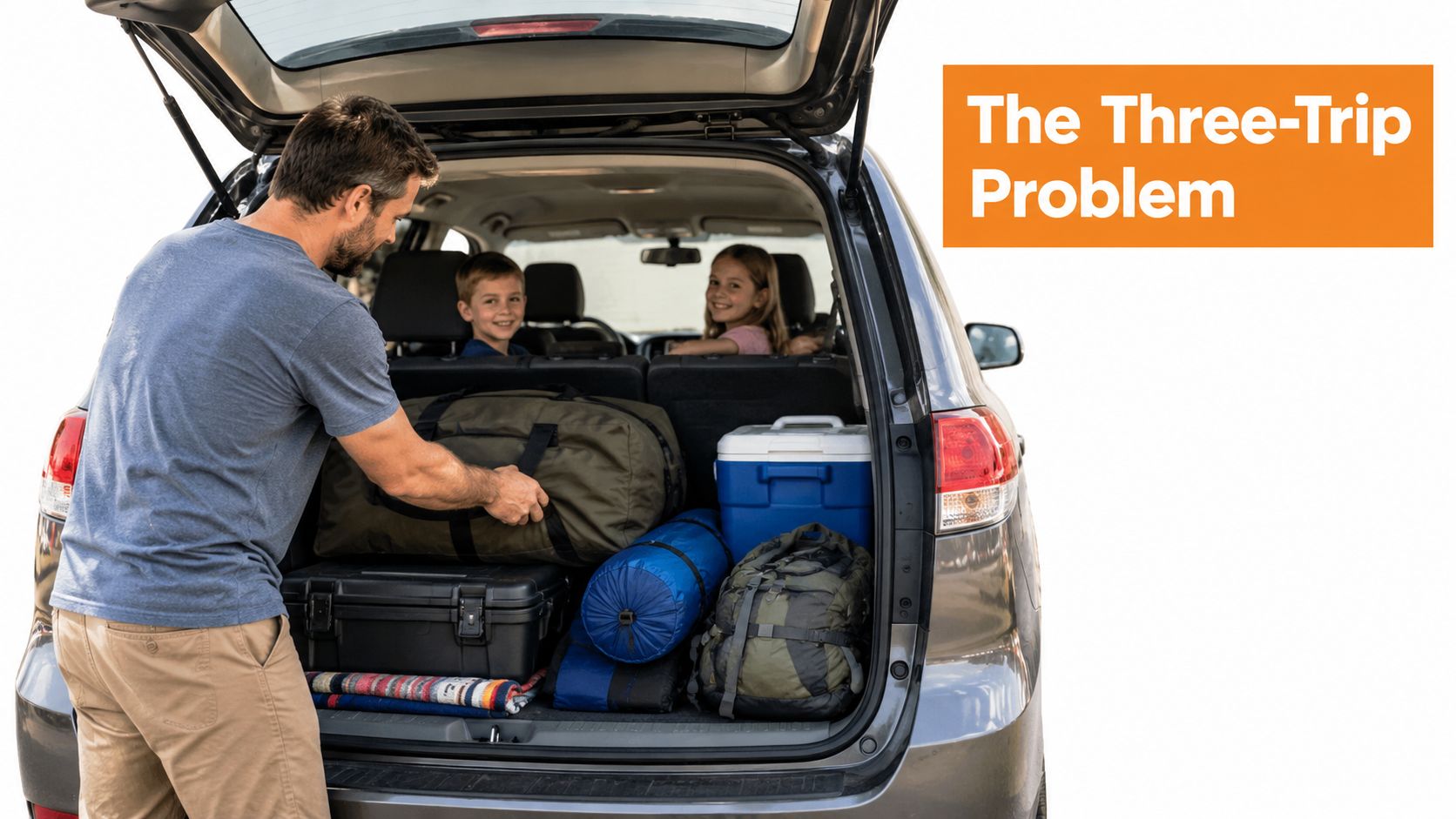
The Three-Trip Problem and Why It Matters
The first bad sign is always the third walk. The kids are already out of the car, the cooler is halfway to the field, and you're still shuttling a chair and a table piece by piece across a lot that somehow feels longer on tournament mornings. That's why a folding camp chair with table exists in the first place, to collapse the carry into one manageable unit.
What matters here isn't laziness, it's friction. Every extra trip steals time, adds clutter, and leaves you less patient before the day even starts. At a crowded soccer complex, that means you arrive flustered instead of settled. At a beach access point, it means you've already spent energy before the sun gets high.
The category has grown because outdoor seating is no longer just about sitting. A market report valued the global camping furniture market at USD 5.4 billion in 2025 and projected USD 9.9 billion by 2035, with chairs and stools at USD 1.7 billion in 2025 and a 6.4% CAGR. Folding camping chairs specifically held USD 924 million, or 38.5% of the global outdoor camping chairs market in 2025, which tells you foldable seating is still the core format people trust for portable lounging Cognitive Market Research.
Practical rule: If the setup saves you a walk but still leaves you uncomfortable, it's not a win. It's just less annoying baggage.
The old-school folding chair solved portability. The better modern question is whether your chair-table system genuinely reduces effort in daily use. That's the difference between a useful buy and another piece of gear that looked smarter online than it feels on grass.
What a Folding Camp Chair With Table Really Means
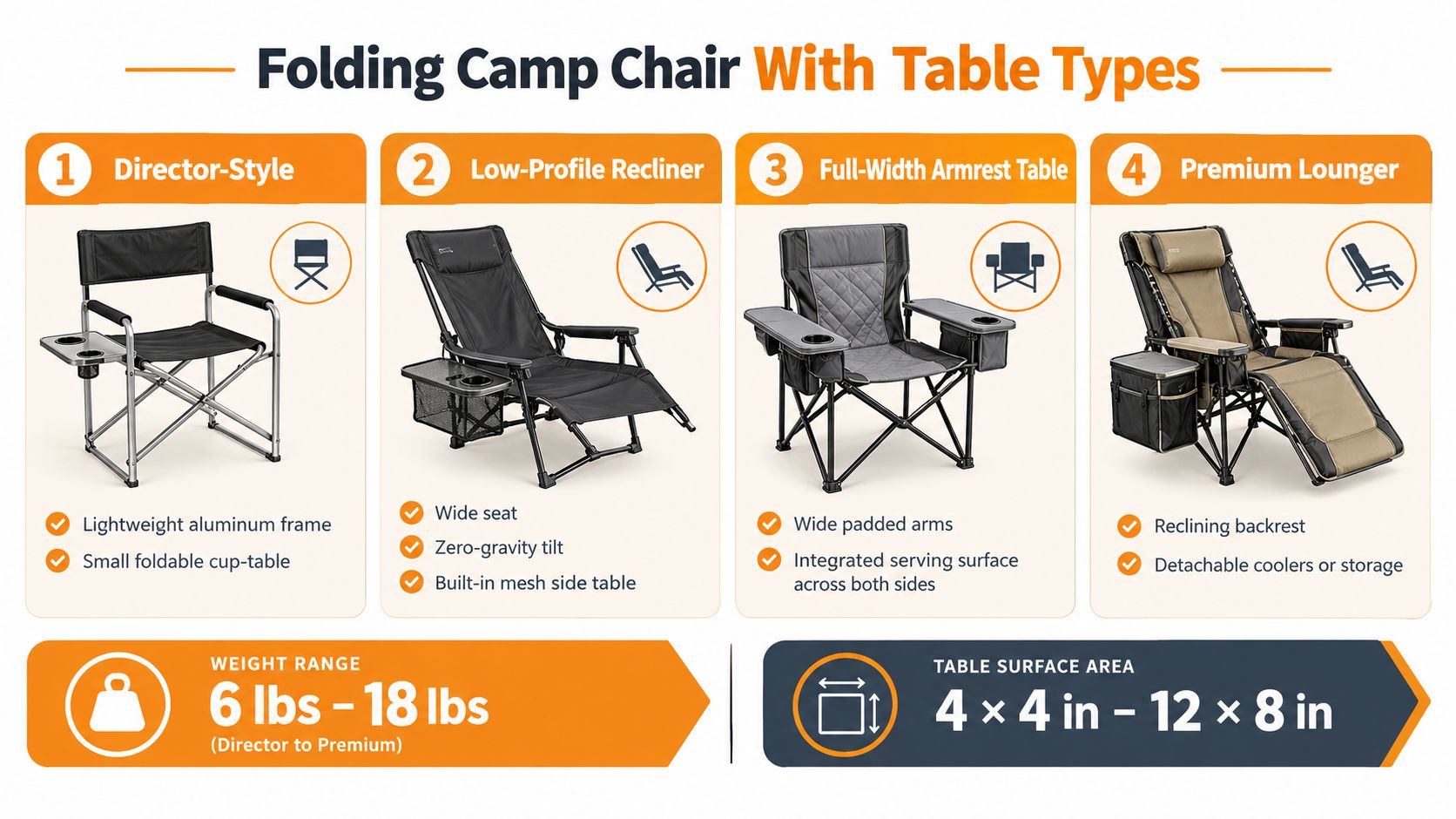
A folding camp chair with table is not one product type, it's a family of shapes with very different jobs. At the small end, you've got director-style chairs with a side table built into one arm. Those are fine for a drink, sunglasses, or a phone, and they're handy when you want a compact sideline seat.
The main forms buyers confuse
Mid-range chairs usually add a flip-out tray or between-arm surface. That gives you a little more room for a plate and a drink, which is useful at a campsite or picnic lawn, but it still isn't a real dining station. The tray is the point, and the tray is also the limit.
At the heavier end, there are broader quad-style chairs and lounger-style seats that turn the table into a usable work surface. They're better for longer stops, but they stop feeling lightweight fast. The market timeline for camp furniture also shows the category has been moving from simple folding seats toward multifunctional gear, with folding designs becoming common from 1900 to 1950 and lighter metals plus portable tables entering the mix from 1950 to 1980 Grand View Research.
Buyer takeaway: A built-in table doesn't automatically make a chair better. It just changes the job description.
The most complete version of the idea is a 2-in-1 seating system, where the seating and table function together instead of pretending to be separate gear bolted onto each other. That's where hybrid products start making sense for parents, festival-goers, and anyone who hates carrying a second item for no good reason. For a deeper look at compact table layouts, the portable table outdoor guide is worth a look.
Key Features to Evaluate Before You Buy
The worst mistake is buying by shape alone. A folding camp chair with table lives or dies on a handful of features, and each one should solve a real problem, not just look clever in a product photo.
The six checks that matter
Feature
What to Check
Real-World Benefit
Frame stability
Steel or reinforced aluminum with a wide footprint
Keeps the tray from wobbling when you set down food or a device
Table size and shape
Big enough for your actual use, not just a cup
Lets you eat, write, or work without stacking everything on your lap
Cup holder integration
Secure fit, not a loose ring
Stops drinks from rattling, tipping, or sliding off
Packability
Folded length, carry bag, and how awkward it feels
Makes the chair easier to load, carry, and stash in a trunk
Weight capacity
Match the rating to the user and the load
Keeps the seat steady instead of flexing under pressure
Fabric and weather resistance
UV-resistant fabric, rust-resistant hardware
Holds up to sand, mud, and repeated outdoor use
Weight ratings are not a side note. Retail listings for folding chairs commonly sit in the 250 to 300 lb range, with heavy-duty versions reaching 400 lb, while compact fold-tables often show 120 lb and 125 lb capacities for the table side of the equation GCI Outdoors capacity guidance. That's the kind of number that tells you whether the chair is built for a snack and a phone, or for a real meal and daily use.
You also want to look at materials, not just marketing words. IKEA lists steel parts with polyester powder coating on some folding outdoor table-and-chair products, which is exactly the kind of material spec that helps a chair survive repeated packing and exposure IKEA outdoor table and folding chairs. That matters more than fancy wording because powder-coated steel is the sort of construction that takes abuse and keeps going.
If you're choosing between two models, pick the one with the better frame and folding hardware before you chase extras. A useless tray is still useless if the chair sags.
For practical layout ideas and tray-style options, the folding chairs with cup holders guide is a useful companion. The chair-table combo should feel solid in your hands before it ever gets to the field.
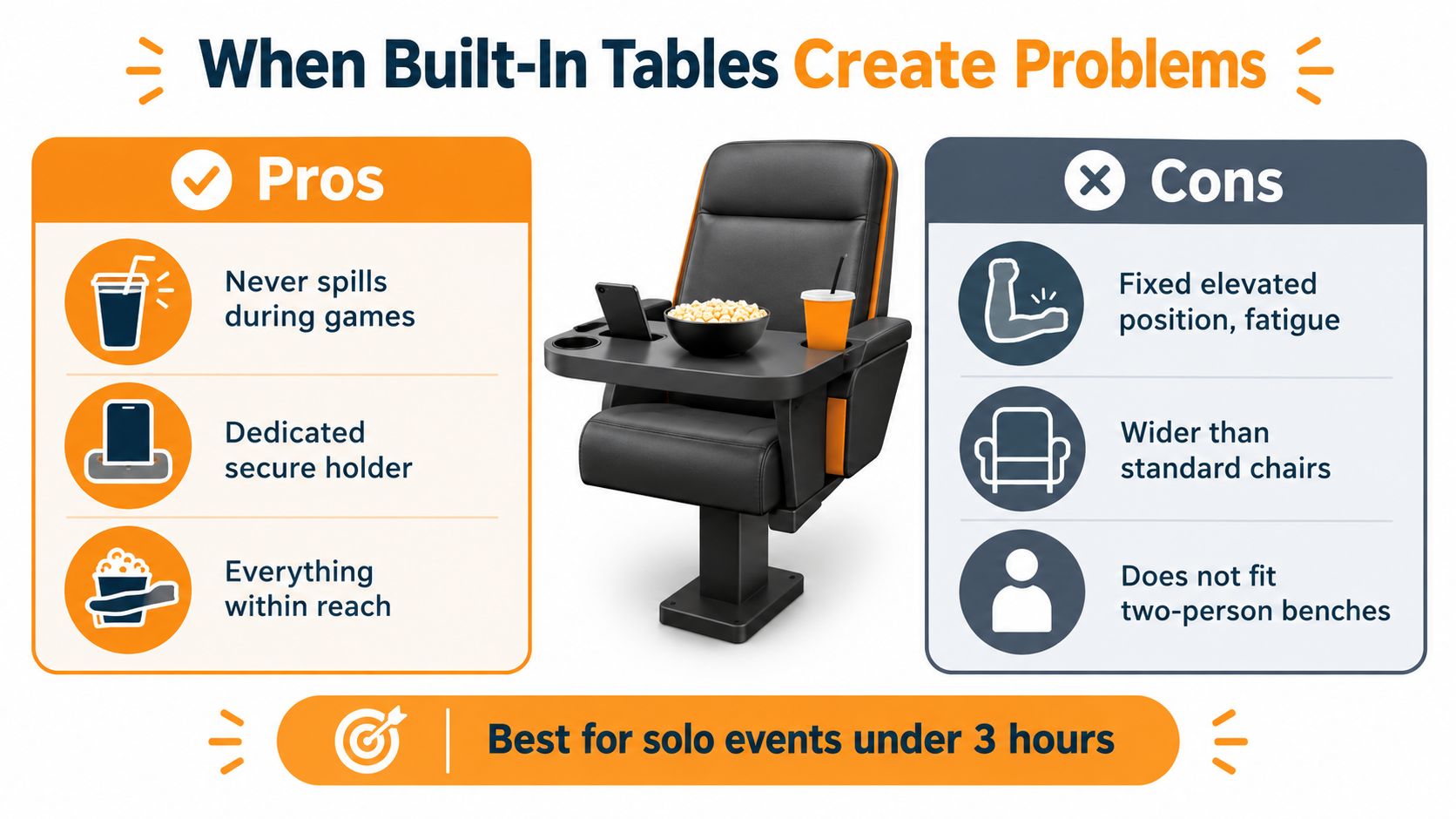
When the Built-In Table Becomes a Problem
A built-in table is not always a gain. On a short sit, it's great. On a long day, it can become the thing that annoys you most because one arm gets locked into a fixed position and your posture starts adapting to the chair instead of the other way around.
That's the issue independent buying guidance keeps circling back to. Low camp chairs are comfortable for lounging, but they're not suitable for table use, while upright chairs are better when you need to sit at a table BestReviews camping chair guidance. That mismatch is the part most product pages skip, because a table sounds like an upgrade until your shoulders and legs say otherwise.
Where the design breaks down
Fixed arm position: A side table can force one shoulder higher than the other, which gets old fast during a full tournament day.
Too little surface area: Small trays are fine for a drink, but they're not a meal station.
Uneven ground tilt: A tray on a sloped field moves with the frame, so drinks slide and plates don't sit flat.
Soft-ground sink: Heavier chairs designed to support more hardware can dig deeper into sand and loose soil.
One-user bias: These chairs usually assume a single sitter, which makes them awkward for families or shared use.
Recent trend coverage also points to a pattern that matters in the field, chairs with side tables are popular, but complaints still focus on discomfort during long sits, low seating, and weight. That's the honest tradeoff. The chair may look multifunctional, but if the geometry is wrong, the extra hardware just gives you more ways to be uncomfortable.
The rule is simple. If you sit briefly, on flat ground, by yourself, the built-in table helps. If the event is long, crowded, or sloped, it starts working against you. That's not a flaw in camping chairs, it's just the wrong tool for the job.
Choosing the Right Setup for Your Days Out
The right chair-table setup depends on where you sit, how long you stay, and how much else you carry. A lot of buyers chase one universal answer and end up with a chair that's decent nowhere. Better to match the design to the actual outing.
Match the chair to the outing
A director-style chair with a side surface fits car camping and backyard dinners because the ground is usually flat and the sit time is manageable. You get quick access to a drink and a book without hauling a bigger frame than you need.
Quad-style folding camp chairs with fold-out side tables make more sense for soccer sidelines and tailgates. The footprint is usually steadier, the seat sits upright enough for table use, and the tray works for a phone, snacks, or a cup. That's the model I'd choose when I know I'll be up and down all afternoon.
Beach use changes the equation. On sand, low-profile chairs and mesh side tables handle stability better than taller seats, but they punish taller users and anyone who wants true table comfort. If you're constantly fighting soft ground, the chair should help you settle in, not force you to keep adjusting.
Field rule: If you need to carry a cooler, shade, and seats, stop buying standalone furniture and think in systems instead.
Full 2-in-1 seating systems belong with parents and event regulars who are managing kids, snacks, and gear across festivals, markets, and games. That's where a rolling setup that converts from haul mode to seat mode earns its keep. Lounge Wagon's 500 lb capacity and 2-in-1 seating approach fit that kind of all-in-one use, especially when the day is really about transport first and comfort second.
Archetype
Best For
Watch Out For
Director chair with side table
Backyard use, tailgates, short sits
Too limited for meals or long sessions
Quad chair with side tray
Soccer sidelines, casual field days
Can feel bulky if you're carrying far
Low-profile beach chair
Sand, short reads, relaxed lounging
Harder for tall users to use at a table
2-in-1 wagon-bench setup
Families, festivals, multi-gear days
Overkill if you only need one seat
You don't need the fanciest chair. You need the one that matches your real day out. If your outing is a quick sit with one drink, keep it simple. If it's a family logistics problem, buy the system.
Setup, Care, and Making It Last
A chair-table combo should feel obvious to use. If setup takes too many steps, you'll start leaving it at home, and then you've paid for convenience you don't use. The best designs open fast, settle solid, and stay out of the way until you need them again.
At the field, the best routine is boring in a good way. Unfold it, lock the frame, check the table latch, and set your drink before the first whistle. At the beach, I'd rather carry the chair assembled in a wagon and fold it only once at the end than keep opening and closing joints full of sand.
Care that actually matters
Rinse after salt or mud: Fresh water keeps grit and corrosion from building up in the hinges.
Dry it fully: Open the joints and let air do the work before you store it.
Check the tray hardware: A loose side-table bracket is a failure waiting to happen.
Store it indoors: Dry storage keeps fabric and frame from aging fast.
Treat it seasonally: A quick hinge check and fabric inspection beats replacing a whole chair later.
IKEA's outdoor folding table-and-chair products are tested against named standards such as EN581, EN12520, and EN1022, and the product pages note testing for safety, durability, and stability, with load testing based on users up to 110 kg or 242 lb depending on the model IKEA outdoor table and folding chairs. That doesn't mean every chair needs the same certification story, but it does show how seriously the durable side of this category should be treated.
A five-minute cleanup after each trip is enough to keep a decent frame alive for years. If you skip that routine, the failure usually shows up at the worst moment, right when a drink hits the tray and the arm starts to sag. For a more detailed folding-care walkthrough, the outdoor folding chair guide fits this use case well.
The Smart Way to Make It a One-Trip Walk
Stop shopping for “the best chair” and start matching the right system to the right outing. If you need a single seat for short, flat, solo use, a director-style chair with a side table is enough. If you're hauling kids, food, and gear too, a 2-in-1 seating solution with real carrying capacity is the cleaner answer, and that's where Lounge Wagon's 500 lb capacity setup belongs in the conversation.
My straight recommendation
Buy a folding camp chair with table if your day is mostly sitting, snacking, and moving a light load. Skip it if you need all-day comfort, stable dining space, or dependable performance on sand and uneven ground. The more your outing looks like logistics, the more you should value a system over a single chair.
The deciding questions are simple. How much room do you have in the trunk. What are your top two uses. Are you sitting for twenty minutes, or trying to run a family base camp. If you answer those directly, the right choice becomes obvious fast.
For a broader setup that handles hauling and seating in one piece, the 2-in-1 beach wagon approach is the model to study before you buy anything separate. It's the closest match to a one-trip carry when the load includes cooler, gear, and people.
Ready to stop making extra trips and start sitting smarter? Visit Lounge Wagon and compare the gear-hauling, 2-in-1 seating options that turn a messy walk into one clean trip. If your outing needs more than a chair, their system is built for exactly that.
Choosing a selection results in a full page refresh.
This pad is perfect for kids or dogs to be comfortable inside the moving wagon, and very nice after you set everything up and want to sit for extra padding.
Having the umbrella this summer has been easy to use and a must to make sitting and watching the parade so nice when there isn't any shade. My dogs laid on the wagon padding and enjoyed the day without getting too hot. I enjoyed the shade too.