An outdoor folding chair should make the day easier, not add another awkward load to carry. The right pick balances comfort, support, and packability, then fits into a one-trip setup so you're not hauling seats, bags, and coolers in separate runs across sand, grass, or crowded sideline paths.
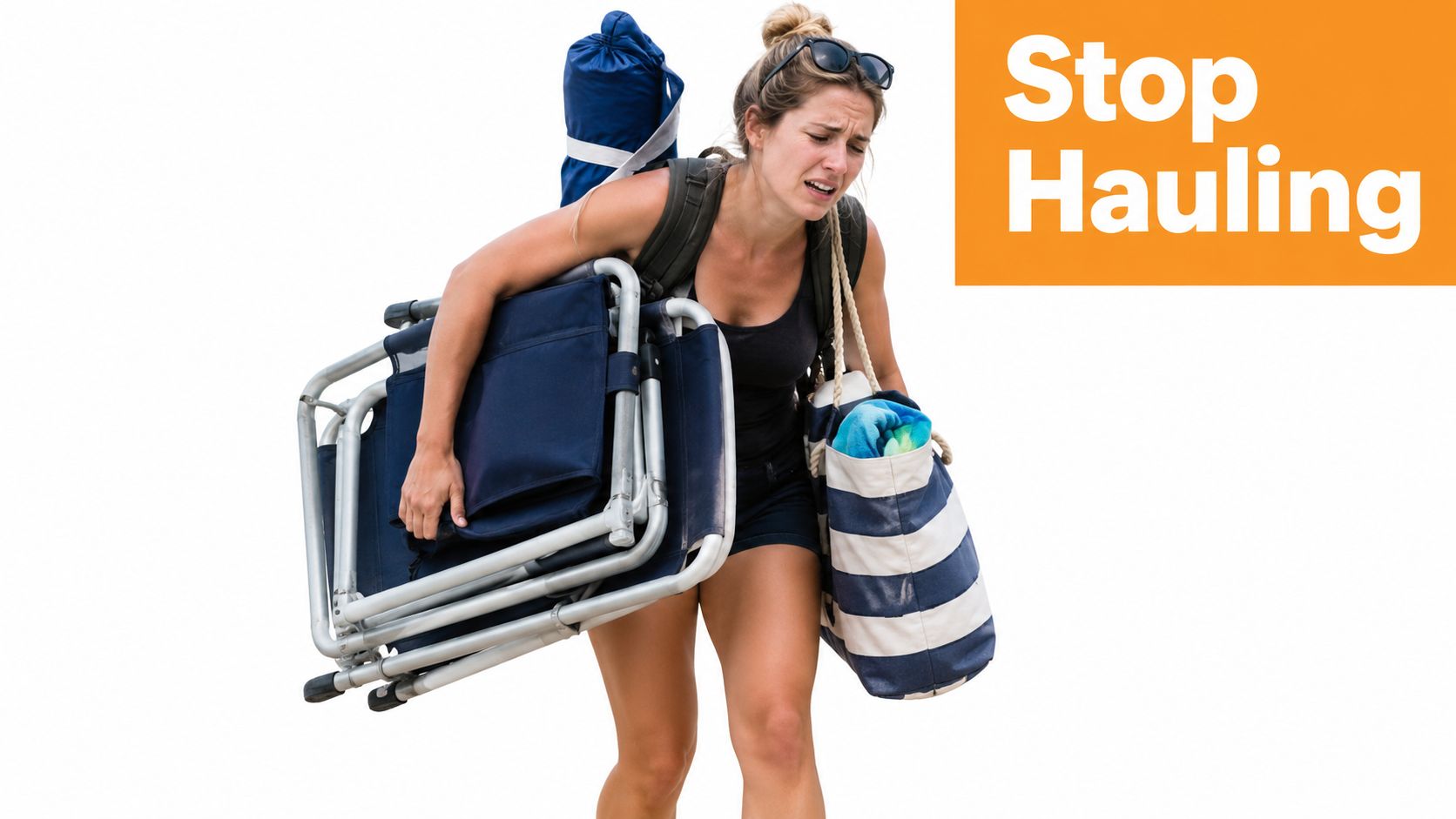
You know the walk. One hand has a cooler. The other has a folded chair that keeps knocking your leg. A tote bag slides off your shoulder, a kid wants a snack now, and you still haven't reached the beach line or the far soccer field. By the time you set up, you're already tired.
That's the outdoor folding chair problem. Shoppers often focus on the seat alone, when the better question is how the chair fits into the whole carry system. Chair weight, folded shape, where it rides, and whether you can skip bringing extra seating at all matter just as much as the backrest.
What we've found at crowded sports complexes is simple. The best setup isn't always two bulky chairs per adult. It's often a lighter chair strategy paired with a wagon that doubles as seating, especially when you're trying to cut the trip count from three to one. If you want that kind of setup, start with this Lounge Wagon overview.
Why the one-trip system matters
A folding chair solves one job. Your day usually has five.
Carry distance: A chair can feel fine in a store and miserable on a long walk over grass or soft sand.
Settle-in time: The more loose pieces you bring, the longer it takes to claim a spot and relax.
Ground conditions: Low beach chairs behave differently on sand than they do on compact turf.
Shared seating: If one product can haul gear and become a padded seat, you may not need as many standalone chairs.
End-of-day energy: Packing out is where clunky gear gets exposed.
Practical rule: If your outdoor folding chair makes the walk harder than the sitting better, it's the wrong chair for that outing.
What a good chair should do
A useful outdoor folding chair needs to match the venue, not just the catalog photo.
For the beach: Go lighter, lower, and easier to rinse or dry.
For all-day sidelines: Prioritize seat height, back support, and getting in and out without a struggle.
For festivals and tailgates: Think compact fold, easy carry, and whether your hauling gear can also become seating.
Stop Hauling and Start Lounging With the Right Setup
You feel the setup decision long before you sit down. It starts in the parking lot, with a cooler in one hand, a chair bag sliding off your shoulder, and a long pull across sand or a crowded sports complex ahead.
A smarter setup cuts that mess down to one trip. Instead of assigning every person a full-size chair, build around a hauling system that also gives you a place to sit. A wagon that converts into a bench covers casual seating, carries the bulky gear, and reduces how much dead weight you carry by hand. Then the folding chair earns its spot by doing something the wagon seat does not, usually better back support, a higher seat, or a more relaxed sit for longer stretches.
That one-trip approach changes how you choose an outdoor folding chair. Chair weight, folded size, and carry method matter just as much as padding once the chair has to fit into a broader system.
The setup that usually works best
For beach days, tournament fields, and park outings, this loadout is usually the cleanest balance of comfort and carry effort:
One supportive outdoor folding chair: Use it for the person who benefits most from armrests, upright posture, or easier stand-up height.
One wagon-bench combo: It handles hauling first, then becomes shared seating once you claim your spot.
Soft items packed around the frame: Towels, hoodies, and blankets cushion the load and make better use of space than loose side bags.
The payoff is simple. Fewer separate pieces to carry, fewer things to set up, and less pressure to bring a full chair for every adult.
Where people overpack
The common mistake is treating seating and hauling as two separate problems. That usually leads to two large chairs, a wagon, extra totes, and loose gear hanging off every handle. It works for a short walk on pavement. It gets old fast on soft sand, gravel paths, and big field complexes.
Bring a chair only if it adds a clear benefit the rest of the setup cannot provide.
For many outings, the wagon bench covers in-between sitting, shoe changes, snack breaks, and a second seat for whoever does not need full back support. One well-chosen chair then handles the longer sits, whether that means watching a full match, reading under a canopy, or staying comfortable through an afternoon at the beach.
That is the trade-off worth making. Carry less. Sit better where it counts.
Outdoor Folding Chair Types Explained and Compared
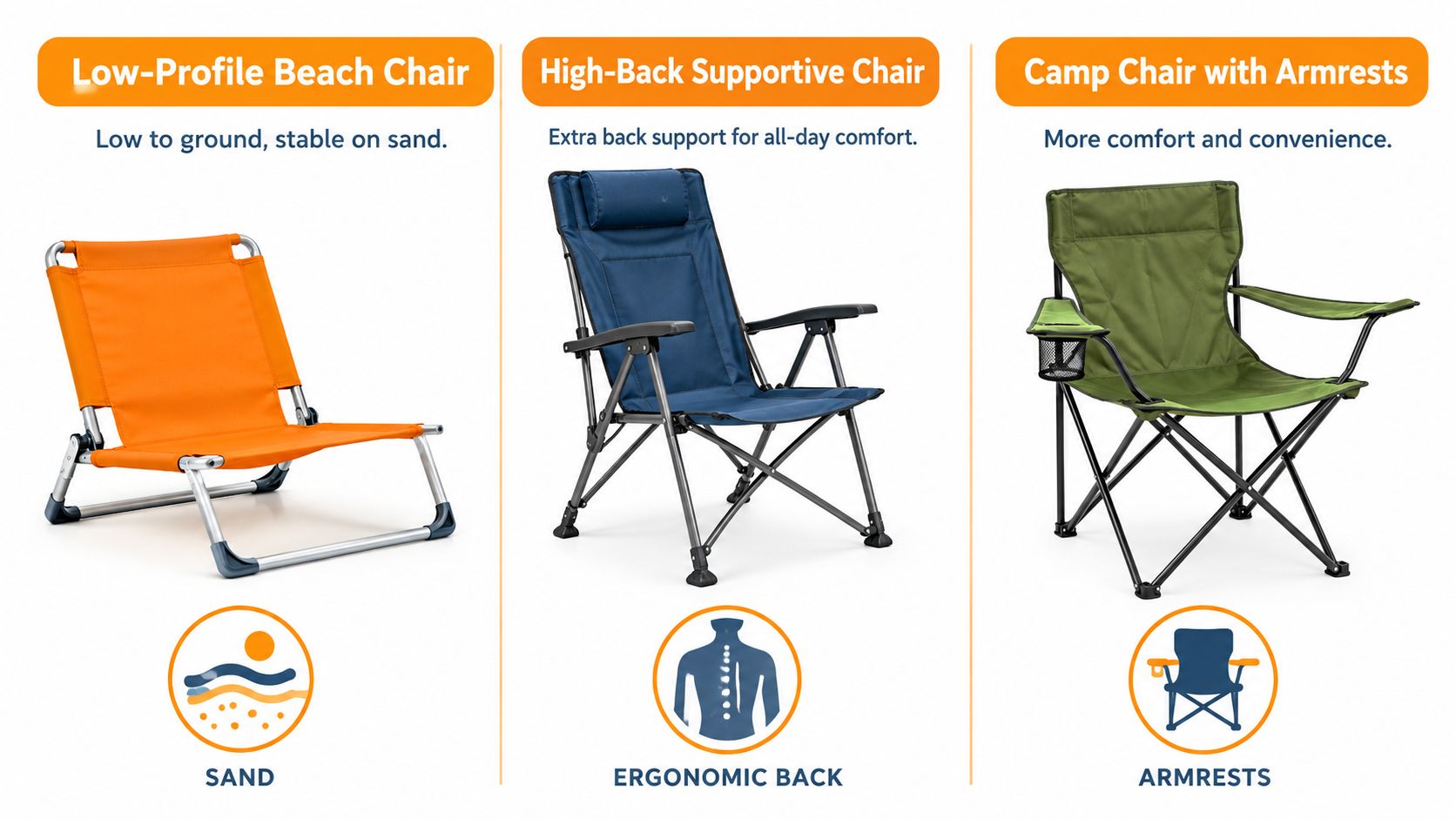
There are plenty of sub-variants, but most outdoor folding chair shopping falls into three useful categories. Low-profile beach chairs, high-back supportive chairs, and backpack-style hands-free chairs. Each wins in a different place, and each asks you to give something up.
Low-profile beach chairs
These sit close to the ground and usually feel more planted on sand. That lower center of gravity helps on uneven beach surfaces, and they're often easier to stretch out in near the shoreline.
The trade-off is getting up. If you've got stiff hips, cranky knees, or you're spending the day hopping up and down for snacks and sunscreen, low seating gets old fast.
High-back supportive chairs
This is the sideline chair category. Taller backs, more upright posture, and armrests that help you stand up cleanly. At youth soccer complexes, this style usually wins because it gives better field visibility and better support over a long day.
The downside is carry bulk. These are rarely the chairs you enjoy hand-carrying along with coolers and bags.
At tournament fields, visibility matters almost as much as cushion. Sitting too low behind a crowd turns a comfortable chair into a bad seat.
Backpack-style hands-free chairs
These are popular because they free up your hands. Shoulder straps can make a moderate carry feel shorter, especially when you're also wrangling umbrellas, toys, or a child's hand through a parking lot.
What they often sacrifice is structure. Some pack flatter and carry better than they sit.
Beach day with kids: Low-profile chairs make sense if you're close to the water and expect a lot of sand.
Three-game weekend: Supportive upright chairs usually earn their space.
Festival or market: Backpack-style chairs help when the walk in is the hard part.
If you're curious about where rocking designs fit into the mix, this breakdown of folding rocking lawn chairs is worth a look before you buy.
Materials That Determine Durability and Weather Resistance
A chair can feel fine for 10 minutes in a store and still be the wrong piece in a one-trip setup. Once you are loading a wagon, cooler, towels, and shade gear together, materials start deciding whether that chair earns its space or becomes the item you leave behind next time.
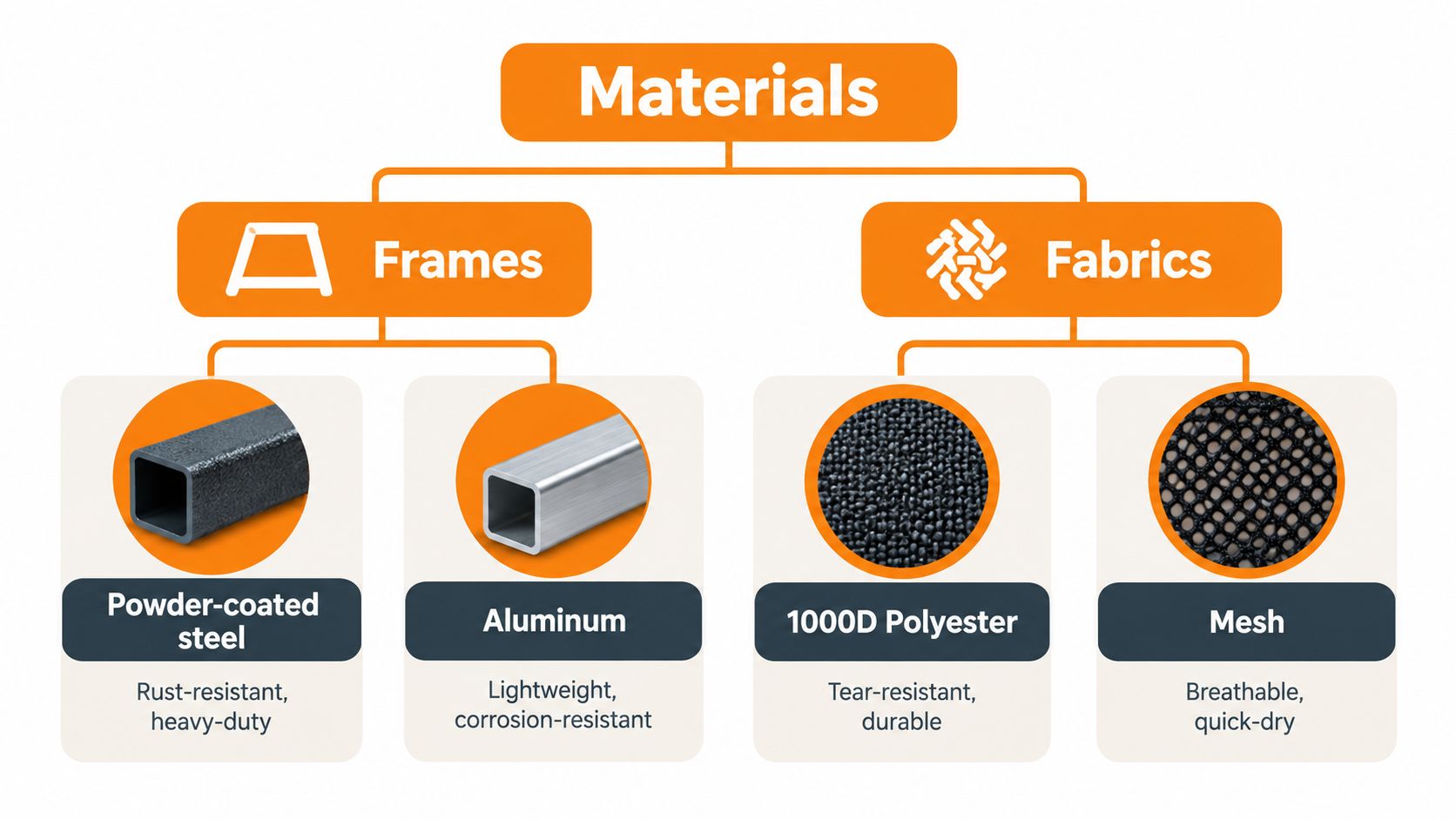
Steel versus aluminum
Frame material sets the basic trade-off. Steel-frame folding chairs generally provide the highest load-bearing headroom, while aluminum typically cuts chair weight by about 30 to 40 percent but usually caps dynamic capacity near 500 lb according to this review of folding chair load capacity and material trade-offs.
That difference matters more if you are trying to keep your whole kit to one haul with a wagon that can also serve as a bench. A heavier steel chair may sit better for a long sideline day, but two heavy chairs plus a loaded wagon add up fast on soft sand or across a sprawling sports complex. Aluminum makes more sense when carry strain is the problem you are solving.
Use this quick filter:
Powder-coated steel: Better for repeated use, bigger bodies, and rougher treatment in trunks, garages, and tournament weekends.
Aluminum: Better for beach days, longer walk-ins, and setups where total carry weight matters as much as seat feel.
Untreated or vague metal listings: Better skipped. If a product page is fuzzy about the frame, it is usually hiding a weak point.
What weather actually does to chairs
Outdoor folding chairs age at the joints first, the coating second, and the fabric whenever they are stored damp or left in hard sun.
Industry references note testing for outdoor weathering, impact, static load, rear-leg stress, cyclic fatigue around 10,000 open-close cycles, and stability checks in order to evaluate outdoor folding chairs for public or outdoor use, as outlined in this summary of ASTM-style folding chair performance factors. That is why I pay more attention to hinge design, leg bracing, and finish quality than to a big rating printed on a hang tag.
Salt air speeds up corrosion. Wet grass attacks hardware. Sand works into pivots and starts the grinding that turns a smooth folding chair into a squeaky, stubborn one.
Fabric and hardware details that matter
A lot of chairs die from the seat before the frame quits.
One independent buying guide says powder-coated steel frames are the key durability separator, with quality chairs lasting about 3 to 5 years under regular use, while cheap untreated models may fail in 1 to 2 seasons. It also notes that fabric often wears out before the frame, especially under UV or damp storage, as covered in this guide to folding chair durability and lifespan.
Look for these specifics:
Powder-coated steel: Helps resist rust after beach air, sprinkler mist, or damp morning pack-outs.
1000D polyester: Usually holds seat tension longer and resists abrasion better than thinner fabric.
Mesh panels: Dry faster and vent heat better, which matters on hot bleachers and windless beaches.
Reinforced hinge geometry and solid rivets: Hold up better under constant folding, shifting, and push-offs when standing.
Replaceable feet or wide foot caps: Worth having if the chair will spend time on pavement, gravel, or abrasive boardwalk surfaces.
Comfort still matters here, because the tougher fabric is not always the softer fabric. Stiff, durable seats often break in slowly. Mesh feels cooler, but it can sag sooner if the paneling is poorly tensioned. This guide to comfortable outdoor seating is a useful companion if you are balancing long-day comfort against material life.
A quick visual can help if you're comparing frame choices and seat fabrics side by side.
Weight Packability and Load Capacity Without the Guesswork
Most buyers fixate on one number, usually weight capacity, and miss the more important question. How does the chair behave when a real person drops into it, leans sideways, or pushes off the armrests to stand?
Static and dynamic load are not the same thing
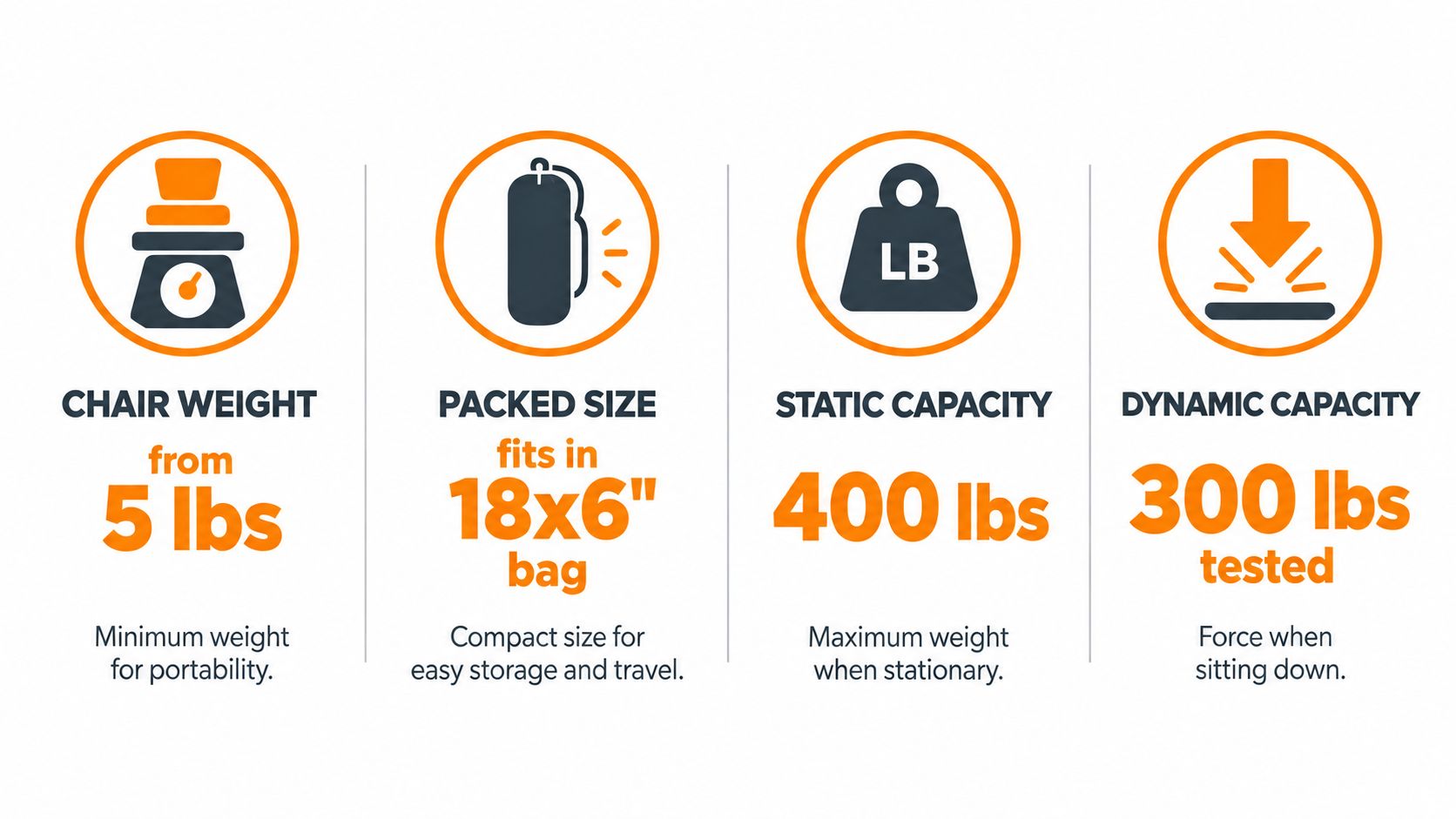
Static capacity is what a chair supports while motionless. Dynamic capacity has to absorb the force of sitting down, leaning, shifting, and standing up. That distinction is one of the most useful filters when you're comparing chairs that look similar on a product page.
A broad consumer benchmark helps anchor expectations. Standard folding garden or outdoor chairs commonly land in the 220 to 330 lb range, while heavy-duty event chairs can be rated as high as 800 to 900 lb, according to this overview of folding garden chair weight capacities.
The benchmark I actually trust
A useful reference point comes from seating standards. ANSI/BIFMA X5.1 testing uses a 275-pound body as the basis for its seating durability tests, which gives buyers a practical comparison marker when scanning load ratings, as noted in this summary of folding chair testing benchmarks.
That doesn't mean every outdoor folding chair with a matching rating will feel equally solid. It means you've got a real-world baseline for sorting serious builds from vague listings.
Matching the chair to the person and the trip
Packability and capacity have to be judged together.
Short walk, longer sit: Choose the more supportive chair, even if it's heavier.
Long walk, shorter sit: Prioritize folded shape and carry ease.
Mixed group use: Buy to the heaviest likely user, not the average.
Beach plus extra gear: Let the transport system do more of the work.
A cheap but familiar example says a lot about entry-level expectations. A basic outdoor portable camping chair sold by a major retailer is rated to hold 225 pounds and includes a mesh cup holder pocket plus a travel bag, which shows the common feature set and baseline capacity of many starter chairs in this category. You can see that setup in this basic folding camping chair listing.
For larger users or tougher use, market guidance says quality folding chairs often support 250 to 400 pounds, and premium heavy-duty models can exceed 500 pounds, which is why the verified manufacturer limit matters more than frame style alone, as explained in this review of folding chair weight limits.
When you zoom out to the whole outing, a 500 lb capacity hauler with 2-in-1 seating and puncture-proof all-terrain wheels changes what “portable” really means. You don't have to force every item to be ultralight if the carry platform handles the load cleanly. If you want a smaller-seat strategy for tight packing, this look at small beach chairs helps sort the trade-offs.
Comfort Features That Matter for All Day Sitting
A chair can be strong enough and still feel awful by halftime. All-day comfort comes from posture, seat height, pressure points, and how often you need to get in and out.
The biggest mistake I see is people treating all folding chairs like they're interchangeable. They're not. A low slung beach chair can feel great for shoreline lounging and miserable at a lacrosse complex when you're standing up every few minutes.
Seat height changes everything
Independent guidance on folding lawn chairs warns that sitting too low can aggravate stiff hips and lower-back strain, especially during casual outdoor lounging. It recommends checking seat height, lumbar support, and taking periodic standing breaks instead of assuming every chair will feel the same, as detailed in this piece on folding lawn chairs and hip comfort.
That's especially relevant for:
Parents at sports complexes: You're up and down all day.
Grandparents and older adults: Low chairs can turn standing up into the hardest part of the outing.
Anglers and pier sitters: Long static sitting exposes weak lumbar support fast.
A chair that feels “relaxed” in a product photo can feel punishing after two hours if the seat is too low for your hips and knees.
Features worth paying for
Not every add-on matters. These usually do.
Armrests: They help when getting up. That matters more than people think.
Lumbar contour or firmer back tension: Better lower-back support over long sessions.
Cup holders and side pockets: Keeps the essentials close so you're not twisting or reaching constantly.
Breathable panels: More comfort in heat, especially on still afternoons.
A seat that stays level: Less sliding forward, less effort to hold posture.
What buyers often say after a long day
“The chair was fine for an hour, then I started shifting nonstop.”
Verified Reviewer takeaway: “I didn't realize how much seat height mattered until I used it at back-to-back games.”
“A cup holder sounds minor until your drink is tipping in the grass and you're balancing everything on your lap.”
Those reactions are common because comfort problems build slowly. The best test is simple. Sit all the way back, place your feet flat, and stand up without rocking hard forward. If that motion already feels awkward in the store or driveway, it won't improve after a full afternoon outside.
Best Use Cases and How to Pair Chairs With the Lounge Wagon
The test happens in the parking lot. If one person is carrying chairs, another has the cooler, and someone else is balancing towels, umbrellas, or team bags, the setup is already working too hard. A better plan starts with the one-trip system. Use the wagon as the main hauler and shared bench, then add standalone chairs only where they solve a real comfort problem.
Beach days and soft sand
Soft sand exposes bad packing decisions fast. A low beach chair may feel right at the shoreline, but carrying two or three of them by hand, plus the rest of the day's gear, is where the hassle starts.
A cleaner pairing usually looks like this:
One dedicated chair for the person who wants back support or a specific seat height
One wagon carrying the cooler, towels, shade, toys, and loose gear
One bench seat at base camp so every adult does not need a separate chair
Field complexes reward upright seating and fast resets. Parents and grandparents are standing up often, shifting fields, and squeezing into narrow sideline space. In that setting, one supportive folding chair paired with the wagon bench usually works better than hauling a full row of oversized chairs.
The trade-off is simple. Dedicated chairs give better personal comfort. The wagon bench cuts bulk, setup time, and the number of loose items to keep track of between games.
A 2-in-1 setup also helps when the load changes during the day. The wagon carries the team bag, drinks, snacks, and extra layers on the walk in. Once parked, it becomes seating instead of dead weight.
Festivals tailgates and trunk-space fights
Duplicate gear gets expensive in space, not just money. Chairs, wagon, side table, tote, and cooler can fill a trunk before the fun starts.
If the hauler also converts into a bench with cup holders and storage pockets, the smarter move is often to pack one compact backup chair instead of a chair for every person. Lounge Wagon fits that approach. It functions as a gear hauler first, then a two-person bench once you stop moving.
That setup is not perfect for every group. If everyone wants a reclined personal seat for hours, bring more chairs. If the goal is flexible seating with fewer trips, the wagon-bench setup earns its space.
When to leave the chair at home
Some outings do not justify extra seating.
Short beach or park stops
Crowded events where setup space is tight
Trips where kids claim the sand or grass and adults rotate through the bench
Any walk where reducing one bulky item makes the whole load easier
The best pairings come from being honest about who needs a dedicated chair. Once the wagon can haul the gear and serve as a bench, many groups can cut one or two chairs without giving up comfort.
Your One-Trip Plan to Haul More, Sit Better, and Stay Longer
You park at the far end of the lot, the sand is soft, and the day's gear list keeps growing. That is when chair choice stops being a catalog decision and becomes a one-trip decision.
The cleanest setup is usually a system, not a pile of separate seats. A dedicated chair still earns its place on some outings, especially for long sits or anyone who needs more back support. But once your hauler can convert into a bench, you can stop treating every person as a separate chair problem.
Use this filter before you load the car:
Pick the chair for the carry, not just the sit: Long walk in, go lighter and more compact. Short walk from the car, a heavier padded chair is easier to justify.
Match the seat to the surface: Low chairs work on sand. Standard-height chairs are easier for older adults and better on grass or pavement.
Let the wagon bench cover shared seating: If two people can use the bench comfortably, you may only need one backup chair instead of three or four separate seats.
Pack for your real sit time: A quick beach stop needs less chair than a full tournament day.
Watch total bulk, not just single-item weight: Two light chairs can still be more annoying to haul than one chair plus a bench-capable wagon.
That last point matters. In practice, the one-trip plan works best when each item does a clear job. The wagon handles the cooler, towels, bags, and loose gear on the walk in. Once parked, it becomes seating. The chair you bring should fill the gap the bench does not fill, usually extra lumbar support, a preferred seat height, or a personal seat for someone who will stay planted for hours.
A cleaner decision for your next outing
Run through these questions before you leave:
Who needs a dedicated chair for comfort
Who is fine rotating through a shared bench
How far the carry is from car to setup spot
Whether the ground will punish narrow feet or low seats
How much trunk space you want to spend on seating
The easiest gear to live with does more than one job and cuts one more trip.
That is the advantage of a one-trip setup. You spend less time hauling, fewer minutes setting up, and less energy keeping track of loose gear. Lounge Wagon fits that approach in a practical way by combining gear hauling with bench seating, which can let you bring fewer separate chairs without settling for the ground.
As noted earlier, the best setup depends on the outing. For all-day sideline use, one supportive chair plus a bench-capable hauler is often the sweet spot. For beach days with kids, the bench can handle quick sits while one low chair covers the person who wants to stay put longer. For tailgates or festivals, cutting even one bulky chair can free up more trunk space than people expect.
Build around the one-trip goal first. Then choose the chair that solves the comfort problem the wagon bench does not.
Choosing a selection results in a full page refresh.
This pad is perfect for kids or dogs to be comfortable inside the moving wagon, and very nice after you set everything up and want to sit for extra padding.
Having the umbrella this summer has been easy to use and a must to make sitting and watching the parade so nice when there isn't any shade. My dogs laid on the wagon padding and enjoyed the day without getting too hot. I enjoyed the shade too.