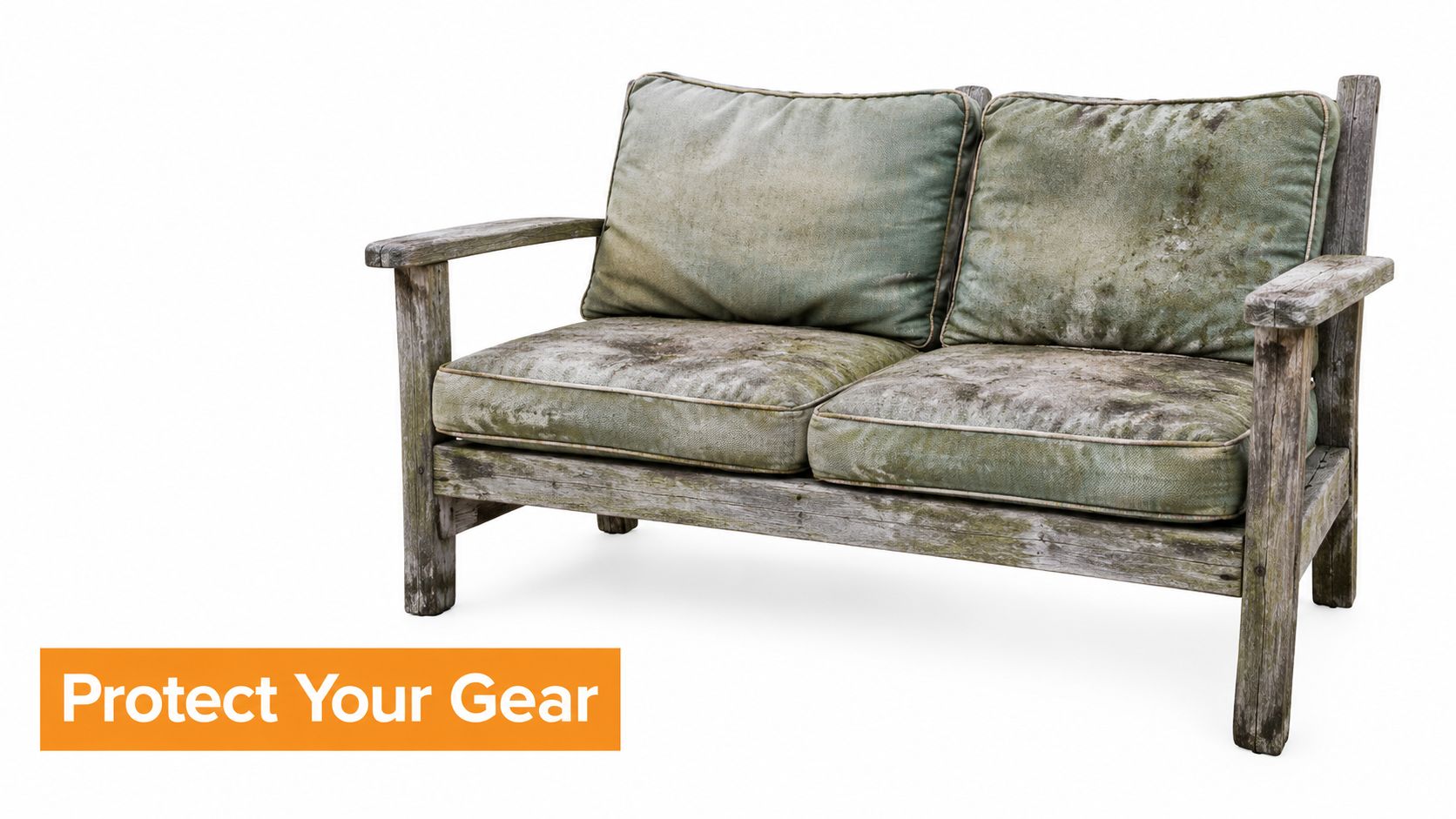
A two seater bench cover should do more than block rain. It needs to protect finish, padding, and frame shape, while still letting the bench dry out properly between uses. On real outdoor furniture, the right cover is the difference between a seat that stays clean for years and one that turns mildewed, sun-faded, and misshapen after a single season.
Outdoor seating gets abused fast. Cushions soak up UV, dust settles into seams, and one wet weekend can leave a bench smelling sour if moisture gets trapped under the wrong cover. A two seater bench cover is a practical shield for garden loveseats, patio benches, and two-adult seating modes like the Lounge Wagon, which converts from gear hauler to bench seat and still needs the same kind of protection when it's parked. If you want to compare options for keeping seating protected, start with how covered seating holds up over time and, if you're also shopping for related home textiles, find chair covers online can be a useful reference point.
Why Your Outdoor Seating Needs Proper Protection
A bench looks sturdy until you leave it exposed through a hard season. The wood weathers, the fabric dulls, and the padding starts holding onto stains that never seem to come out fully. I've seen good outdoor seating lose its appeal not because it broke, but because nobody protected the surfaces that people touch.
The market for covers exists because outdoor seating is a long-term investment, not a disposable accessory. One market estimate places the global automotive seat cover market at USD 7.8 billion in 2024, with growth to about USD 10.2 billion by 2030 at a 4.6% CAGR (source). That kind of scale matters because it shows how much buyers value preservation, comfort, and durability across seating categories, including bench-style applications.
Practical rule: if the seat has padding, stitching, or a finish you care about, it deserves a cover that fits and breathes, not just a plastic sheet that sheds rain.
Bench seating also has deep roots, which explains why the format keeps showing up in modern homes, patios, and utility gear. A historical review notes that bench seating appeared in the first petroleum-fueled vehicle in 1885, then evolved through layered upholstery materials before molded foam became standard in the 1960s (source). That lineage is why a modern two seater bench cover isn't a novelty, it's a continuation of a seating form that's been refined for comfort and protection for generations.
What matters in practice is simple:
Protect the finish: Covers keep dirt, bird droppings, and surface grime from settling into wood and fabric.
Protect the padding: UV and repeated wet-dry cycles break down comfort faster than people expect.
Protect the usability: A clean, covered seat is ready when guests arrive, which saves time and cleanup.
For a shared bench, that protection pays off quickly. It keeps the seat looking intentional instead of tired, and it preserves the kind of comfort people notice the moment they sit down.
Decoding Sizing and Fit for Two Seater Benches
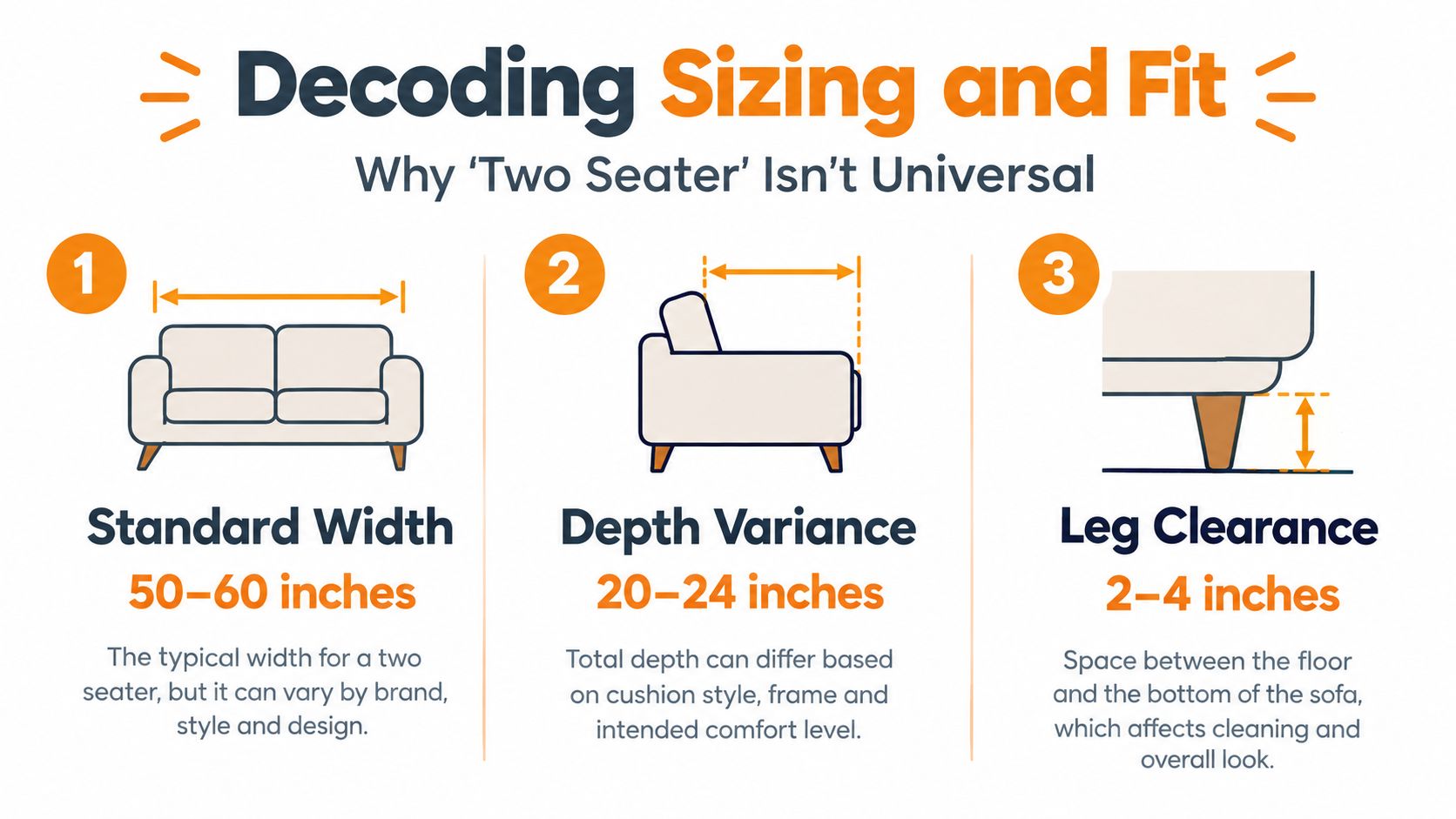
The biggest sizing mistake is assuming “two seater” means universal fit. It doesn't. A rectangular garden bench, a deep loveseat, and a wagon bench can all be labeled for two people while having very different back height, arm width, and seat depth. One retailer's listings show a 2-seater bench cover can measure 134 x 70 x 99 cm, 134 x 66 x 89 cm, or 132 x 66 x 81 cm depending on the seller (source).
Measure the bench the way the cover will sit
Start with the full outside dimensions, not just the cushion area. Measure width from the widest arm to arm point, then measure depth from the back edge to the front edge, and finally measure the highest point of the backrest. If the bench has thick arms or a curved back, those details change the fit more than the seat count does.
Professional seating guidance helps explain why the numbers matter. Comfortable bench seating often uses about 18 inches of seat height and roughly 24 inches of seat length per person (source). If your cover is cut too tightly around that profile, it'll pull at the seams and resist secure fastening. If it's oversized, it'll pool and rub in the wind.
A cover should follow the shape of the bench without fighting it. Tight enough to stay put, loose enough to avoid stress points.
The most useful fit checks are straightforward:
Account for high backs: A tall backrest needs extra height allowance so the hem doesn't ride up.
Measure arm depth: Thick armrests often cause the worst misfits because generic listings ignore them.
Check leg clearance: If the cover stops above the base, splash and grime still reach the lower frame.
Decide on drape versus fitted look: A little extra room works for casual patio use, while a cleaner hem usually calls for custom sizing.
The other hidden question is whether “two seater” means two adults comfortably or just two nominal positions. That distinction matters because a cover that fits a narrow, upright bench can look ridiculous on a wider, cushioned loveseat. For more bench-specific fit considerations, this outdoor bench guide is worth comparing against your actual measurements.
Material Showdown 600D vs 1000D and Marine Fabrics
Fabric choice decides how a cover behaves after months in the sun, wind, and dust. On everyday benches, 600D solution-dyed polyester is popular because the pigment runs through the fiber instead of sitting on the surface, which improves fade resistance and makes the fabric better suited to outdoor exposure. Manufacturers of outdoor bench covers commonly specify 600D, 100% solution-dyed polyester with PU or TPU coatings because that combination balances UV resistance and water resistance (source).
What changes as denier goes up
A heavier build usually means more resistance to abrasion and tearing. Bench cover ranges that use 1000D PVC-coated polyester or 600D marine-grade fabrics target tougher exposure, especially where wind, salt air, or rough handling are part of normal use (source). The trade-off is that heavier materials can feel stiffer, and they're not always the most forgiving if you want a softer, more casual drape.
Here's the practical comparison:
Material Type
Key Features
Best Environment
600D solution-dyed polyester
Good UV fade resistance, water resistance, lighter handling
General patios, mixed weather, casual home use
1000D PVC-coated polyester
Higher tear and abrasion resistance, more rigid feel
Busy spaces, rough handling, frequent movement
Marine-grade fabric
UV and antimicrobial protection, built for harsher exposure
Coastal areas, salt air, long sun exposure
The right pick depends on how hard the bench lives. A sheltered patio with occasional rain doesn't need the same armor as a bench left in full sun beside a pool deck. For a broader comparison of outdoor bench fabric choices, this bench guide is a useful companion read.
The Waterproof Myth and the Importance of Airflow
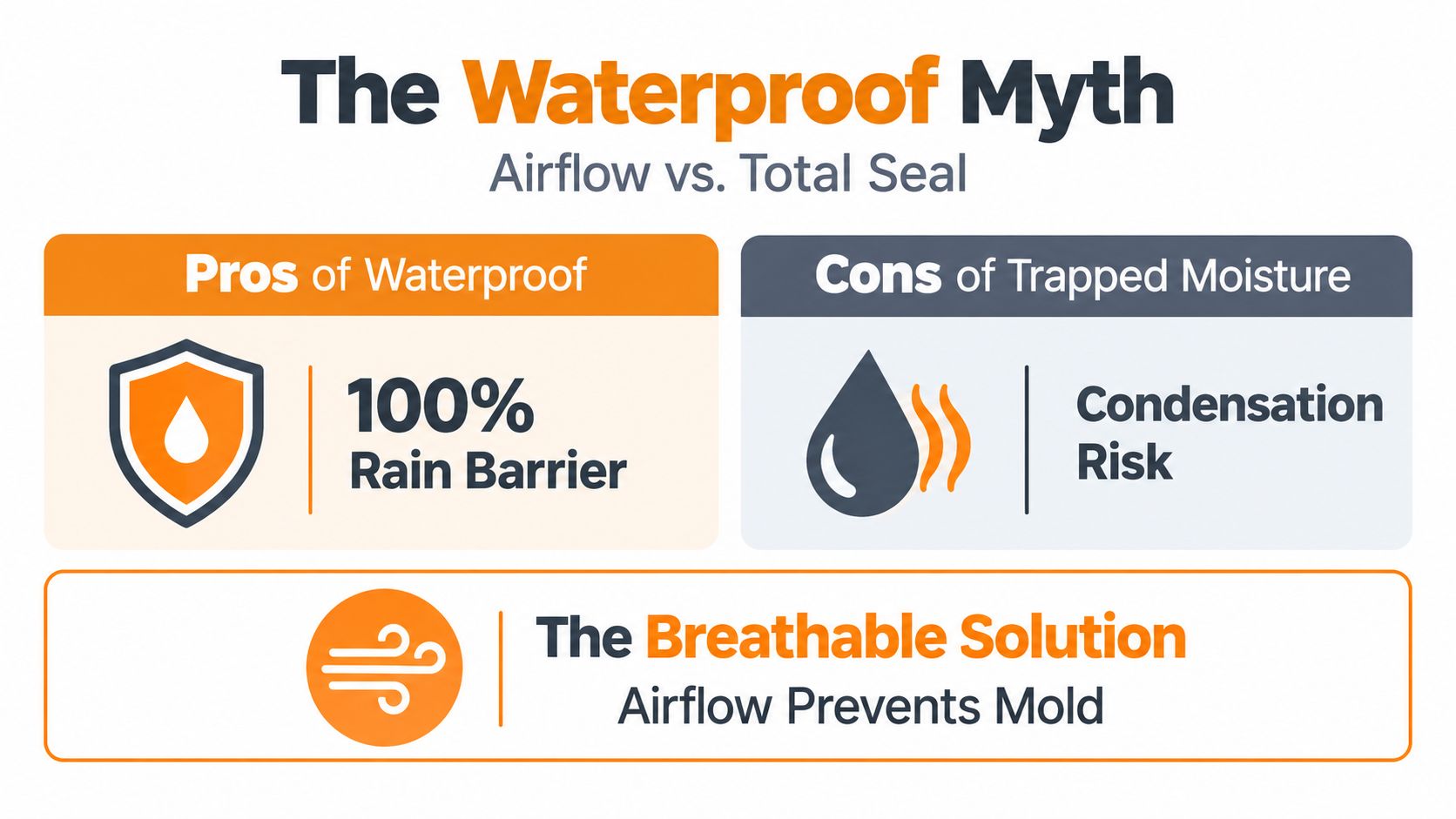
A cover that blocks every drop of water can still ruin the furniture underneath if it traps moisture. Condensation builds when a sealed cover sits over damp wood or cushions, and that trapped humidity can lead to sweating, odor, and mold buildup. Several listings explicitly warn that airflow and drying matter, one product highlights air vents to reduce ballooning and improve circulation, while another advises letting furniture dry completely before covering to prevent sweating, condensation, and mold buildup (source).
Why vents beat a total seal in real weather
Air vents matter because they let the cover breathe when the temperature shifts. Without them, wind can turn a loose cover into a sail, and moisture can linger underneath long after the rain stops. In humid summers and coastal climates, that matters more than a bold waterproof claim.
Practical rule: if a bench stays outdoors through damp mornings and warm afternoons, ventilation is part of protection, not a nice extra.
Many buyers get misled by marketing language. Waterproof sounds decisive, but waterproofing alone doesn't solve trapped condensation, and it doesn't dry a cushion that was already damp before the cover went on. Breathable construction, a proper fit, and a secure hem work together to protect wood, foam, and hardware.
The climate logic is easy to apply:
Rainy winters: prioritize drainage, venting, and a snug lower edge.
Humid summers: choose breathable fabric and make sure the bench dries before covering.
Coastal areas: look for airflow plus materials that handle repeated moisture exposure.
Freeze-thaw zones: avoid sealing in wet fabric that can degrade faster when temperatures swing.
For a deeper look at sealed-versus-breathable protection, this waterproof seat cover guide is a helpful reference point. The core takeaway is simple, airflow keeps a cover from becoming part of the problem.
Installation and Long-Term Care Routines
A good cover fails early when it's installed carelessly. If the fabric sits slack, wind will whip it, and loose edges will rub at the same spots until the coating wears thin. Start by centering the cover, then secure the drawstring or elastic hem before fastening buckles so the load is distributed evenly across the frame.
Daily fit habits that extend life
Use the fastening system the way it was designed. Drawstrings should be snug, not cinched so hard that they distort the hem, and buckles should lock without twisting the straps. If the cover has vents, keep them unobstructed, because folded fabric over a vent defeats the point.
For cleaning, gentle methods win. Mild soap and a soft brush remove grime without grinding at PU or TPU coatings, which is why a routine clean is safer than an aggressive seasonal scrub. If you want a good general reference for safe furniture care habits, how to clean outdoor furniture properly is worth a look alongside the care tag on your specific cover.
A solid off-season routine looks like this:
Brush off debris first: Leaves, grit, and pollen can scratch when dragged across wet fabric.
Wash lightly: Use mild soap and cool water, then rinse fully.
Dry completely: Both the bench and the cover need to be fully dry before storage.
Store loosely: Fold the cover only after it's dry, then place it in a breathable storage bag.
Never pack away a cover that feels even slightly damp. That's how mildew starts, especially in closed garages and sheds.
If you're maintaining a multi-use seating setup, this wagon maintenance guide is a smart companion for keeping moving parts and upholstery in good shape. Consistent care beats rescue cleaning every time, because coatings last longer when they're not abused by dirt and moisture.
Final Checklist for Your Next Purchase
The best purchase decision comes down to fit, fabric, and airflow. If one of those three is wrong, the cover will either wear out early or fail to protect what matters. A strong two seater bench cover should match your bench's real dimensions, use a fabric suited to your climate, and fasten securely without trapping moisture.
Use this quick shopping checklist:
Measure the actual bench: Width, depth, back height, and arm thickness all matter.
Choose the right fabric weight: Solution-dyed polyester works for many setups, while marine-grade and heavier denier builds suit tougher exposure.
Check for vents: They help with circulation and reduce ballooning in the wind.
Look at the fastening system: Drawstrings, buckles, and elastic hems should work together, not compete.
Confirm storage discipline: Dry first, store second, and never trap moisture inside the fold.
If you want more seating ideas that combine utility with comfort, browse pet product guides with an eye for how layered protection and durable materials are handled in adjacent categories. The same mindset applies here, where the goal is to protect the seat without making it stuffy or hard to use.
For anyone who's tired of ruined cushions, awkward fits, and covers that flap apart after one storm, the answer is a better-built seating solution and a smarter cover strategy. Upgrade the way you protect outdoor seating, choose gear that fits real use, and make every season easier to manage with products built for the elements.
Ready to stop fighting weather, mildew, and bad fits? Visit Lounge Wagon to see how a two-in-one bench and gear hauler fits into a smarter outdoor setup. If you're protecting seating, hauling gear, or trying to cut down on repeat trips, it's a practical place to start.
Choosing a selection results in a full page refresh.
This pad is perfect for kids or dogs to be comfortable inside the moving wagon, and very nice after you set everything up and want to sit for extra padding.
Having the umbrella this summer has been easy to use and a must to make sitting and watching the parade so nice when there isn't any shade. My dogs laid on the wagon padding and enjoyed the day without getting too hot. I enjoyed the shade too.