A folding camp bench earns its place when it combines stable support, sensible packed size, and transport. For beaches and sports sidelines, choose positive leg locks, a flat setup, and load guidance that distinguishes distributed weight from sudden center impact. A wagon can reduce trips by hauling equipment before becoming seating.
Last Updated: October 2026
Meta description: Choose a folding camp bench with better stability, easier transport, and practical beach or sideline performance. Compare options and simplify your next outing.
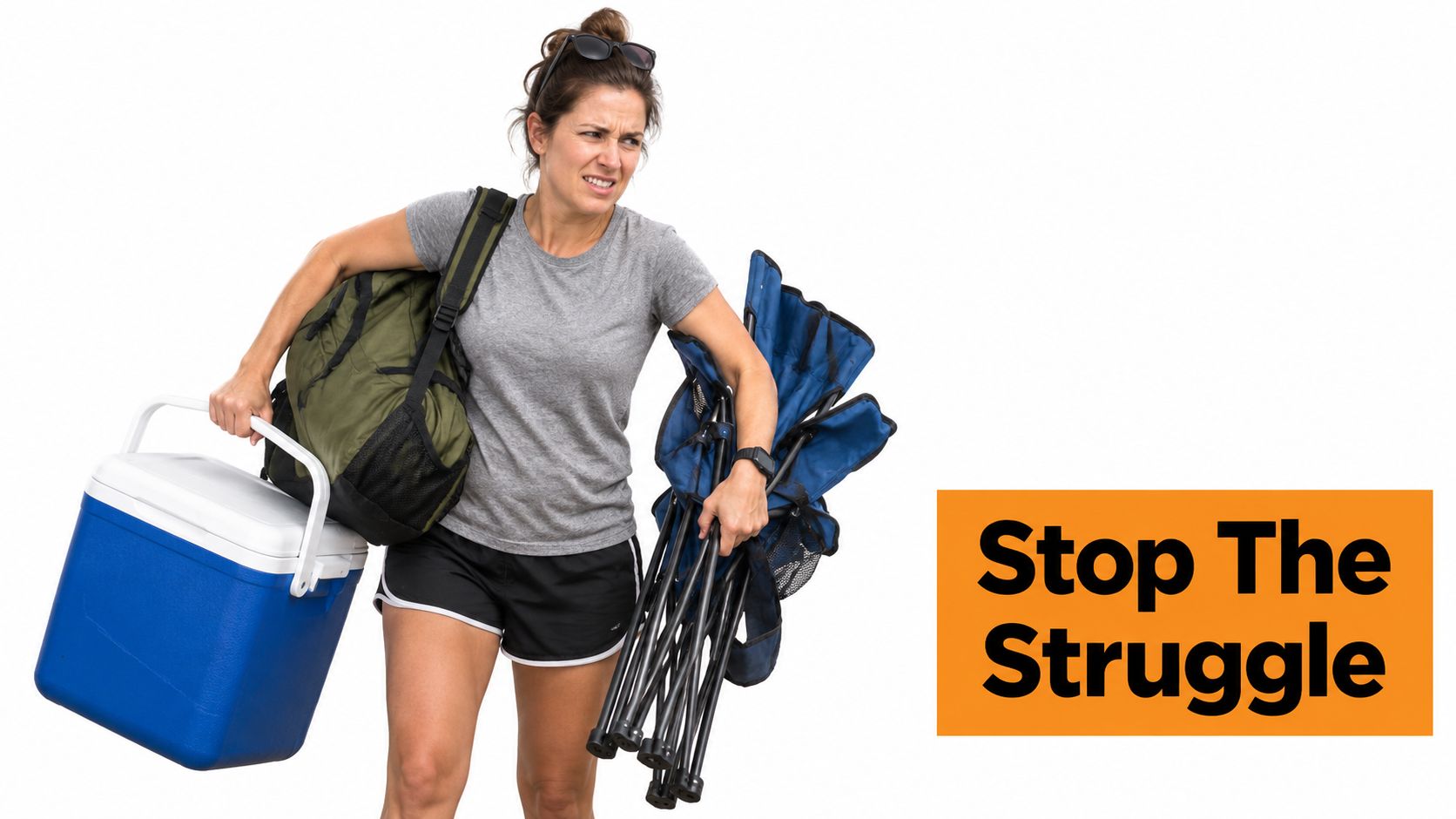
The car is parked, the field is already crowded, and you're carrying a cooler in one hand, a gear bag in the other, and a folding chair clenched awkwardly against your side. The umbrella is still in the trunk. So are the snacks, towels, and the second chair.
The Exhausting Three-Trip Walk
The first trip gets the cooler and the children to the sandy shoreline. The second brings the shade, toys, and sports bags. By the third, your back is tight, your view of the field is blocked by someone else's canopy, and the flimsy chair you carried has sunk into the ground.
That routine is why a folding camp bench should be judged as part of your outdoor logistics, not just as a place to sit. A good bench needs to pack efficiently, support more than one person, and work on the actual surface where you spend the day. Grass, gravel, mud, and soft sand expose weak designs quickly.
The “heavy-duty” wagon problem is familiar at beach access points. A cart may look substantial in a parking lot, yet its narrow wheels dig into soft sand and turn every step into a pull-and-stop struggle. A separate bench solves the seating problem but creates another item to carry, load, unfold, and find space for.
Practical rule: If your seating can't travel with the rest of your essential gear, it hasn't solved the whole problem.
A two-seat bench can be a sensible compact alternative to separate chairs. Product descriptions commonly place this format at 100 to 120 cm long and 25 to 30 cm deep, with two to three seats in one compact unit, according to folding bench and set guidance. For a solo angler, that may be unnecessary. For a sports parent managing a cooler, tent, and equipment bags, it can be the difference between one organized arrival and several exhausting walks.
Before buying, consider a practical plan for hauling heavy gear to the beach alone. The right solution combines load carrying, usable seating, and ground clearance instead of treating each need as a separate purchase.
Understanding Folding Bench Construction
A folding bench stays reliable when the frame, hinges, feet, and seat surface all work together. A thick seat panel does little if the legs flex, the locks feel loose, or the feet slide on wet grass. The weak point usually shows up where the bench meets the ground, or where weight lands in the middle.
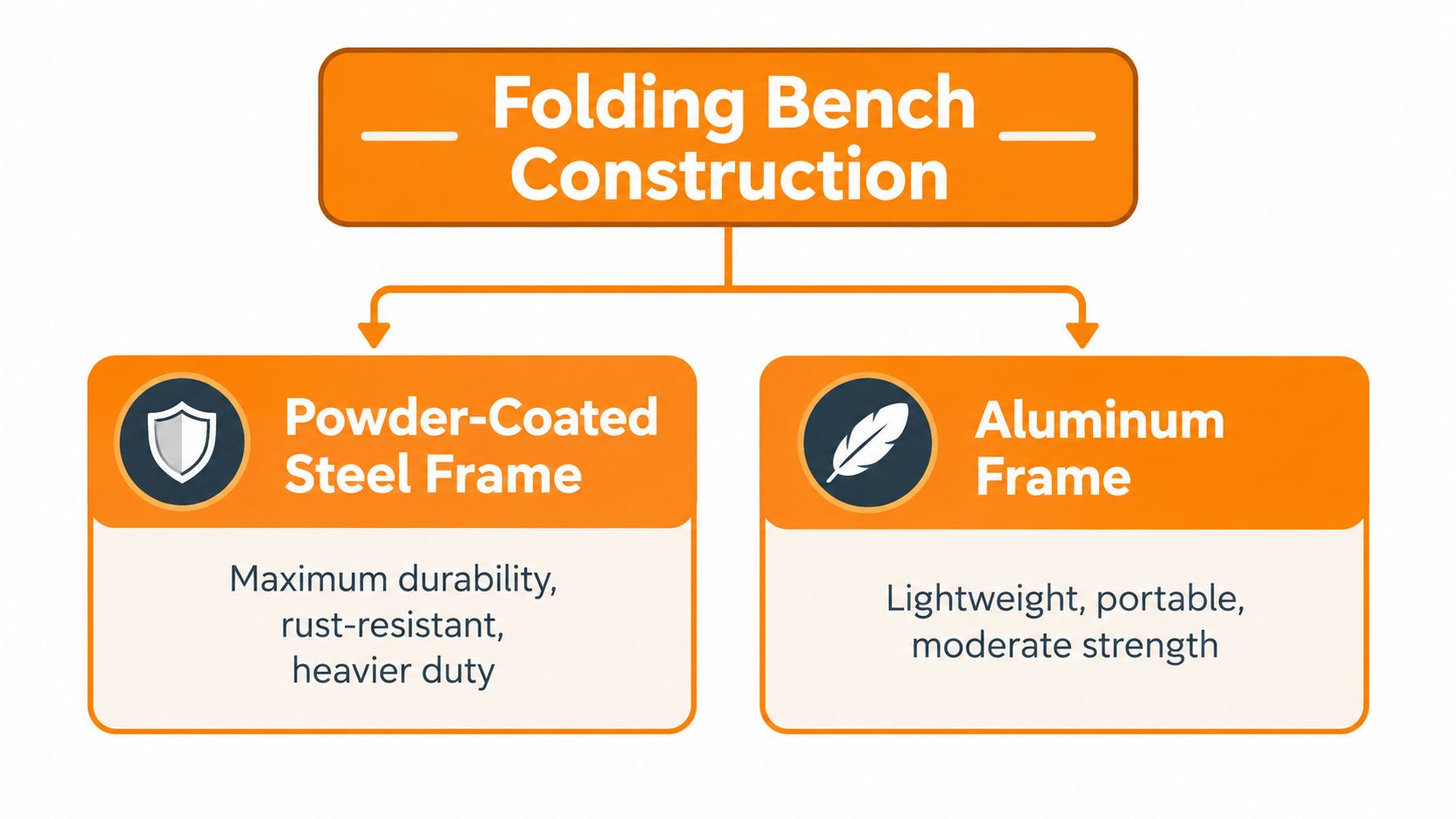
Powder-coated steel is the usual choice when stiffness and durability matter more than shaving off carry weight. Aluminum makes the frame easier to lift, but it still needs enough bracing to control side-to-side movement. Seat fabrics such as 1000D polyester can hold up well outdoors when they are properly supported, though fabric strength alone does not tell you whether the bench will feel steady under real use.
Static capacity isn't the whole story
A listed capacity describes a test condition, not every way people sit on the bench. One retail listing shows a folded size of 55 x 10 x 4.5 inches and a maximum capacity of 800 pounds, while seating two to three people, as shown in this folding bench retail listing. That figure matters, but it does not mean the bench should take bouncing, a hard drop onto one end, or someone standing on the seat.
Distributed static load is easier on the frame than a sudden center hit. Two adults sitting down at different moments create a different stress pattern from two adults landing on the middle at once. A product page that lists only a maximum capacity leaves out the part parents care about on a sideline, whether the bench stays planted when weight shifts fast.
Look for these construction details:
-
Positive leg locks: The legs should stay locked during use, not depend on friction alone.
-
Braced joints: Cross-support helps reduce side-to-side wobble, especially on hard ground.
-
Protected hinges: Folding hardware should not leave obvious pinch points during setup.
-
Broad feet: Larger contact areas are less likely to sink or slip on soft ground.
-
Supported seat edges: A reinforced perimeter helps prevent flexing when someone sits near the end.
A folding table and bench set can also cut down the number of separate items a family carries. For a compact setup that works alongside bench seating, see the aluminum folding camping table guide, then check whether the table height and packed shape match the bench you are considering.
Single Seats vs. Multi-Person Benches
A folding seat can save space and still create a bad sideline if the load is wrong. That is the actual choice here. One seat is lighter and easier to grab. A bench gives shared seating, but it asks for more care when weight shifts to the middle or one end.
For a solo stop, a stool or single chair does the job fast. For a long game or a campsite where two parents need to stay put, a bench keeps everyone in one spot without dragging out extra chairs. The trade-off is simple, though. A bench takes more room in the car, needs more careful placement on soft ground, and can feel awkward if the area is tight.
As noted earlier, the common folding bench format usually fits two to three people, while some team-style options stretch to four and add carry features or side storage. That range is why the category works better than the old picnic-only image suggests. It covers family sideline use, shared camp seating, and short breaks where one person does not want to sit alone.
Seating Options Comparison
| Feature |
Single Stool |
Multi-Person Bench |
| Seating |
One person |
Usually two to three people |
| Packed size |
Small and easy to place in a day bag |
Longer, but still folds for vehicle storage |
| Transport |
Simple to carry by hand |
Better when carried with a wagon or shared gear load |
| Best use |
Fishing breaks, cooking, short rests |
Sidelines, campsites, beaches, and shared viewing |
| Load pattern |
One occupant centered on one seat |
Multiple occupants, requiring careful weight distribution |
| Main trade-off |
Limited comfort and no shared seating |
More useful capacity, but greater stability demands |
The load pattern matters more than the seat count. A bench can look roomy and still feel unstable if everyone sits down at once or crowds the middle. A single seat avoids that problem because the weight stays centered and predictable.
For a family, the bench wins when everyone wants the same view and nobody wants to stand around carrying extra gear. For a solo outing, it may be more seat than you need. The right answer depends on whether the seat stays in one place or gets moved from the car to the field, then back again after the last inning.
A wagon that converts from a gear carrier into a 2-in-1 seat can remove the need to pack a separate bench. The key question is not whether that idea sounds clever. It is whether the wagon still rolls well when loaded and gives adults a stable place to sit after arrival. The folding camp chair with table guide gives another useful way to compare seating and outdoor organization.
Stability and Safety Checklist
A stable bench starts with setup, not the product photograph. Uneven ground, soft soil, a loose hinge, or a person sitting on the edge can change the load dramatically.
Set the bench on the flattest practical surface before anyone sits down. Open every leg fully, engage each lock, and inspect the contact points. Guidance on folding bench safety highlights positive locking hinges, flat-surface setup, and pinch-point control as important safeguards, while unstable bases and exposed hardware can increase tip-over or injury risk according to folding bench safety guidance.
A field test before the first long day
Use this sequence at home, preferably with the same type of surface you'll encounter outdoors:
-
Check the open position. Confirm that the seat is level and that every leg touches the ground. If one foot rocks, don't assume a person's weight will correct it.
-
Test the locks. Apply controlled pressure near each hinge and leg joint. A locked mechanism should stay engaged without slipping or folding.
-
Check the ends. Apply gradual downward pressure near each end. End-load stability matters because people rarely sit with perfect weight distribution.
-
Observe the center. Press down in the middle, then release. Excessive flex, lateral movement, or a sharp hinge noise deserves attention.
-
Repeat after folding. Dirt and sand can interfere with a latch. Inspect the mechanism each time you reopen the bench.
A capacity label describes a test condition. It doesn't replace careful setup or responsible use.
The most overlooked distinction is between distributed static load and dynamic load. Recent coverage of folding camping furniture notes that a two-seat bench should generally support 200 to 300 kilograms of distributed static load, while center loading and sudden sit-down forces represent different failure modes, as discussed in portable camping furniture stability coverage. Don't let children stand on the edge, and don't treat a high capacity rating as approval for jumping or bouncing.
Choosing the Right Gear for Your Sport
A beach family and a tournament parent may both search for a folding camp bench, but they face different ground and transport problems.
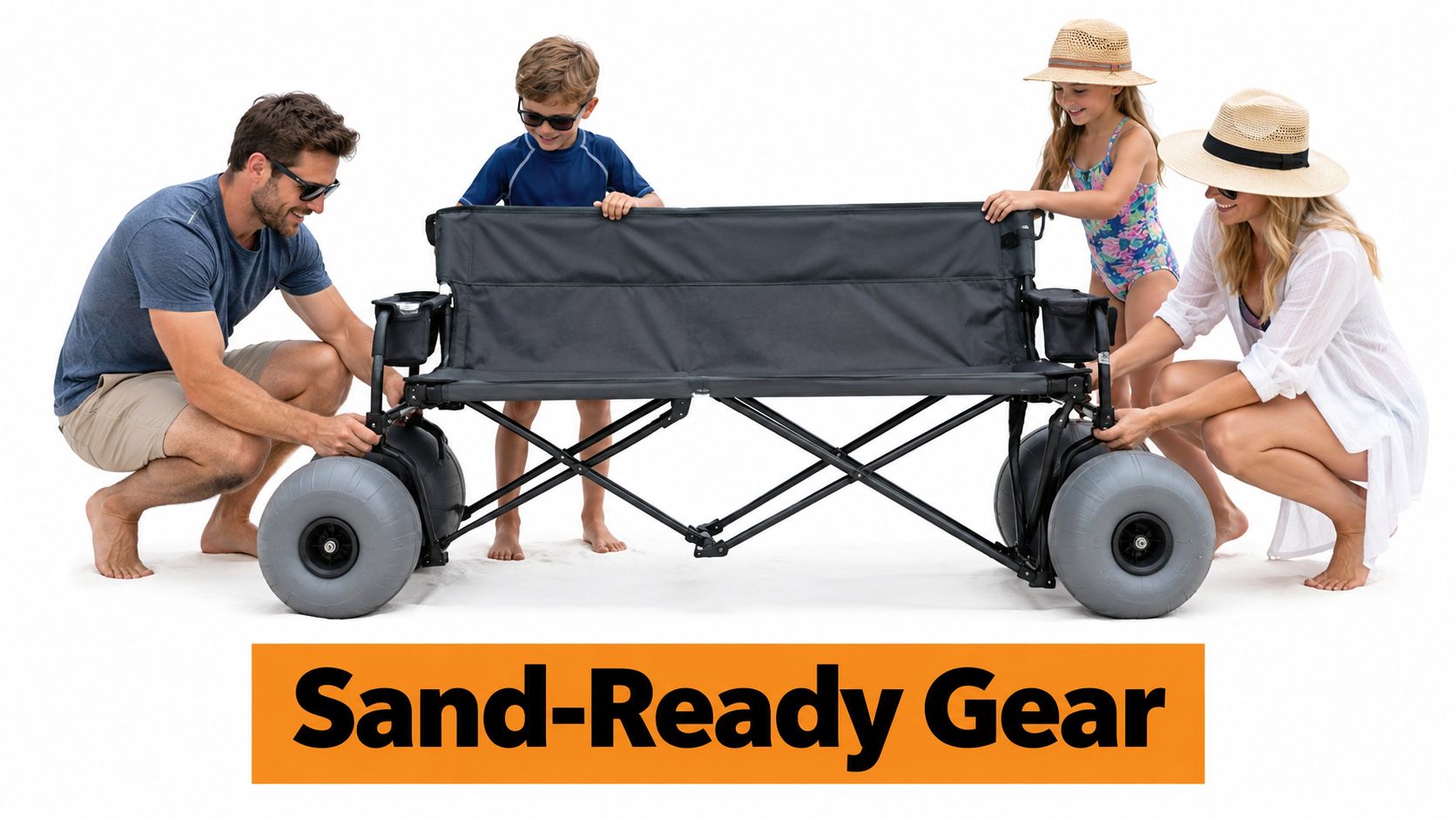
The Sand-Sovereign needs wide, low-pressure wheels and a seating system that doesn't have to be carried separately. True all-terrain carts commonly use 7- to 12-inch low-pressure balloon tires, which can reduce ground penetration by 40% to 60% compared with standard 4-inch wheels, according to all-terrain beach cart guidance. Another source identifies tires 9 inches or wider as suitable for deep sand. The benefit is practical, less digging and less stopping when the cart carries umbrellas, towels, toys, and refreshments.
Match the seat to the outing
For the Sideline Elite, the priorities change. A tournament setup needs space for a cooler, tent, balls, bags, and personal items, followed by a seat that keeps parents off wet grass between matches. Integrated cup holders and storage pockets reduce the small clutter that otherwise spreads around the sideline.
A dual-purpose option from Lounge Wagon uses a reinforced steel frame, 500 lb capacity, 10-inch puncture-proof wheels, and 2-in-1 seating that converts the loaded wagon into a padded seat for two adults. Those features are presented on the sideline survival gear guide, where the relevant benefit is fewer separate pieces of equipment to carry.
Other users have different priorities:
-
Festival visitors: Need a compact home base that carries blankets and supplies before providing a raised seat.
-
Grandparents with children: Benefit from a seat that avoids carrying a separate chair and is easier to access than ground-level seating.
-
Mobile anglers: Need room for tackle and rods without sacrificing a place to rest.
-
Event volunteers: Need one transport tool that can move supplies across grass or gravel and provide downtime seating.
For deep sand, wheel design matters more than a capacity label. For a sports complex, conversion speed and storage organization may matter more than minimum packed size. The best choice is the one that removes the extra item you usually forget, drag, or make a second trip to retrieve.
Care, Maintenance, and Final Thoughts
Outdoor seating lasts longer when sand, salt, mud, and moisture don't remain trapped in the frame or fabric. After a beach day, brush loose sand from hinges, wheel mounts, seams, and the underside of the seat before folding anything.
Use a damp cloth for routine cleaning, then allow the fabric and frame to dry completely. Salt residue deserves particular attention because it can remain on metal surfaces even after the visible grit is gone.
A simple post-outing routine
-
Shake it out: Remove sand and grass before folding so debris doesn't grind into moving parts.
-
Wipe the frame: Use clean water and a soft cloth on metal, hinges, and handles.
-
Inspect the locks: Confirm that pins, latches, and hinges move freely without sticking.
-
Dry the fabric: Leave the seat open until it has fully dried to reduce mildew risk.
-
Store it properly: Keep the folded bench or wagon in a dry, shaded place rather than a damp shed or wet vehicle.
A folding camp bench should also be checked before every busy event. Look for stretched fabric, bent hardware, loose fasteners, damaged wheels, or feet that no longer sit evenly. If the frame rocks when empty, don't wait until two adults are seated to investigate.
For equipment that sees repeated field, beach, and campsite use, follow the wagon maintenance guide. The broader lesson is simple: inspect the parts that carry the load, clean the areas that collect grit, and store the gear dry.
A conventional bench remains a strong choice when the seating stays in one location. A 2-in-1 seating system makes more sense when the same item needs to carry equipment first and support adults afterward. In that use case, the 500 lb capacity matters because the carrier has to handle the day's gear before it becomes a seat, not because a rating replaces stable setup and sensible loading.
Lounge Wagon combines a high-capacity gear hauler with padded 2-in-1 seating, 500 lb capacity, and all-terrain wheels for beach days, tournaments, and campsites. Visit Lounge Wagon to replace the two-trip routine with one organized walk and a comfortable place to sit.


