TL;DR: The best tailgate gear in 2026 earns trunk space by doing more than one job. A Lounge Wagon hauls coolers, grills, shade gear, and supplies, then converts into a 2-in-1 seat. With a 500 lb capacity, 10-inch puncture-proof wheels, and integrated storage, it turns a fragmented setup into a practical one-trip system.
Last Updated: September 2026
The exhausting part of tailgating often happens before the first burger hits the grill. You make repeated walks from the SUV, drag a cooler over rough pavement, carry folding chairs under one arm, and still discover the canopy poles are buried beneath everything else. By the time the setup is ready, your back is tired and your best parking-lot energy is gone.
That's why the Lounge Wagon belongs in a serious tailgate plan. It combines a heavy-duty gear hauler with a 2-in-1 seating function, giving you one product that moves the load and creates a place to recover. You can view the Lounge Wagon and decide whether replacing separate hauling and seating gear makes sense for your vehicle.
The Tailgate Lot Is a Storage Problem First
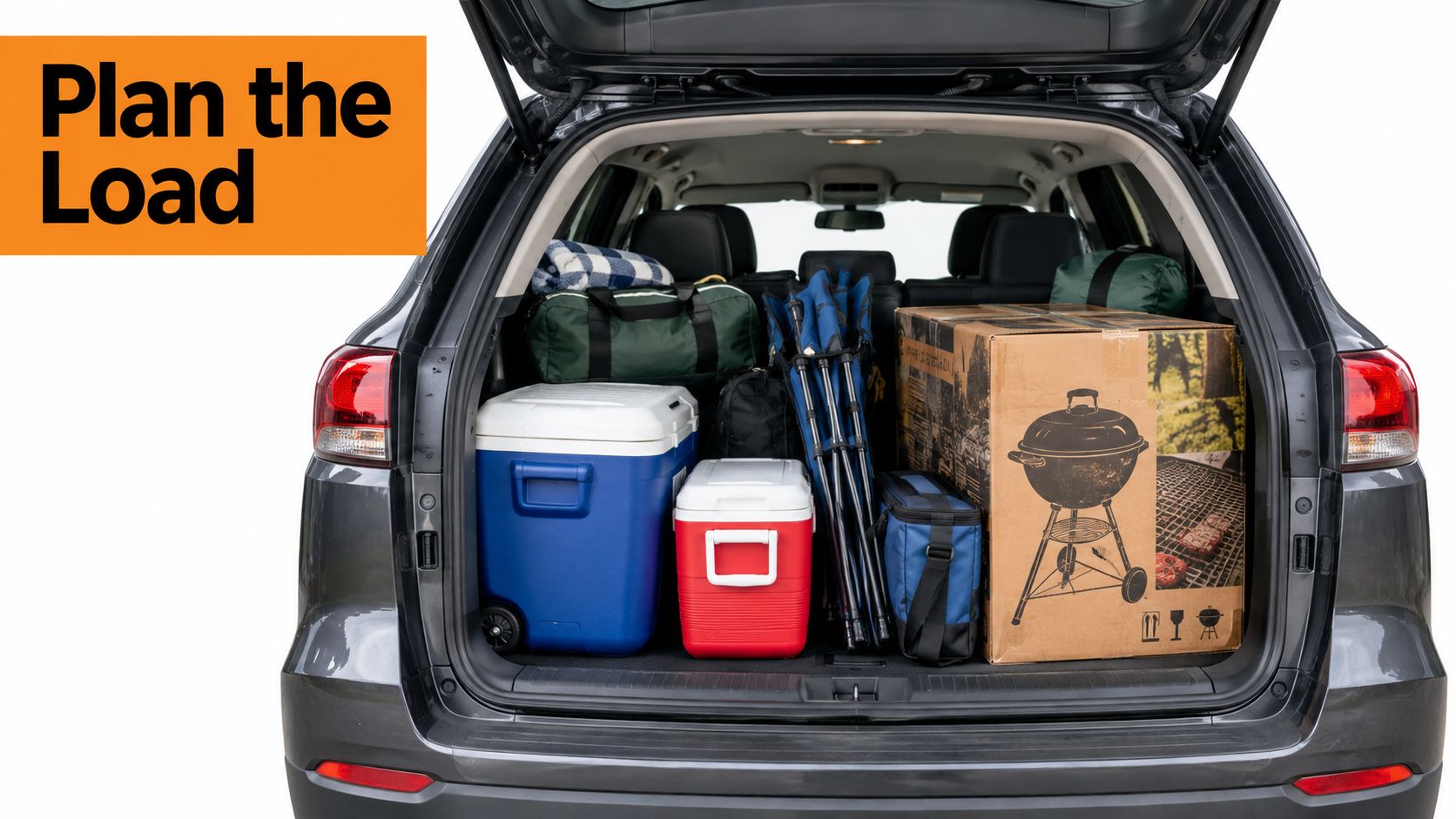
Saturday morning exposes the limit of an SUV: cargo space disappears long before the parking spot becomes a gathering place. The cooler takes the footwell, the grill box consumes the cargo floor, and chair bags get wedged beside passengers. Canopy poles, food bins, a folding table, and a speaker compete for whatever space remains.
The result is more than a crowded trunk. Cargo behind the third row becomes difficult to reach, several products sit unused outside game days, and each arrival repeats the same slow routine: unload, unfold, assemble, and walk back for what did not fit. The tailgate becomes a storage puzzle before anyone has a place to sit.
Why one-job products create clutter
A standard wagon hauls. A folding bench seats. A cooler stores food and drinks, while a side table holds plates and condiments. Each item can work well alone, yet the combined footprint leaves less room for the people and supplies that make the tailgate worthwhile.
Good gear earns its place through repeated use across a season. Chairs, coolers, grills, food storage, shade, and transport address recurring needs. Decorative flags and novelty serving pieces can add personality, but they should not displace equipment that carries, supports, or protects the group.
Practical rule: If a product cannot help with hauling, seating, cooking, cooling, shade, or cleanup, its cargo footprint needs a clear justification before it enters the SUV.
The foldable flatbed cart guide supports a simple buying principle: match transport gear to the load and terrain rather than adding another object to the trunk. That applies to a family heading to a Florida Gulf Coast stadium lot, a tournament parent visiting youth soccer complexes, and a group setting up beside a college field. The strongest setup uses fewer separate pieces and keeps the remaining cargo accessible.
Tailgating is a recurring outing, so repeated loading, unloading, sitting, and comfort should guide purchases more than novelty. The figures in tailgating behavior and spending facts reinforce that practical standard.
The storage problem comes first. Count the bulky items, identify what blocks access, and judge every product by how often it earns its space. The result is a cargo puzzle that rewards fewer, more versatile pieces, a setup question the following sections evaluate by category.
What Actually Counts as Best Tailgate Gear in 2026
A full cooler, grill, canopy, chairs, and food bin can fill an SUV before the drive begins. The best tailgate gear earns its space by solving a recurring game-day problem, then doing more than one job when possible. Start with the cargo plan, not the feature list.
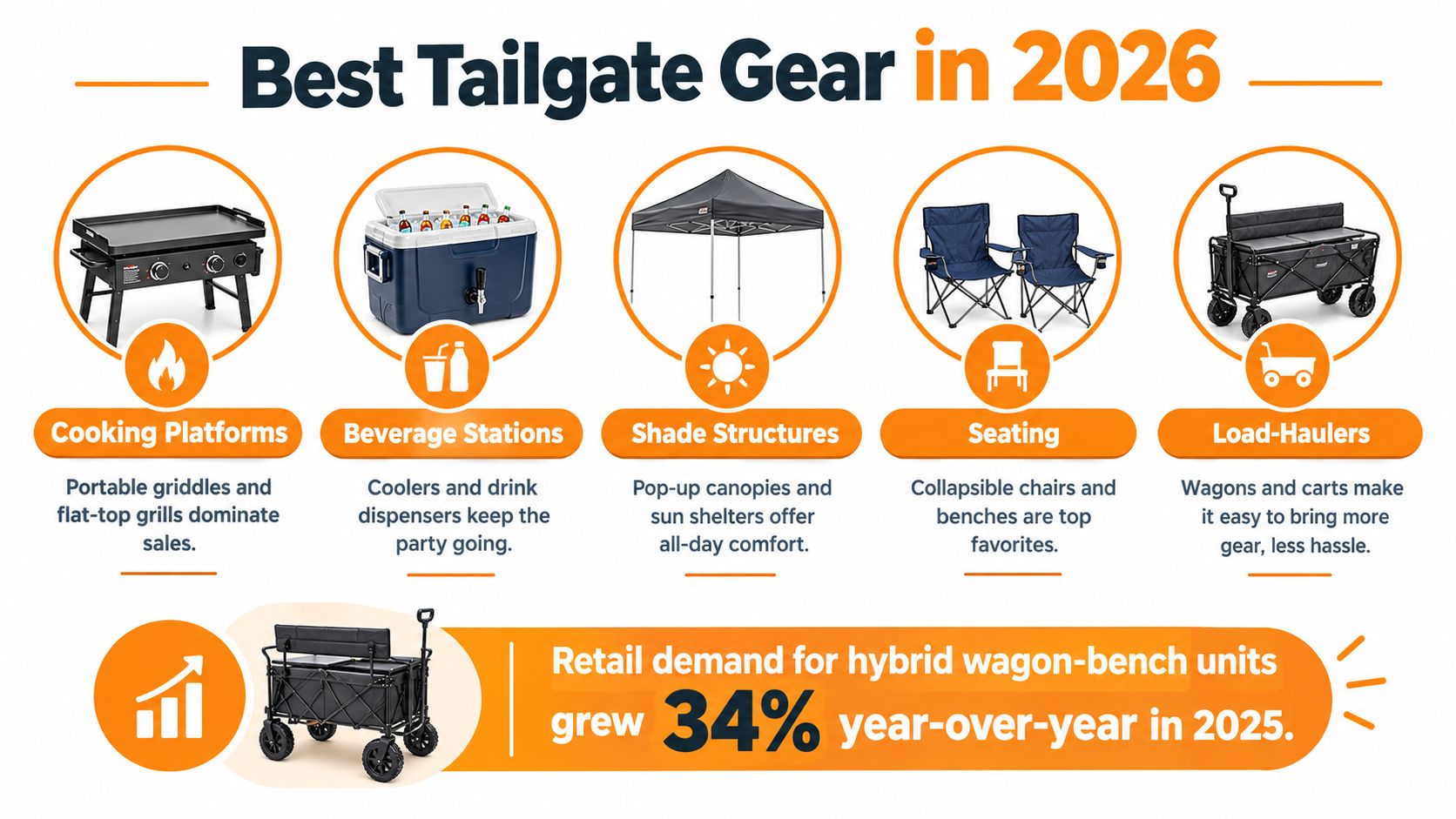
A dependable setup covers five functional categories:
-
Cooking platforms: Portable grills, griddles, and prep surfaces turn a parking space into a working kitchen.
-
Beverage stations: Coolers, insulated totes, and drink storage keep refreshments accessible without sending people back to the vehicle.
-
Shade structures: Canopies, umbrellas, and other sun protection make exposed asphalt easier to tolerate.
-
Seating: Chairs and benches provide a place to recover between activities, meals, and kickoff.
-
Load-haulers: Folding wagons and carts move heavy, awkward items that are difficult to carry by hand.
The core basket remains practical
The Weber GrillWatch survey reported that food was essential for 78% of tailgaters, a grill for 76%, chairs for 74%, and a cooler for 71%. It also found that portable grills were the preferred away-from-home choice for 63%, while 31% of grill owners still brought a full-size grill. See the survey details in Weber's tailgating gear findings.
Those figures reflect the packing problem. A grill cooks, a cooler protects food and drinks, and seating gives the group a place to settle. Transport gear must move all three without blocking access to the rest of the vehicle.
That is why the Lounge Wagon has a logical role. It does not replace the grill or cooler. Its hybrid wagon and bench design combines hauling with seating, reducing the number of separate pieces competing for trunk space.
What deserves trunk space
Use this checklist before loading:
-
A portable grill or griddle earns space because it supports the meal.
-
A cooler suited to the group size earns space because cold storage remains useful throughout the day.
-
A canopy or sun solution earns space when the lot offers little protection.
-
A wagon with suitable wheels earns space when the route includes pavement, grass, gravel, or sand.
-
A seat that also carries gear earns space because it serves two jobs instead of one.
Tailgate spending supports a practical buying position. Durable, multipurpose equipment deserves priority over decorations that serve one season or one photo. Choose products that can handle repeated loading, unloading, meals, and cleanup.
For gift planning, practical tailgate party presents can help identify useful accessories without turning the trunk into a novelty display. Use the tailgate packing checklist before you pack. The final test is direct: the product should survive the route, carry the load, fit the vehicle, or provide a second use.
Selection Criteria That Separate Winners From Novelties
A wagon can look rugged in a product photo and still struggle on a real parking-lot route. I judge tailgate equipment by what happens after the cooler is full, the pavement turns uneven, and the setup has to be packed again at the end of the night.
Wheel geometry comes first. Independent testing and expert reviews report that wider, larger-diameter wheels spread weight over a larger contact patch, reducing sinkage on soft surfaces. Wheels below 6 inches tend to bog down in soft sand, 7 to 8 inches work better on firmer sand, and 9 inches or larger provide more reliable performance on soft, dry sand. Deep powder may require 12 to 13-inch balloon-style pneumatic tires, according to beach wagon wheel guidance.
A practical scorecard
| Criterion |
What It Measures |
Benchmark to Beat |
| Wheel geometry |
Traction and rolling resistance across mixed terrain |
At least 7-inch all-terrain wheels for mixed surfaces |
| Load class |
Ability to carry a filled cooler, grill, food, and shade gear |
Choose a rated capacity matched to the full load |
| Frame construction |
Resistance to flexing and fatigue |
Reinforced steel or an equivalently rigid frame |
| Folded footprint |
Whether the wagon fits the cargo area |
Flat-folding geometry that doesn't consume unnecessary depth |
| Seating function |
Whether the product serves a second role |
Stable, comfortable seating without a separate chair unit |
A 2026 tailgating wagon guide reports that folding wagons commonly hold between 150 and 660 pounds, depending on the model, and recommends all-terrain wheels of at least 7 inches for mixed surfaces. Those specifications appear in folding wagon selection guidance. The number on the label matters only when the frame, axle, wheel design, and handle can manage the same working conditions.
Why generic wagons miss the brief
Many folding wagons handle pavement acceptably but struggle on sand. Others offer beach-cart wheels that feel awkward across asphalt, while lighter frames flex when loaded with a cooler, grill, and table. Some fold neatly but provide no useful place to sit, forcing you to carry a separate bench or chairs.
The sports wagon design analysis is helpful because it treats the wagon as field equipment, not a decorative accessory. For tailgaters, durability, portability, and multifunctionality should be scored together. A product that wins on only one axis isn't the best choice for a full game day.
Why Hybrid 2-in-1 Gear Wins the Parking Lot
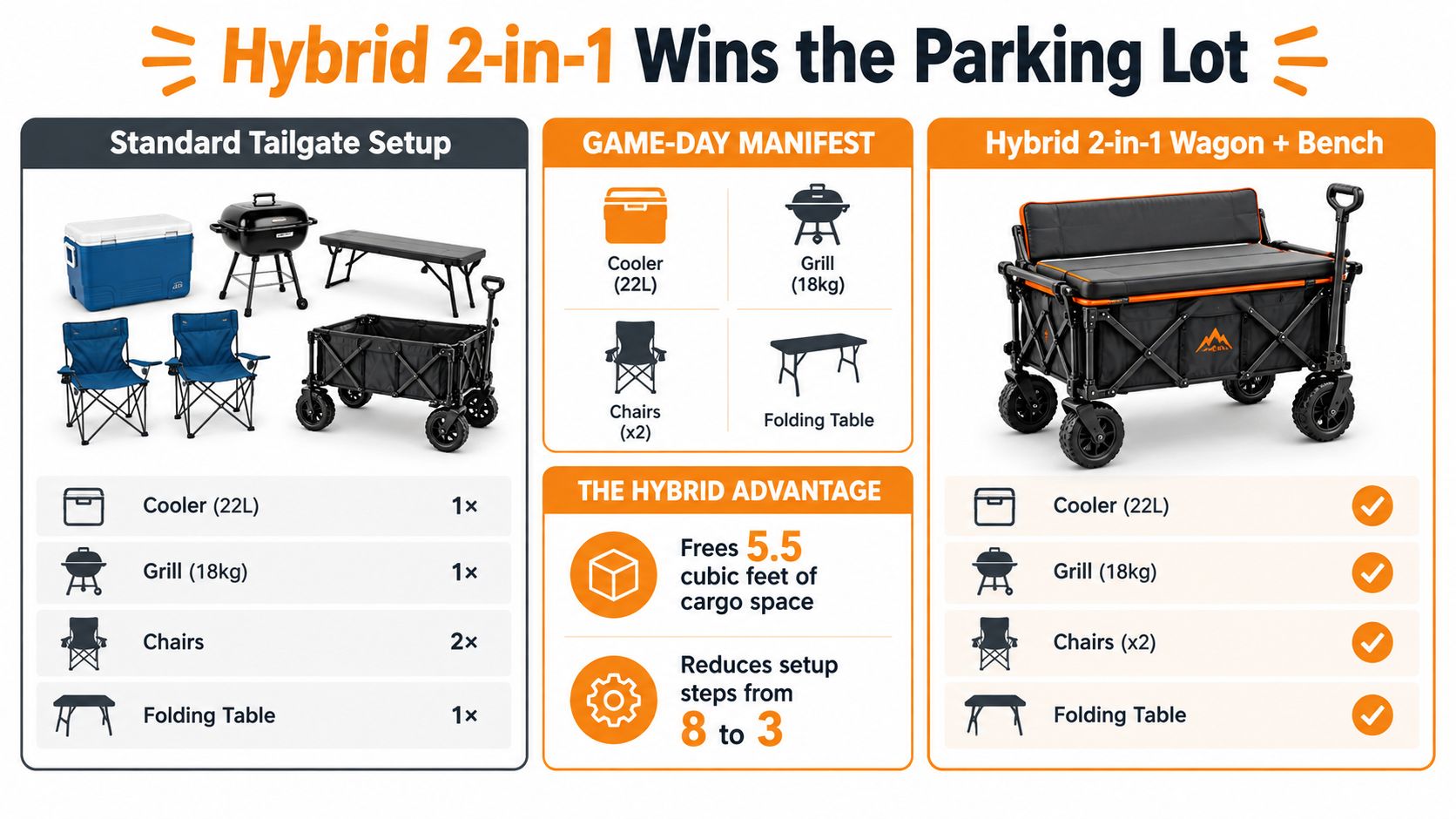
The hybrid approach solves the SUV-cube problem by combining two jobs that normally compete for the same cargo space. A typical manifest includes a cooler, portable grill, two chairs, a folding table, canopy or umbrella, speaker, food bins, and cleanup supplies. A conventional setup asks you to carry each item separately and assemble the seating after the gear arrives.
The hybrid alternative moves the bulky load first, then becomes seating. That change matters most for tournament parents and families who arrive early, carry supplies across large complexes, and need a dependable place to sit between activities.
The real benefit is fewer separate decisions
A standalone wagon needs a separate seating plan. A folding bench needs a separate hauling plan. When both products travel together, they consume cargo space independently and create another object to remember during cleanup.
A product such as the Lounge Wagon is designed as a heavy-duty, all-terrain utility wagon with a reinforced steel frame, a 500 lb capacity, and 10-inch puncture-proof wheels. In seating mode, it becomes a padded bench for two adults with integrated cup holders and storage pockets. The feature matters because the same frame that carries the load creates a usable rest point once the load is unloaded.
Why one product changes setup behavior
The benefit isn't just a smaller equipment list. It changes how people move through the lot:
-
Unload once: The wagon carries the cooler, grill accessories, shade pieces, and food bins together.
-
Create a base: The converted bench gives parents, grandparents, and guests a defined place to rest.
-
Keep essentials close: Integrated storage reduces the need for another small table or accessory bag.
-
Pack with less friction: The seating surface remains part of the product instead of becoming another loose component.
The 2-in-1 beach wagon overview shows why this design also suits tailgaters who cross between grass, gravel, and pavement. The same logic applies at a youth soccer complex, a festival field, or a stadium parking lot. One footprint handles transport and recovery, which is more valuable than another single-purpose gadget.
Packing and Vehicle Space Strategies That Actually Fit
Good gear won't fix careless loading. Put the wrong items in first and you'll still unload half the SUV to reach the grill or discover that the wagon is trapped behind a cooler.
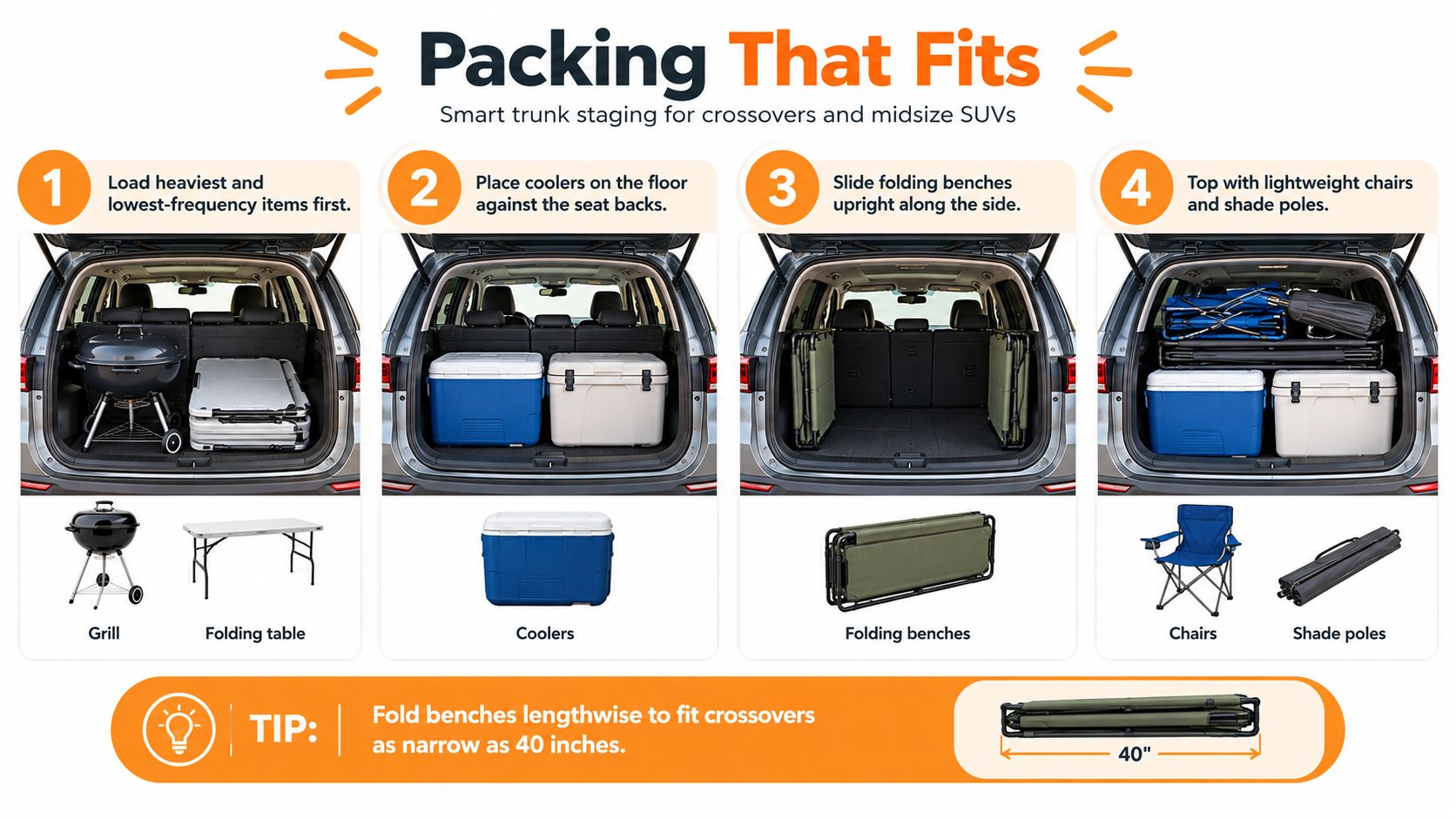
Start with the heavy, low-frequency items on the cargo floor. That usually means the grill, folding table, large water container, or other dense equipment. Keep the weight low and close to the seat backs so it doesn't shift during the drive.
Load by arrival priority
Place coolers on the floor against the seat backs, where they stay stable and remain accessible after the first unload. Slide the folded bench or wagon along the side, then top the cargo area with lightweight chairs, blankets, canopy fabric, and shade poles.
For a midsize SUV, orient the folded bench parallel to the rear axle when possible. That arrangement preserves access across the cargo opening. In a compact crossover, a perpendicular orientation can protect sight lines and leave a clearer path to the liftgate, provided the folded unit doesn't block third-row access.
Use the cargo shape, not just the cargo volume
Soft-sided coolers conform to narrow gaps and can fit beside wheel wells. Hard-sided coolers provide a rigid platform and stronger protection, but they don't surrender space when the trunk is tight. Choose the format based on the vehicle and the route, not on a generic capacity claim.
Flat-folding furniture also beats nested-folding furniture when every inch matters. A flat unit creates a predictable panel that can slide beside cargo. A nested chair stack often leaves awkward voids and forces you to build the rest of the load around its shape.
Use this checklist before leaving:
-
Heavy items: Grill and folding table on the floor.
-
Cold storage: Coolers secured against the seat backs.
-
Hybrid seating: Folded wagon or bench positioned near the liftgate.
-
Lightweight gear: Chairs, blankets, canopy fabric, and poles on top.
-
Arrival essentials: Plates, napkins, utensils, sunscreen, and cleanup supplies in a reachable tote.
-
Final check: Confirm the wagon, fuel, food, drinks, shade, and trash bags aren't still in the garage.
The Lounge Wagon product details are worth checking before loading because the folded dimensions and accessory configuration determine how it fits your particular crossover or SUV. Measure the cargo opening, not just the interior volume.
Comfort-First Setup for Long Game Days
Tailgate comfort determines whether people stay for the full event or start packing before kickoff. A chair that works for a quick meal can become miserable during a long afternoon, especially on hot asphalt with no shade and nowhere to stretch.
Ergonomics starts with posture. One outdoor-chair review identifies a 10 to 15-degree backrest angle as a match for the spine's neutral curve and highlights lumbar support or adjustability for reducing fatigue during longer sitting. The relevant outdoor chair ergonomics guidance supports a simple test: sit naturally, check lower-back support, and make sure the seat doesn't force you into a slump.
The comfort checklist
-
Stable footing: Uneven grass and pavement joints shouldn't make the seat rock.
-
Breathable material: Mesh or ventilated fabric helps manage heat around the back and legs.
-
Useful height: A higher seat makes standing easier than a low stadium chair.
-
Reachable storage: Cup holders and pockets keep drinks, phones, sunscreen, and keys within reach.
-
Clear foot space: The seating area should allow a relaxed stance without catching ankles or bags.
-
Quiet movement: Larger wheels should roll across expansion joints without rattling the entire setup.
A portable comfort product should support natural posture, not merely reduce the weight of what you carry. An ergonomics-focused outdoor comfort guide defines ergonomics around how well a product supports the body's natural position. That standard separates a useful seat from a thin pad attached to a folding frame.
Shade and heat belong in the seating decision
Recent tailgating trend coverage reports portable fans surging 398% and car sunshades 175%, suggesting that buyers increasingly care about staying functional through long periods of heat and exposure. The figures appear in tailgating product trend coverage. A cooler and grill can support the party, but shade, airflow, and a place to sit determine how long people can comfortably use it.
The best tailgate chairs guide is useful when comparing separate seating, but a hybrid bench changes the packing equation. A tailgater who can haul gear and sit in the same product carries fewer loose pieces and has a better chance of keeping a shaded rest point available throughout the day.
The Lounge Wagon Compared and Your One-Trip Close
A crowded trunk usually reflects a planning problem before it reflects a gear problem. Separate wagons, benches, and loose accessories each claim cargo space, then demand separate handling in the parking lot. The Lounge Wagon addresses that tradeoff by combining hauling and seating in one product.
Current Lounge Wagon specifications list a 500 lb total capacity, 10-inch puncture-proof wheels, a folded depth of about 27 inches, and one-pull conversion between wagon and bench modes. The design also includes integrated cup holders and seating for two adults. Verify the exact configuration and current product details before ordering, especially if a bundle or variant is listed.
Lounge Wagon vs. standard alternatives
| Metric |
Lounge Wagon |
Standard Folding Wagon |
Dedicated Tailgate Bench |
| Weight capacity |
500 lb total capacity |
Varies by model |
Seating only |
| Wheel design |
10-inch puncture-proof wheels |
Varies by model and terrain |
Usually no hauling wheels |
| Folded dimensions |
About 27 inches deep |
Varies by model |
Varies by model |
| Seat-to-haul conversion time |
One-pull conversion |
Not applicable |
Not applicable |
| Cup holder count |
Integrated cup holders |
Usually not a seating feature |
Depends on model |
The comparison makes the space advantage clear. A standard wagon moves equipment but leaves seating to another item. A dedicated bench provides a rest point but cannot haul the cooler or grill. The hybrid format removes one product from the packing list and gives that recovered space back to food, shade, cooking, or cleanup gear.
The Weekend Warrior can carry food, drinks, and cleanup supplies without sacrificing a usable seat. The Sideline Elite can move a team cooler and tent, then use the same product as a parent seat between matches. The Sand-Sovereign benefits from wide wheels suited to beach routes. The Grand-Packer gets a higher, more supportive place to rest than a low wagon floor.
The Lounge Wagon does not replace food, cold storage, cooking equipment, shade, or cleanup supplies. Its role is specific: it combines transport with seating and carries the publisher's stated 500 lb capacity, reducing the number of separate items competing for vehicle space.
That makes the purchase decision simple. Choose it when one person must move heavy gear across the lot and still have a dependable seat at the destination. Choose separate products when your setup requires specialized hauling or seating that the hybrid format cannot provide.
A practical tailgate should require one departure from the driveway, one loaded product crossing the lot, and one compact base for the rest of the day. The Lounge Wagon supports that plan by turning hauling space into seating space without adding another bulky item.
Ready to stop hauling separate chairs and carts? The Lounge Wagon combines a 500 lb gear-hauling capacity with 2-in-1 seating for a more efficient game-day setup. Visit Lounge Wagon and turn your next tailgate into a one-trip walk from the vehicle to your seat.


