The best camp chairs match how you haul, sit, and stand throughout the outing. When the cooler, chair, and beach bag turn arrival into a three-trip struggle, a lighter seat isn't always the answer. Lounge Wagon offers another approach: carry the equipment, then turn the hauler into your resting place.
Last Updated: October 2026
Why the Wrong Camp Chair Ruins a Long Day
At the field, the cooler bumps your leg, the chair strap slides off your shoulder, and the towels catch on the gate. You make another trip across the grass while everyone else settles in.
Then the seat is too low, making each stand a strain, or the fabric sags and keeps you shifting. A chair can be light to carry and still be uncomfortable through a long afternoon. For older users and anyone getting up repeatedly to check on kids, that trade-off matters.
Judge the whole outing, not just the packed weight. Count the gear, consider the route, and think about who will sit. A solo camper carrying a short distance has different needs from a family hauling equipment to a day of games.
Solve the arrival problem first
Lounge Wagon began with a beach trip carrying chairs, towels, coolers, bags, sand toys, boogie boards, umbrellas, and children aged 5 and 1. Its founders wanted to make hauling gear and enjoying time outdoors with family work together.
For a full family load, explore Lounge Wagon's Sideline Wagon bundle. It's designed for game-day comfort. Compare the entire setup with a standalone chair: if one seat can also replace a separate gear hauler, the added bulk may be worth it. If you have a long walk and little equipment, a portable folding chair may be easier to carry.
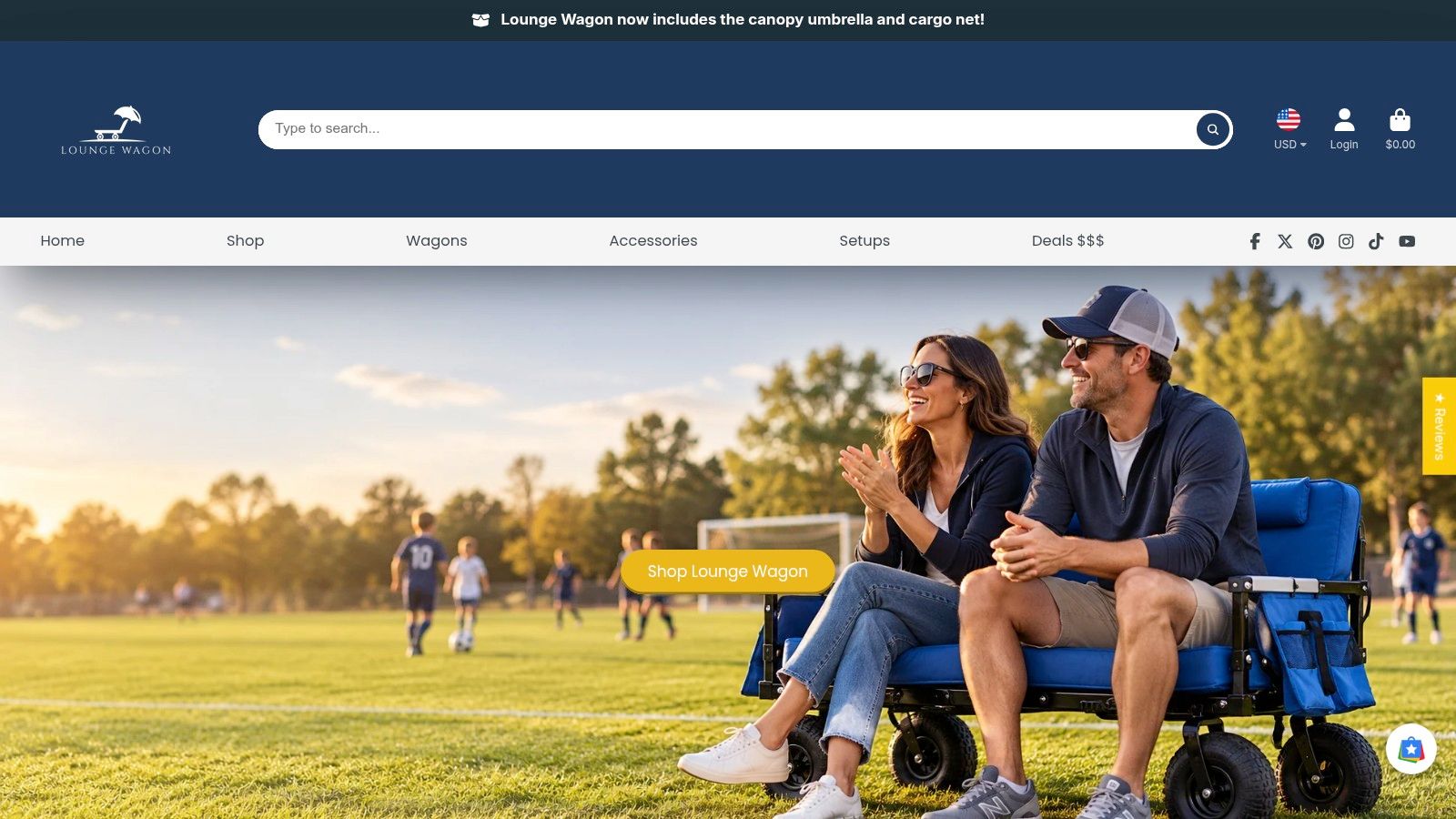
This screenshot shows the product approach.
Match the guide to your day
Long walk, little equipment: Prioritize packed weight and a comfortable carry.
Full family load: Compare the weight and usefulness of the complete hauling-and-seating setup.
Frequent rest breaks: Check seat height and how easily you can stand, especially if you'll get up often.
Long stretches in one spot: Look for support that remains comfortable after the first few minutes.
Use this comfortable outdoor seating guide to compare seating needs for your outing. A compact chair can be the right call when carrying distance matters most. When repeated standing and fewer trips matter more, consider whether a combined hauler and seat earns its space.
What Makes a Camp Chair Worth Buying
At a crowded field, the chair that saves a few ounces may still leave you making extra trips from the car. Judge the whole setup: what you carry, how the chair packs, how it supports you, and whether it reduces the gear you need to haul.
A worthwhile chair balances packed weight, packability, comfort, frame construction, and materials. Each affects a different part of the outing. Low weight helps when you carry the chair over distance; a compact folded shape matters when the trunk is full. Padding alone does not guarantee useful support.
The design challenge has been around for decades. Frank M. Stoll's folding chair patent documents an early effort to combine portability with a functional seat. The patent application was filed on July 1, 1921, and granted on July 11, 1922, as recorded in Stoll's folding camp chair patent. Improving one feature can make another less convenient, so match the trade-offs to your usual outing.
Evaluate what you'll carry and store
Packed weight matters most when you carry the chair rather than roll it. An aluminum frame can reduce the shoulder load. A heavier steel structure may make more sense when support matters more than carrying distance.
Packability is separate from weight. A light chair with an awkward folded shape can be harder to load than a heavier, flatter one. Check the space beside the cooler and other equipment, not just the empty trunk.
Comfort means usable support, not softness alone. Check seat tension, back support, arm position, and whether the front edge presses into your legs. A cup holder helps only if you can reach your drink without twisting or leaning out.
Practical rule: Buy for the loaded car and the occupied seat, not the clean product photograph.
Inspect the structure beneath the fabric
Lounge Wagon's patented, all-in-one setup is designed to replace chairs, umbrellas, and gear haulers. Its 2-in-1 seating and hauling arrangement aims to reduce separate items, but a combined setup is bulkier than a chair you carry by hand. Judge it by the total load and how often you need to move the gear.
Frame joints: Check for unwanted movement and confirm that every locking point engages.
Fabric tension: Sit fully back and see whether the seat supports you without excessive sag.
Materials and seams: Inspect attachment points, especially where fabric meets the frame.
Useful accessories: Choose pockets or a table only when they replace something you need.
For meals or sideline snacks, compare folding camp chair and table arrangements. A nearby surface can make eating easier, but check that it does not make the chair awkward to pack or get into. For older users or anyone who stands and sits often, test that movement too. A comfortable seat that is difficult to rise from may not suit a long day.
Comparing Lightweight, Base-Camp and Multi-Use Designs
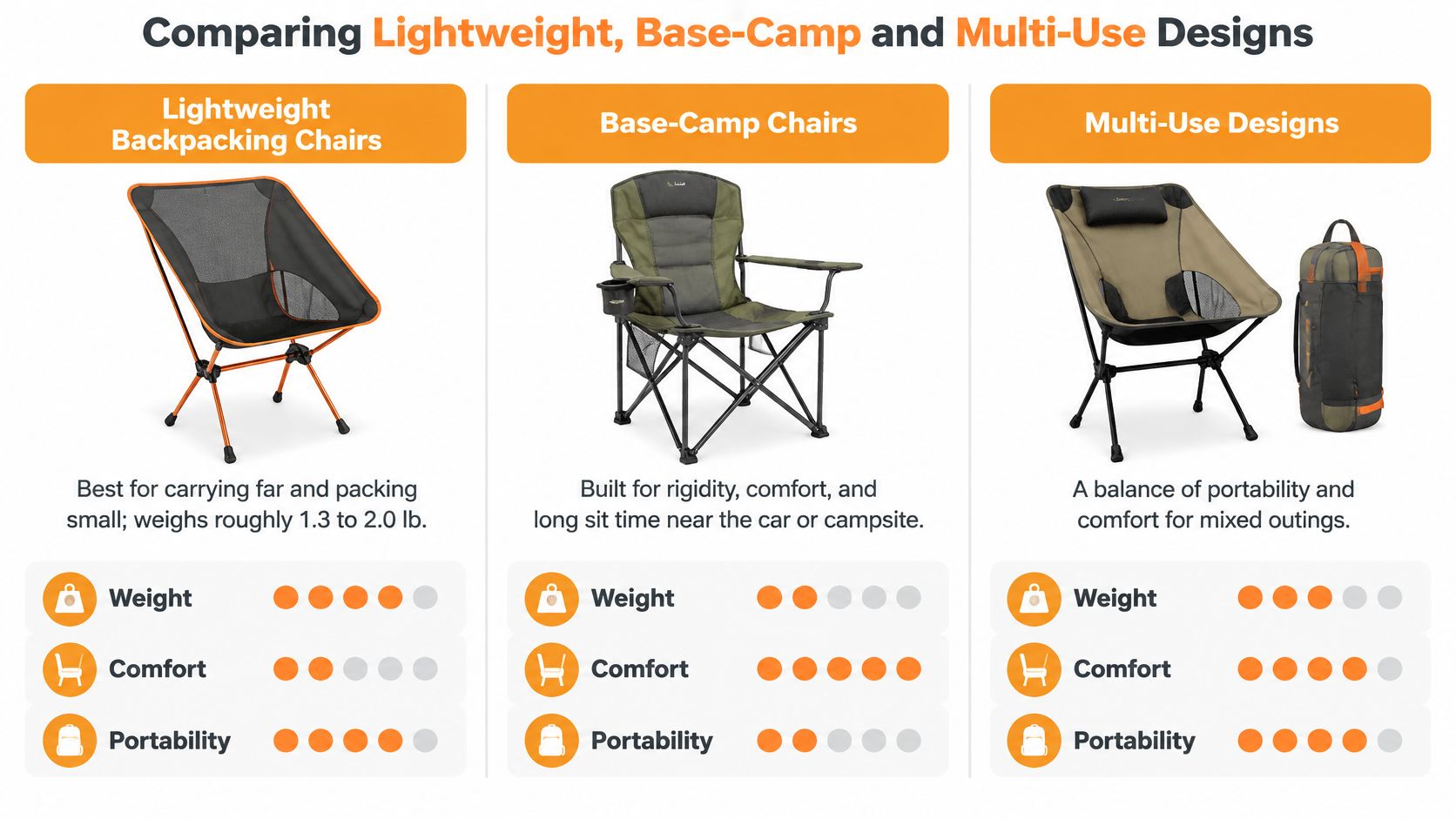
A chair packed for a long walk solves a different problem from one set up beside the car. Lightweight backpacking designs reduce what you carry. Base-camp chairs prioritize a place to sit for longer stretches. Multi-use systems combine seating with hauling gear, which can cut down the number of items you bring.
Camp Chair Design Families Compared
Design Family
Typical Frame
Packed Weight
Seat Height Tendency
Best Fit
Lightweight backpacking
Aluminum
Low, designed for carrying
Often low
Long walks and compact packing
Base-camp
Commonly steel
Heavier than minimalist designs
Often more upright, model dependent
Campsites and extended sitting near the car
Multi-use wagon seating
Varies by setup
Bulkier than an ultralight chair
Check the actual occupied seat
Family equipment loads and shared seating
In OutdoorGearLab's independent camp-chair testing, lightweight aluminum backpacking models commonly weigh roughly 1.3–2.0 lb, while chairs rated to 500 lb generally appeared more durable in extended testing. Treat those findings as comparison points, not a shortcut. Weight and capacity alone don't tell you whether a chair suits the outing or the people using it.
The chart below shows how the three design families differ.
Lightweight isn't the same as versatile
Backpacking chairs work well when you carry everything on your back. Their compact frames and lower seats can be awkward for meals at a table, frequent standing, or uneven ground. That trade-off makes sense when distance and packed size matter more than repeated sit-to-stand comfort.
Base-camp chairs carry more weight in exchange for a more substantial seat. Steel may resist flex, but it doesn't guarantee sound construction. Check the joints and base before relying on a chair through a long day.
Suspended seats suit people who prefer reclining. The lounging position isn't right for every outing, especially when you need to eat or get up often. Compare hammock camping chair designs when reclining comfort is a priority.
Compare the complete equipment system
Lounge Wagon is a patented, all-in-one setup designed to replace chairs, umbrellas, and gear haulers. It's a wagon-based option rather than a backpacking chair. Its larger package makes sense when it replaces equipment you would otherwise carry.
Specification
Our Wagon Setup
Lightweight Chair
Conventional Base-Camp Chair
Weight capacity
Stated product capacity applies to the complete setup
Model dependent
Model dependent
Seating
Designed to seat two adults
Usually individual seating
Individual or shared, depending on model
Wheel size
Check the product specifications
No integrated wheels
No integrated wheels
Main benefit
Rolls equipment and provides seating when parked
Reduces carrying burden
Provides a dedicated resting place
Compare the wagon-and-seat system with a gear hauler plus separate chairs. At a field or beach, that difference can mean fewer separate items to load and move. If you don't need a hauler, a multi-use setup offers less advantage. If you already bring one, combining hauling and seating may earn the extra space.
Seat Height and Back Angle for All-Day Comfort
At a tournament, a chair has to work through more than one long sit. You may stand for a close play, change fields, then sit down again. For older adults and anyone with knee or hip limitations, easy exits matter as much as a soft seat.
A 2025 study of older adults' seating comfort tested 20 healthy adults aged 61–70. The study found the best subjective and objective comfort at a seat height equal to behind-the-knee height or 25 mm below it, paired with a 105° backrest inclination. Use those findings as a fitting reference, not a universal prescription. Outdoor chairs vary, and a study measurement does not confirm that a particular model matches it.
Measure the person, then test the seat
Measure from the back of the knee to the floor in the shoes you'll wear outdoors. Then compare that measurement with the seat while someone is sitting in it. Cushion compression can lower the occupied seat and change how easily the person stands.
Foot contact: Check that both feet rest comfortably on the ground.
Seat depth: Sit against the backrest without the front edge pressing behind the knees.
Arm support: Press gently on each armrest and check for movement before using it to help stand.
Repeated exits: Sit down and stand up as you normally would, several times.
Ground contact: Test stability on grass and gravel like those at your usual outings.
Ask a helper to be nearby if balance is uncertain. A camp chair is not a mobility aid. Its capacity rating also does not show whether the armrests can safely support a person standing up.
Balance relaxation with getting up
Research on chair design and older users' exit difficulty found that lower seats, more backward tilt, more reclined backrests, and softer cushioning increased the effort, time, and perceived difficulty of standing. Those features can also make a chair more comfortable for resting. Test both uses before choosing.
A comfortable chair must work while you rest and when you're ready to leave it.
Before adding padding, compare your occupied-seat measurements with guidance on seat cushion height and pressure relief. Extra cushioning changes the seat height, so test the complete setup rather than judging the chair and cushion separately.
Lounge Wagon's padded seating also belongs in a hands-on fit check. Compare the seat width, support, and effort needed to get up with the person who will use it. This review of plus-size folding chair considerations can help identify fit factors to check before buying.
Choosing a Camp Chair for Each Outing
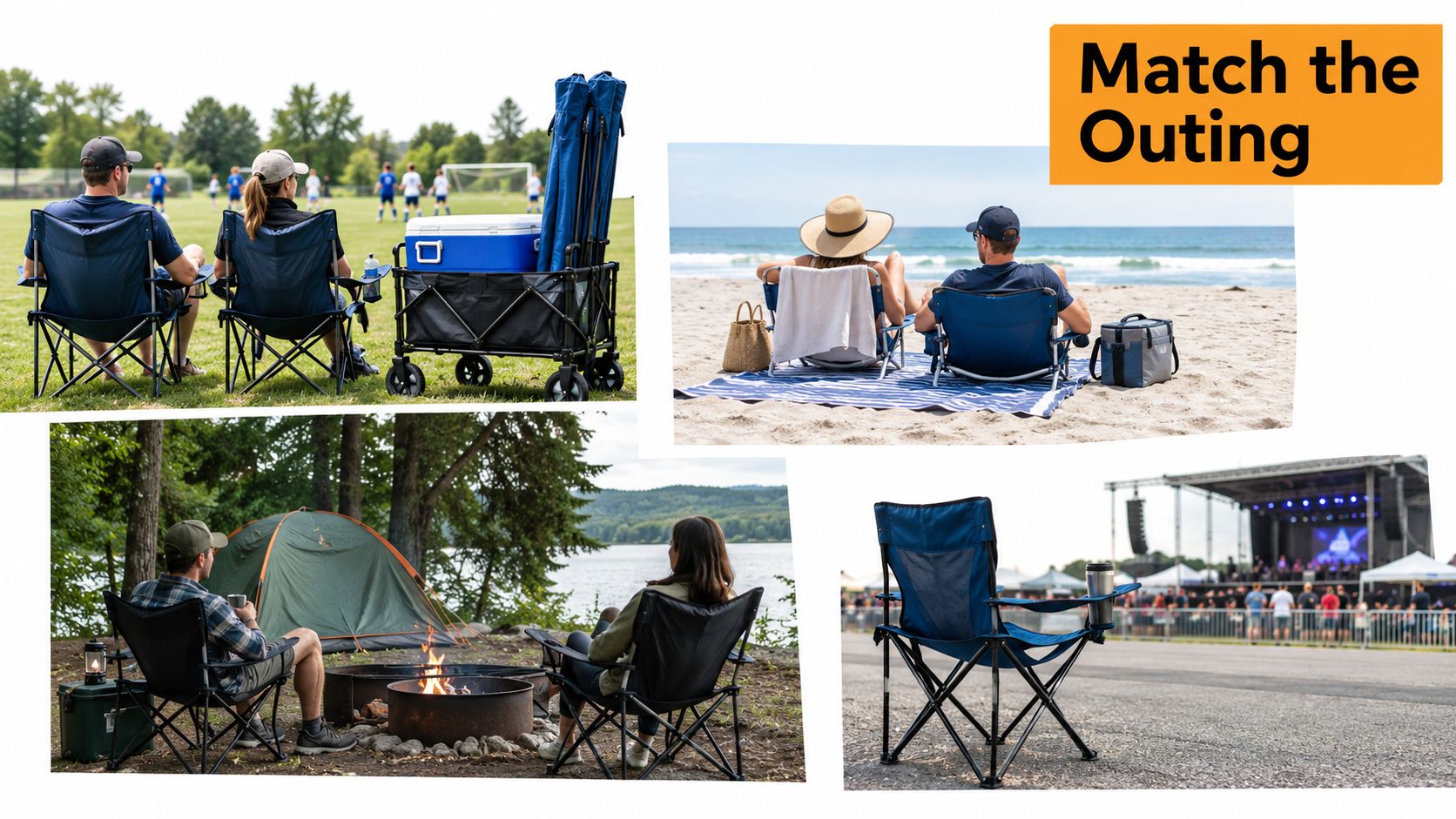
At a tournament, chair bags, coolers, and sports gear all compete for room in the car. At a campsite, the drive may end close to the pitch site. Choose for the route, the equipment load, how often you'll sit and stand, and the space available. A chair that saves weight can still add another item to carry.
Tournament sidelines and soft-sand beaches
At tournament sidelines, parents may haul a cooler, tent, and other gear between matches. A shared seat can cut down on separate items if it replaces the usual chairs. It should also let older users get up and sit down comfortably through a long day. Beth Ritchey described the family seating in her review:
“Love that my family and friends can sit on it as well while we watch the kids play. Great for year round.”
Sideline decision rule: Compare total outing utility, including seating and hauling, rather than packed weight alone.
Beach access changes the calculation. A paved boardwalk, a steep ramp, and deep soft sand put different demands on wheels and the person pulling the load. Lounge Wagon's 10-inch puncture-proof wheels remove tire punctures from the maintenance list, but wheel diameter alone does not guarantee easy movement through every type of sand.
Beach decision rule: Check the wheel design, load, and actual access route before relying on an all-terrain label.
Festivals, markets, and car camps
At festivals and farmers markets, a chair bag takes room from purchases, blankets, and refreshments. A multi-use setup can replace a separate hauler, but only when venue rules allow it and there's space to set it up. Check entry and seating rules before packing.
Crowded-event decision rule: Choose a compact individual chair when space is tight. Consider a multi-use setup when it is permitted and replaces gear you already carry.
At tailgates and car camps, fit the full load before choosing your seat. Pack the cooler, cooking kit, and sleeping gear in their usual places, then check how much room remains. Use our car-camping essentials checklist to spot equipment that duplicates another item.
Planning a recurring private camping base raises a separate question. Dollar Land Store's resource on buying affordable acreage in the West discusses land planning. Assess access and permitted use before treating a property as a campsite.
Car-camping decision rule: Choose multifunctional seating only if the complete packed setup leaves room for everything else.
Budget Tips for Buying a Camp Chair
A low price can turn into wasted money if a chair is awkward to carry, hard to get out of, or uncomfortable after repeated use. Set your budget around the outing: what the seat needs to support, how far you'll carry it, and whether it must replace another piece of gear.
Weight and capacity alone don't make chairs comparable. Published comparison specifications list a steel Kijaro Dual Lock at 9.4 lb with a 300-lb capacity, an aluminum NEMO Stargaze at 7.8 lb with the same capacity, and a Crazy Creek Hex 2.0 at 1.3 lb with a 250-lb capacity, as summarized with REI's camp-chair buying guidance. Each fits a different use. Check the seat height and support, too, especially if getting up repeatedly is difficult.
Spend on the constraint you actually have
If you'll carry the chair far, compare capacity relative to packed weight, then check what the lighter design gives up. Low seats can be harder to rise from, while arm support, recline hardware, and storage add weight and cost. For a short walk from the car, sturdier construction may be a better use of your budget.
Limited budget: Put a suitable seat and sound frame ahead of optional accessories.
Frequent use: Check joints, fabric attachment points, and repair options.
Family equipment load: Compare the cost of a hauler, seats, shade, and carrying accessories with a setup that combines functions.
Occasional outings: Skip specialized reclining or ultralight construction if you won't use it.
Compare accessories and repair costs
The blue DualShade 10-by-10-foot canopy is listed at a sale price of $99.95, reduced from $129.95. Use that as a price comparison, not a reason to buy. Shade earns its place when it replaces a separate item you would otherwise bring.
Lounge Wagon replacement parts support repairs, upgrades, and preventative maintenance, so a customer can avoid replacing an entire wagon. Include that option when comparing ownership costs for gear used at fields and beaches.
Before buying another accessory, compare it with what you already own. Pay for a function you need, not a duplicate of equipment already in the garage.
Picking the Best Camp Chair for Your Next Trip
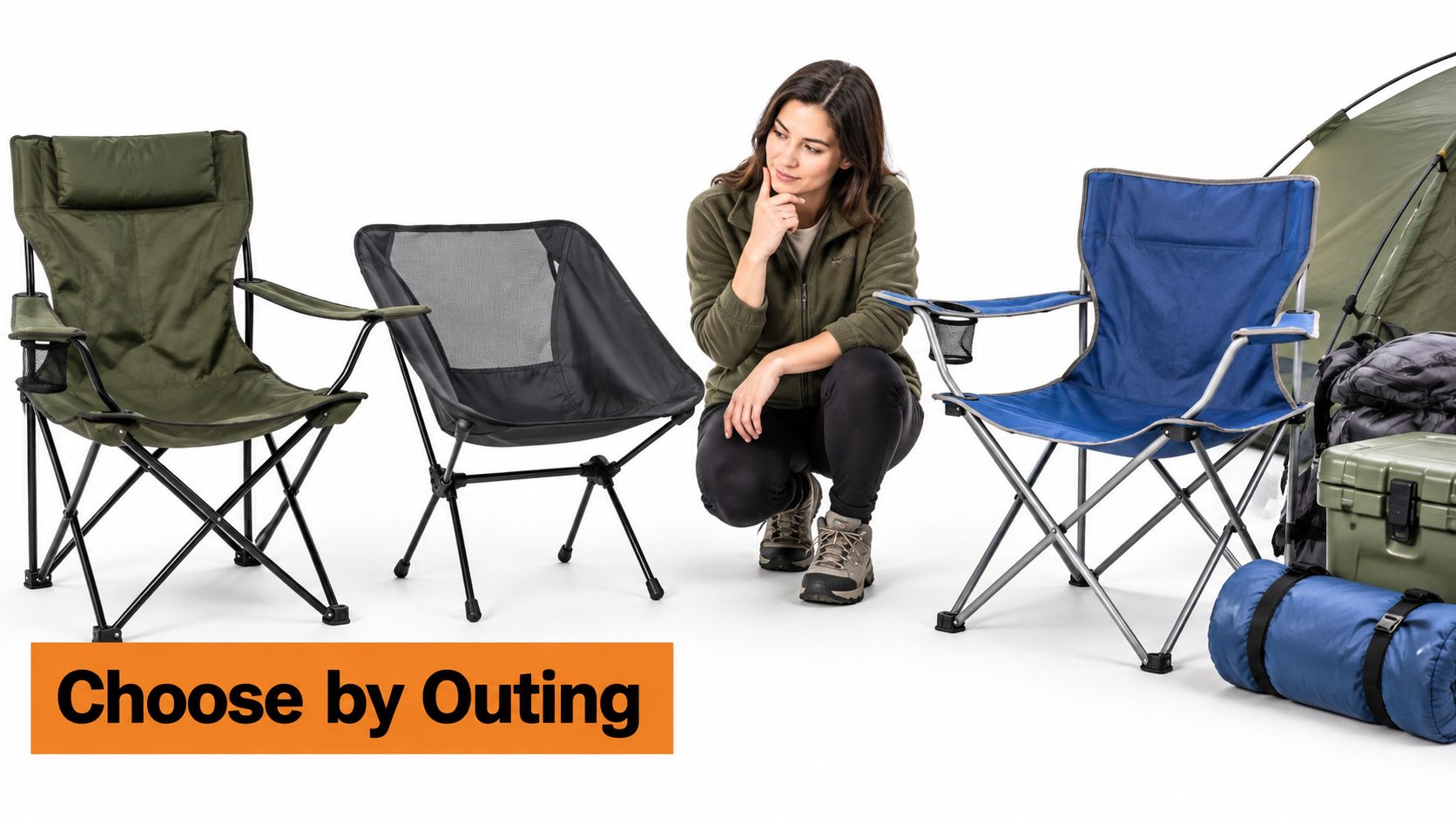
A tournament family unloading at the field has different needs from a backpacker carrying a seat down a trail. Judge a chair by the whole outing: how far it must travel, how comfortable it is through repeated sitting and standing, and whether it can replace a separate gear hauler. For older users, an easy-to-use seat can matter more than a lighter packed weight.
Choose by total outing utility, not packed weight alone.
Make the trade-off explicit
The Lounge Wagon hauls gear and seats two adults. Its all-in-one design combines seating and hauling, so it can replace a separate wagon and chairs for some outings.
That means more to carry than an ultralight chair. It may not fit a small trunk, crowded venue, or backpacking trip. Compare the full setup with what you already own before deciding whether the extra size earns its place.
Carry far with little gear: Choose a lightweight individual seat.
Stay near the car: Prioritize comfortable support for long periods.
Haul family equipment: Compare a combined seating-and-hauling setup with your current wagon and chairs.
Need frequent rest: Test getting in and out repeatedly, especially if standing comfortably is a priority.
A chair that works at the field may not suit a long walk to camp. Check how it fits your actual route and routine.
Before buying, measure your storage space and consider what the seat can replace. The right choice leaves fewer awkward items to manage and a seat you'll be glad to use.
Choosing a selection results in a full page refresh.
This pad is perfect for kids or dogs to be comfortable inside the moving wagon, and very nice after you set everything up and want to sit for extra padding.
B
Wagon & 6' Xl Sports Umbrella Setup Beth Ritchey
Umbrella is a must
Having the umbrella this summer has been easy to use and a must to make sitting and watching the parade so nice when there isn't any shade. My dogs laid on the wagon padding and enjoyed the day without getting too hot. I enjoyed the shade too.