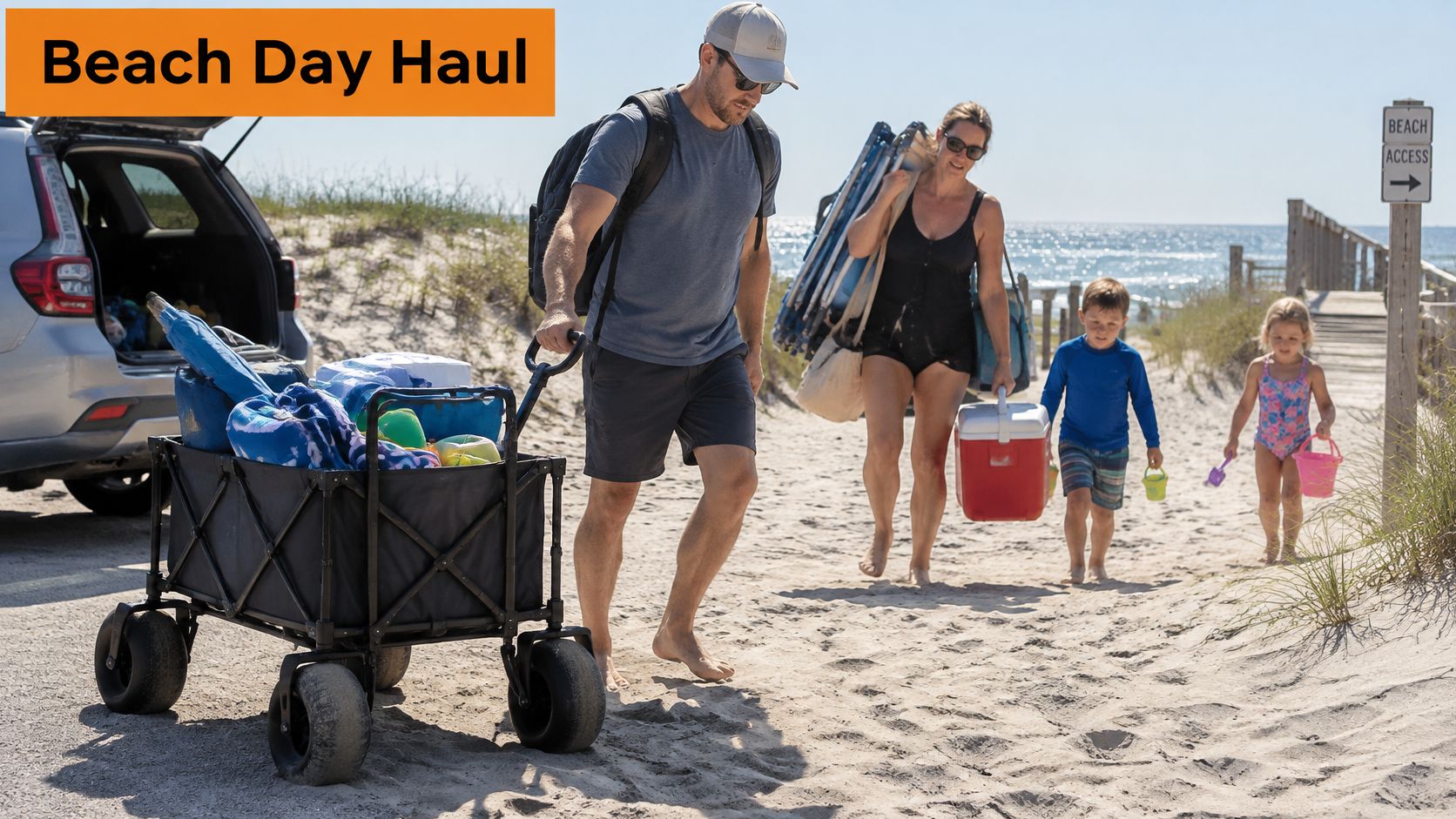
The lot is behind you, the cooler is full, and the first soft patch of sand stops the wagon cold. I have watched parents lean back like they are pulling a sled while kids carry towels in circles. That is the moment wheel choice stops being a spec-sheet detail.
Beach wagon heavy duty wheels need three numbers read together: tread width for float, diameter for roll-over, and the load each wheel carries once chairs, water, shade, and snacks are stacked. A 500 lb frame rating can still feel stubborn in deep sand if the footprint is narrow or the wheels are small enough to plow. Puncture-proof helps on shells and gravel, but sand asks for surface area and height first.
The Lounge Wagon pairs a reinforced steel frame with 10-inch puncture-proof wheels, a 500 lb capacity, and a padded double seat for the stop after the haul. Check the unloaded feel too: once the gear comes out and the wagon becomes a bench, it should sit level instead of rocking on tired wheels.
For a long, hot day, cargo room keeps water, shade, and a place to rest in the same trip. Choose the wheel package that turns the walk from the lot into one steady pull, then gives you a stable seat when you arrive.
Why the Walk to the Sand Falls Apart
The name goes back further than folding haulers. By at least 1862, "beach wagon" described an open-air, horse-drawn carriage used for excursions, and by approximately 1908, builders including Folger and Drummond of Amesbury, Massachusetts, were producing them for shore and countryside trips. The Amesbury Carriage Museum notes that some had rubber floor coverings to protect interiors from mud, sand, and debris. (Historical background on the beach wagon)
Those carriages solved the same problem your wagon does: moving people and gear over ground that resists wheels. What breaks the trip today is rarely the frame. It's the contact patch. Concentrated weight on a small, narrow wheel presses it under the surface, and once a wheel sinks, every step forward means dragging it back out. Pulling feels less like steering and more like plowing.
That gap is why "heavy duty" and "sand-capable" are two separate claims. A load rating describes what a frame can hold while parked. Whether it moves depends on how the tread sits on soft ground and how the diameter rolls over ruts and soft spots. Read those specs together, because a wagon that hauls 500 lb on pavement can still stall the moment dry sand swallows a narrow tire.
The work doesn't end at the waterline, either. Once the cooler and chairs come out and the wagon converts to a seat, it has to stay planted on uneven sand rather than rocking or settling unevenly under two adults. The Lounge Wagon's padded double seat is built for that second job, but any wagon you rely on as a bench deserves the same stability check after it's unloaded.
What Heavy Duty Really Means on Sand
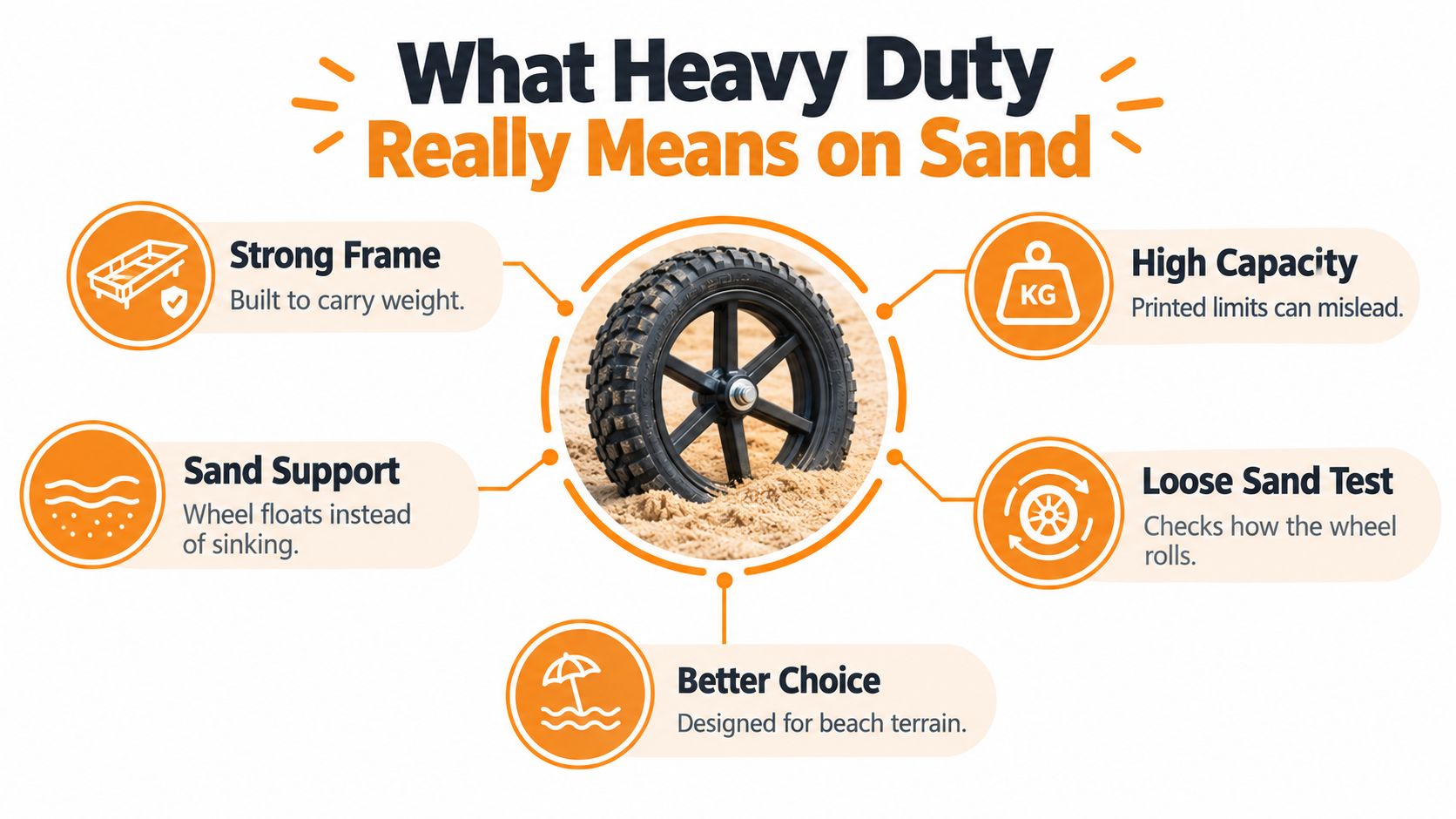
A wagon can roll smoothly across the parking lot, then stall in the last stretch of soft, dry sand above the tide line. The frame didn't fail. The wheels did. "Heavy duty" on a spec sheet usually describes the frame and its stated capacity, and it says little about how the tires behave under a concentrated load on loose ground.
A wheel's contact patch works like a footprint. A snowshoe spreads weight over more ground than a boot, and a broad wheel spreads the wagon's load better than a narrow one. Width alone doesn't settle the question, though. Diameter, load distribution, inflation pressure where it applies, and slope all change the result. A U.S. government mobility study tied sand strength to the maximum slope a vehicle could climb and found that tire width by itself wasn't decisive within its tested range. (Technical report on vehicle mobility over sand)
Puncture-proof tires solve flats. They don't solve sinkage.
A historical beach-wagon patent describes conventional two-wheeled carts sinking because their tires didn't have enough surface area, then becoming difficult to manage once loaded. The same skepticism applies to capacity claims. Say a wagon carries a 500 lb rating: that figure is a label on paper, and it doesn't guarantee a tested 500 lb operating load in deep sand.
Run the numbers on that example. A 10-inch wheel is about 254 mm in diameter. A 500 lb load is about 227 kg, or roughly 57 kg at each wheel in a simple four-way split before bumps, turns, or a slope shift more weight onto one corner. That math explains why per-wheel capacity and a safety margin matter more than the headline frame rating.
Stability matters after unloading, too. If your wagon converts into a seat, the same wheels that carried the cargo now have to keep the frame level and planted while people sit down. A chassis that felt rock-steady under a cooler can wobble under two adults if the wheelbase and tires weren't chosen for it.
Powder-coated steel and 1000D polyester are body materials, and they can't compensate for the wrong wheels. Read the frame rating, the per-wheel rating, and the wheel dimensions together, and treat any single impressive number with suspicion. For context on how stated limits relate to real loads, see this guide to wagon towing capacity.
Here's the wheel concept in motion:
Wheel Size Width and Puncture-Proof Specs
Start with a stubborn truth: heavy-duty and puncture-proof describe toughness, while sand capability comes from geometry and load. Read diameter, tread width, and per-wheel rating as one spec, then picture the wagon loaded low with chairs, a cooler, and the kid who swears they can walk.
A wider tread puts more contact on the surface, so the first pull feels less like yanking a fence post. Larger diameter helps the axle roll up over ruts, shell ridges, and gravel edges instead of slamming into them. Puncture-proof polyurethane removes the flat-tire worry, but soft ground still adds drag; the tire can be tough and still feel slow.
For scale, puncture-proof polyurethane wheels sold for material handling run from 50 mm wide at 200 mm diameter and 100 kg capacity to 85 mm wide at 240 to 260 mm diameter and 120 to 150 kg capacity. A 10-inch wheel, about 254 mm, belongs near that bigger-diameter end, but only the actual width and rating tell you how it will behave under your load. (Puncture-proof polyurethane wheel examples)
Wheel specs that change a sand push
Diameter
Tread width
Capacity note
Seating
Generic narrow casters
Often small
Narrow contact area
Check each wheel rating
Not specified
Mid-size all-terrain wheel
Varies
Wider than a caster
Check wheel and wagon limits
Not specified
Lounge Wagon 10-inch puncture-proof wheels
10 inches, about 254 mm
Confirm tread width on the product spec
Wagon listed at 500 lb; real sand use depends on conditions and per-wheel margin
2-in-1 seating for two
The category label matters less than measured width and rating. As noted earlier, stated wagon capacity is a ceiling, not a promise once sand, slopes, and diagonal loading enter the day. When the cargo comes out and the wagon becomes a bench, stability still counts: a wide stance, low center of gravity, and wheels that do not settle unevenly keep two seated kids from turning the stop into a tip.
Buying rule: If a seller gives you only the wagon capacity or says “puncture-proof,” keep asking about wheel diameter, tread width, and per-wheel rating. This guide to puncture-proof wheels explains why the label alone does not tell you how the wagon will feel on sand.
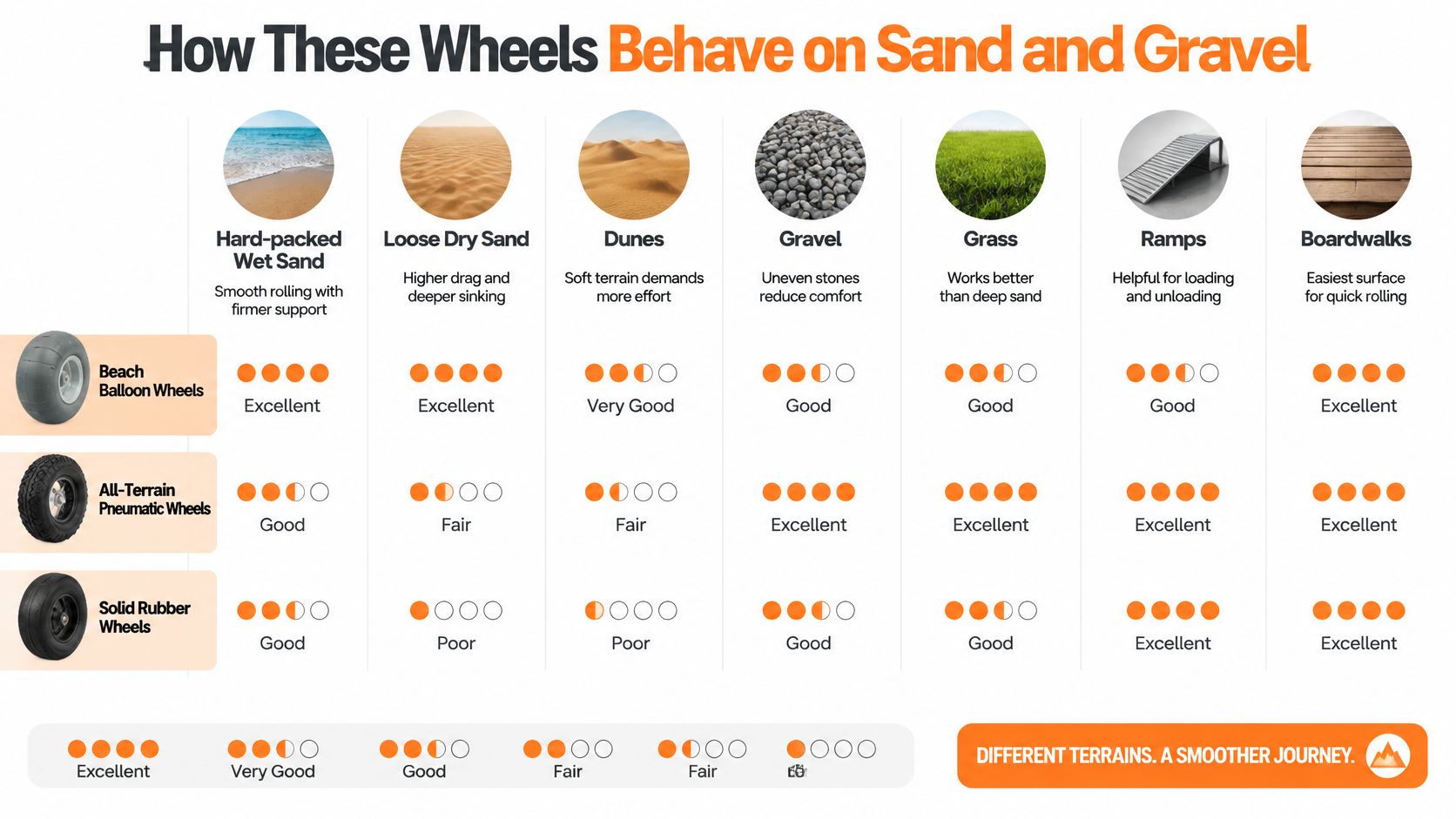
How These Wheels Behave on Sand and Gravel
A loaded wagon can roll easily across firm, wet sand, then bog down a few yards later in loose, dry sand. Diameter and tread width work together: a larger, wider wheel generally sinks less and rolls more easily on soft ground, while a heavy-duty or puncture-proof label alone says little about sand performance. Even a capable wheel needs more pulling effort on a slope or through deep sand.
Surface
What to expect
Hard-packed wet sand
Firmer support makes rolling easier than on loose sand.
Loose dry sand
Expect more drag and sinkage. Reduce or rebalance the load if the wagon bogs down.
Dunes
Soft ground and slopes take more effort to cross.
Gravel
Uneven stones can make the ride rough and the handle harder to control.
Grass
Often manageable for sideline hauling, though soft or uneven patches slow the wagon.
Ramps
Control the load when stopping or changing direction.
Boardwalks
Firm ground usually makes for the easiest rolling.
On gravel, a larger wheel helps it roll over stones rather than catch on every bump. On sand, wider tread helps spread the load. Neither spec guarantees an easy pull: the surface, slope, and weight in the wagon all matter. A bench-style wagon also needs to remain stable when gear comes out. Keep passengers seated and the load balanced, and avoid letting one end become much heavier than the other.
Before crossing a curb, ridge, or uneven patch, make a quick adjustment:
Keep dense gear low and near the axles. A cooler perched at the back can make the wagon harder to steer.
Spread the load across the wagon. Uneven weight can make a wheel drag and the handle pull off line.
Take wide turns where there's room. Sharp turns are harder on loose or uneven ground.
Ease the load in deep sand or on slopes. Puncture-proof wheels prevent flats, not extra effort.
Pack water, hats, sunscreen, and shade for a long beach or sideline day. New York City health guidance recommends water, shade, hats, sunscreen, and breaks as heat-index conditions rise, and notes that grass, dirt, and sand generally stay cooler than asphalt.
Choose wheels for the softest surface on your route, then adjust the load to match the conditions. For a loaded wagon, use this practical guide to pulling a wagon.
Keeping Heavy Duty Wheels Rolling
A wheel that survived July can still quit on you in August. Salt crystals grind into axle housings, sand packs into the bracket gaps, and one hard curb drop on a tournament parking lot can bend a mount enough to make the whole wagon track crooked. That upkeep habit is what keeps a frame rated for a 500 lb capacity rolling like it should.
Puncture-proof polyurethane wheels remove the flat-tire problem, but they don't remove wear. After a curb hit or a rough weekend, spin each wheel and look for debris lodged in the tread, a side-to-side wobble, a bent bracket, or a tread face that no longer looks round. Any one of those makes a loaded pull feel heavier than it needs to.
Run these five checks before the first shore day, after a tournament weekend, and before winter storage:
Rinse off salt and grit. Clear the wheels, frame, and folding joints, then let everything dry.
Check around each axle. Pick out sand and small stones that add drag to the roll.
Spin each wheel. Watch for uneven movement or a wobble at the hub.
Inspect the brackets. Look for bending or cracking after bumps and drops.
Dry before storage. A wet, gritty wagon folded away in the garage ages fast.
A wobbling wheel costs you twice. It drags on the pull across the sand, and once the cooler comes out and the wagon becomes your bench, that same wobble decides whether the seat stays steady under two adults.
Matching Wheels to Family and Event Days
A wagon that handles Saturday's soccer sideline can still bog down on Sunday's soft sand. Match the wheels to the worst surface on your actual route, then ask the question most buyers skip: does the seat still work once the gear comes out of it?
Read the specs as a set. Diameter tells you how the wagon rolls over ruts and ridges. Tread width decides whether the wheels float on sand or dig into it. Real per-wheel load tells you whether the rating on the box survives a full cooler plus chairs plus a kid who wants a ride. A puncture-proof label covers flats alone. Push effort in deep sand comes down to size and width.
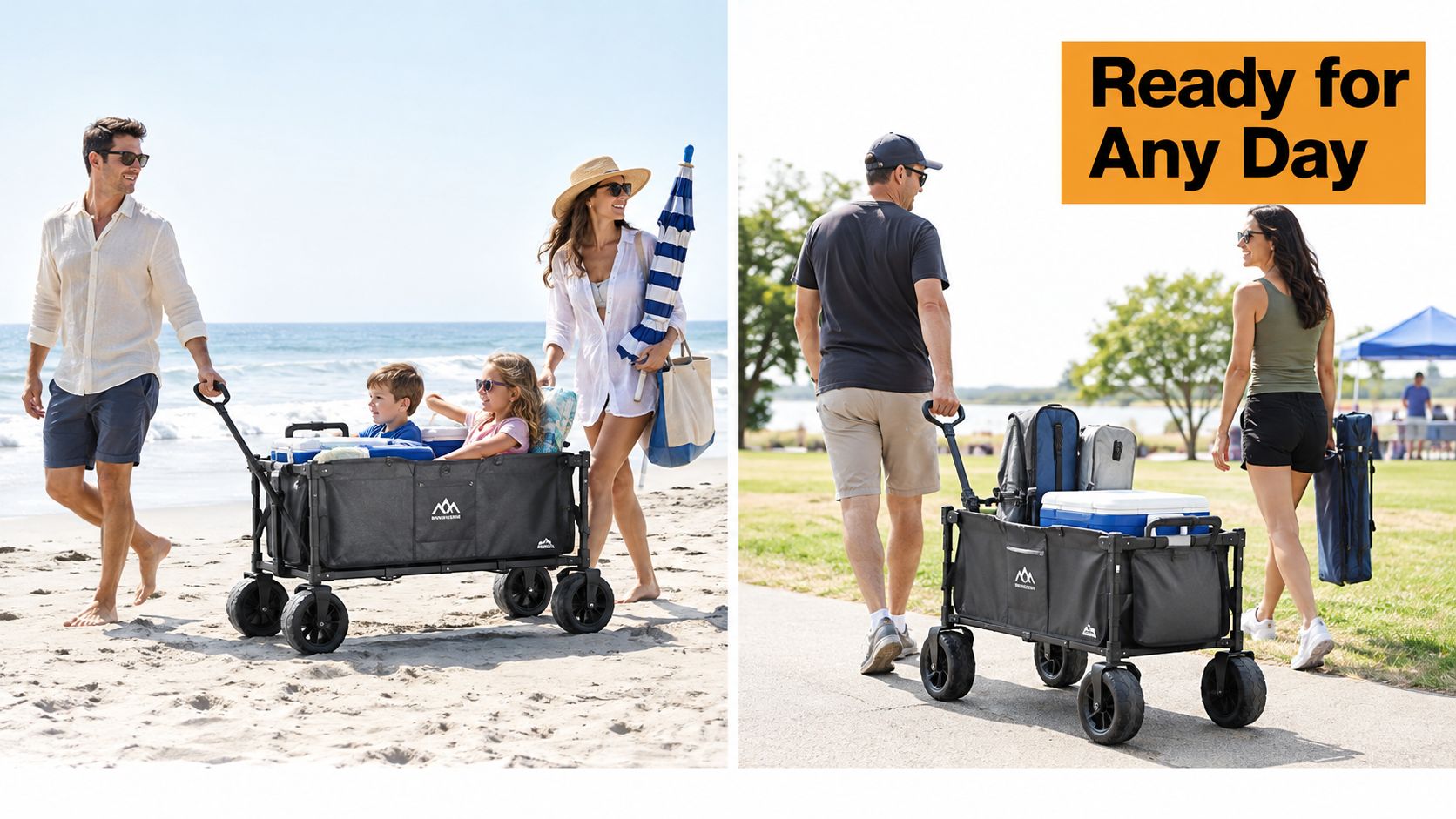
Coastal families haul umbrellas, toys, and refreshments across a soft access path. Tournament parents shuttle a cooler and tent between fields, then want a seat instead of hunting for a spare chair. Volunteers move water jugs across grass and gravel, and grandparents often value a rest spot that doesn't sit six inches off the ground. Participation among seniors and youth keeps climbing, and camping research shows families sometimes bring grandparents or extended family along. (Outdoor participation trends for 2025)
The Lounge Wagon lists a 500 lb capacity and 2-in-1 seating for two adults. Treat those figures as a starting question: how does the wagon sit as a bench once the cargo leaves the frame? Check seat height, back support, and how easily people get in and out. On uneven ground or a slight slope, park deliberately and give the wagon a shove before anyone sits down.
This setup makes particular sense for:
Beach families hauling shade gear and toys across a soft access path.
Tournament parents carrying sideline supplies and wanting a seat between games.
Grandparents and multigenerational groups who appreciate a convenient rest spot.
Event volunteers moving water and supplies across grass or gravel.
Festival and market regulars who want their gear and seating together.
Comfort decides whether the wagon gets used or left in the garage. Look for back support, usable seat space, cup holders, and storage pockets, and check that children can climb in and out without tipping it. A guide to what to bring on a snorkel tour is a handy packing reference for a day by the water, and this list of gear for a beach day with kids covers the family essentials worth hauling in the first place.
Heat guidance backs the same planning. The National Weather Service advises stopping exertion and moving into shade when someone becomes lightheaded, weak, confused, or faint. Keep water and first-aid supplies on top and within reach, rather than buried under the cooler. (National Weather Service guidance on outdoor heat)
Make the Shore a One-Trip Walk
Buy for the softest thirty yards of your route, because that stretch decides whether the morning feels easy or punishing. Ask three plain questions before you pay: are the wheels wide enough to float on dry sand, is the diameter tall enough to roll over ruts and ridge lines, and does the load sit evenly enough that each wheel carries its share?
Treat the 500 lb capacity as a frame rating. Real pulling effort comes from wheel size, tread width, and how you pack the weight, and puncture-proof tires still sink when they are narrow. Put the cooler low and centered, keep the kids' bags where you can grab them, and leave enough balance that unloading the gear does not rock the wagon when it becomes a seat.
That is the version worth wanting: one walk from car to shoreline or sideline, then a stable place to sit while the day starts. Lounge Wagon pairs a heavy-duty hauler with a padded double seat for exactly that routine. If your weekends keep ending in multiple trips, fix the wheels and the packing order first.
Choosing a selection results in a full page refresh.
This pad is perfect for kids or dogs to be comfortable inside the moving wagon, and very nice after you set everything up and want to sit for extra padding.
B
Wagon & 6' Xl Sports Umbrella Setup Beth Ritchey
Umbrella is a must
Having the umbrella this summer has been easy to use and a must to make sitting and watching the parade so nice when there isn't any shade. My dogs laid on the wagon padding and enjoyed the day without getting too hot. I enjoyed the shade too.