Last Updated: February 2026
TL;DR: Safely pulling a wagon comes down to three things, keep dense gear low and centered, respect the force it takes to get rolling, and choose the route and handle position that reduce strain. On soft sand and rough ground, big wheels and balanced loads matter more than marketing claims.
The exhausting three-trip walk from the car to the shoreline or sports complex ruins the morning before you've even sat down. Coolers, chairs, umbrellas, and team gear turn into a chain of separate carries, and every extra trip adds fatigue, back strain, and more chances to drop something. A Lounge Wagon turns that pile of gear into one move, then gives you a place to rest between loads with 2-in-1 seating.
Its reinforced steel frame and 500 lb capacity are useful because they consolidate the mess, not because they invite reckless loading. Explore the Ultimate 2-in-1 Gear Hauler in the main product page, then think about the actual job: one trip, less lifting, and fewer reasons to make your shoulders do all the work.

Pulling a wagon safely means loading heavy items low and centered, using large wheels that resist sinking, beginning on level ground, and pushing rather than pulling when the route allows. The wagon should stay below its rated capacity, the handle should stay near waist height, and the operator should avoid twisting. On hard ground, that's mostly a question of mechanics. On sand or grass, it becomes a question of traction, wheel geometry, and how much effort your body can sustain.
The One-Trip Solution for Heavy Outdoor Gear
The worst part of hauling gear is not the weight, it is the break in rhythm. You unload the cooler, go back for the chairs, return for the umbrella, then find the sand toys and folding seats still in the trunk. By the time everything is out, the day has already started with extra lifting and unnecessary fatigue.
A single hauler cuts that churn down. A wagon built around a 500 lb capacity and 2-in-1 seating lets you move the load once, then use the same platform when you arrive. For families and tournament parents, that means fewer handoffs, fewer awkward carries, and less time spent babysitting scattered gear.
The value is in how the wagon behaves under load. Keeping weight low and centered over the axle shortens the moment arm that makes the front end yaw, so the handle does less twisting work as the wheels roll. On soft sand or uneven grass, that matters more than branding or marketing claims about “all-terrain” performance.
A wagon that also gives you a place to sit solves two jobs with one frame. For a closer look at that setup, see the Beach Day Bundle and compare it with your usual carry routine.
Field rule: if the wagon feels unstable on the first pull, the load is too high, the route is too rough, or both.
The right gear should make the day feel lighter from the first parking spot, not just at the destination.
Mastering Weight Distribution and Load Placement
The fastest way to make a wagon hard to move is to stack the heaviest objects on top. Full coolers, tackle boxes, tent bases, and water jugs belong low in the bed and as close to the axle area as the layout allows, because that keeps the center of gravity down and reduces the jerk you feel when the wagon starts moving. When the load sits high, the wagon wants to yaw, the wheels scrub more, and the handle tends to lurch.
That matters whether you're hauling team gear or beach supplies. Dense items should anchor the load, while lighter items fill the gaps around them instead of riding above them. A balanced bed also keeps your forward view open, which sounds minor until you're trying to thread through parked cars, sideline traffic, or a crowded boardwalk.
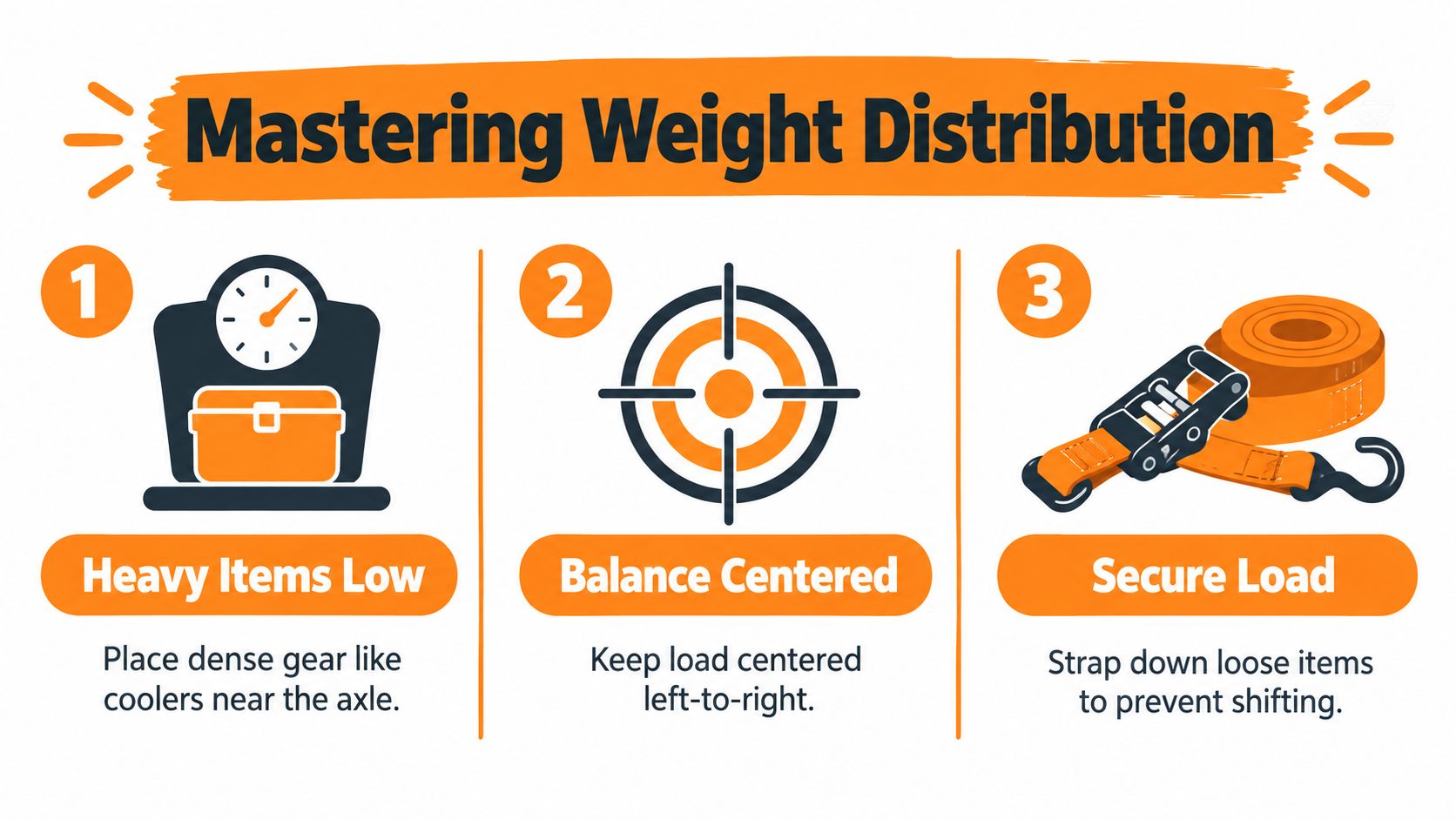
Packing rules that actually hold up
-
Put heavy gear first: Cooler, water, sand anchor, and tool bags go low and central, not on top.
-
Keep the wagon level: If one side sags, shift the load before you move.
-
Strap loose items down: A shifting canopy or umbrella bag changes balance fast.
-
Separate hard from soft gear: Shoes, balls, and toys can fill edge spaces, but they shouldn't create a top-heavy stack.
-
Treat the handle as feedback: If it jerks up when you start, the load is fighting you.
Pack for stability, not for volume. A wagon that looks full isn't necessarily packed well.
If you want modular gear that helps you keep weight low while still staying organized, check the Adventure Backpack Cooler. Used well, accessories should support the load plan, not fight it. That same approach helps preserve the wagon's balance when you're moving across grass, gravel, or uneven asphalt.
Ergonomic Limits for Pushing and Pulling
Your body notices force before your brain finishes naming it. The start of motion takes more effort than steady rolling, which is why a loaded wagon often feels manageable once it's moving but stubborn at the first step. Neutral ergonomic guidance sets recommended upper limits at about 320 N for initial movement and 230 N for sustained movement for men, and 220 N initial and 130 N sustained for women, while also warning that surface friction, wheel resistance, posture, and handle height change what those numbers feel like in practice. Those are force limits, not payload limits.
OSHA's guidance is blunt about the mechanics. Pushing generally uses body weight better than pulling, and pulling can put the cart where you don't want it, including near your shins or ankles. It also recommends keeping pushing force below 50 pounds where possible, because the injury risk rises when the force climbs.
That's why handle position matters so much. Keep the handle around waist-to-chest height, use both hands, and stay square to the wagon so you're not twisting through your torso on every turn. If you need to lean back hard just to get rolling, the route or the load needs fixing before your back gets involved.
For readers who deal with similar tugging problems in other gear, stop the walk tug-of-war is a useful phrase to keep in mind, because the same biomechanics show up in ropes, carts, and wagons. The body doesn't care whether the object is a wagon or a leash, it only cares how much force you're asking it to produce.
Ergonomic habits that pay off
-
Start on level ground: Get the wagon moving before you hit slopes or soft patches.
-
Use your legs, not just your arms: Let body weight help with the first push.
-
Keep wrists neutral: Bent wrists make the pull feel heavier.
-
Avoid twisting while turning: Step your feet around the wagon instead of wrenching your torso.
-
Stop early when resistance jumps: More effort is usually a terrain problem, not a motivation problem.
For people shopping for a safer, more comfortable hauling setup, the best heavy duty folding wagon for seniors is worth reading alongside any product page. The right handle and wheel setup should reduce strain across long parking lot walks and grassy fields, not just survive them.
Navigating Soft Sand and Uneven Terrain
Soft sand changes the mechanics of every pull. The wheel has to climb a shifting surface, and narrow tires sink deeper because the contact patch is smaller, so rolling resistance rises fast. On loose ground, a wagon that feels fine on pavement can start to plow instead of roll, especially if the route includes a turn while the wheels are already buried. Uneven grass creates a different problem, since one wheel can drop into a rut while the others stay high, which makes the wagon wander and puts side load into the handle.
Wheel size matters more than marketing copy. A 10-inch wheel sinks about 50% less than a 7-inch wheel on dry sand because the larger diameter spreads the load across a bigger contact area, so the wagon keeps moving with less drag at the same load. That is why a beach cart that won't sink in soft sand is worth comparing before you buy. The difference shows up in the first few yards, where small wheels stall and larger ones bridge the surface.
| Surface Type |
Standard Folding Wagon |
Heavy-Duty Beach Wagon |
| Dry sand |
Often sinks, drags, or needs frequent corrections |
More likely to keep rolling with less effort |
| Packed sand |
Can work, but starts and turns feel heavier |
Usually tracks more predictably |
| Grass |
Handles short stretches, but may bog under load |
Better stability across uneven patches |
A straight path also helps. Once the wagon starts to yaw, you waste force correcting direction instead of moving the load forward, and every correction increases side scrub in the wheels. The bobsleigh four man race setup is a useful mental model here, because each contact point only works well when the system stays aligned and the force stays clean.
The biggest mistake on beach routes is assuming any wagon will handle soft ground the same way. A model with 10-inch puncture-proof wheels has a real advantage on mixed terrain because the wheels bridge ruts and shell fragments instead of dropping into every low spot. On grass, that extra diameter also reduces the jolting that comes from small height changes.
Safety Boundaries for Convertible Seating
A cargo rating is not a passenger license. A wagon that can carry heavy gear doesn't automatically become safe for moving people, especially children, over uneven ground. That distinction matters because recent consumer safety action involving approximately 530 utility wagons highlighted entrapment and fall hazards, especially where a wagon opening and restraint system weren't designed for moving occupants.
The safer way to think about 2-in-1 seating is as a stationary bench, not a rolling ride. Used that way, it gives adults a place to rest between matches or while waiting at the shoreline. Used as a moving seat for a child, it raises a completely different risk profile, especially on slopes, gravel, or rough paths.
When the wagon is converted to bench mode, use the parking brake or wheel lock before anyone sits down. Keep it on level ground, don't let the seat configuration tempt you into treating it like a stroller, and shift back to cargo mode before moving the wagon again. The wagon that converts to chairs should be read with that boundary in mind.
A padded bench can be a comfort feature, not a transport promise. That's the difference between resting and riding, and it's the line families need to keep clear.
Your Checklist for Effortless Hauling
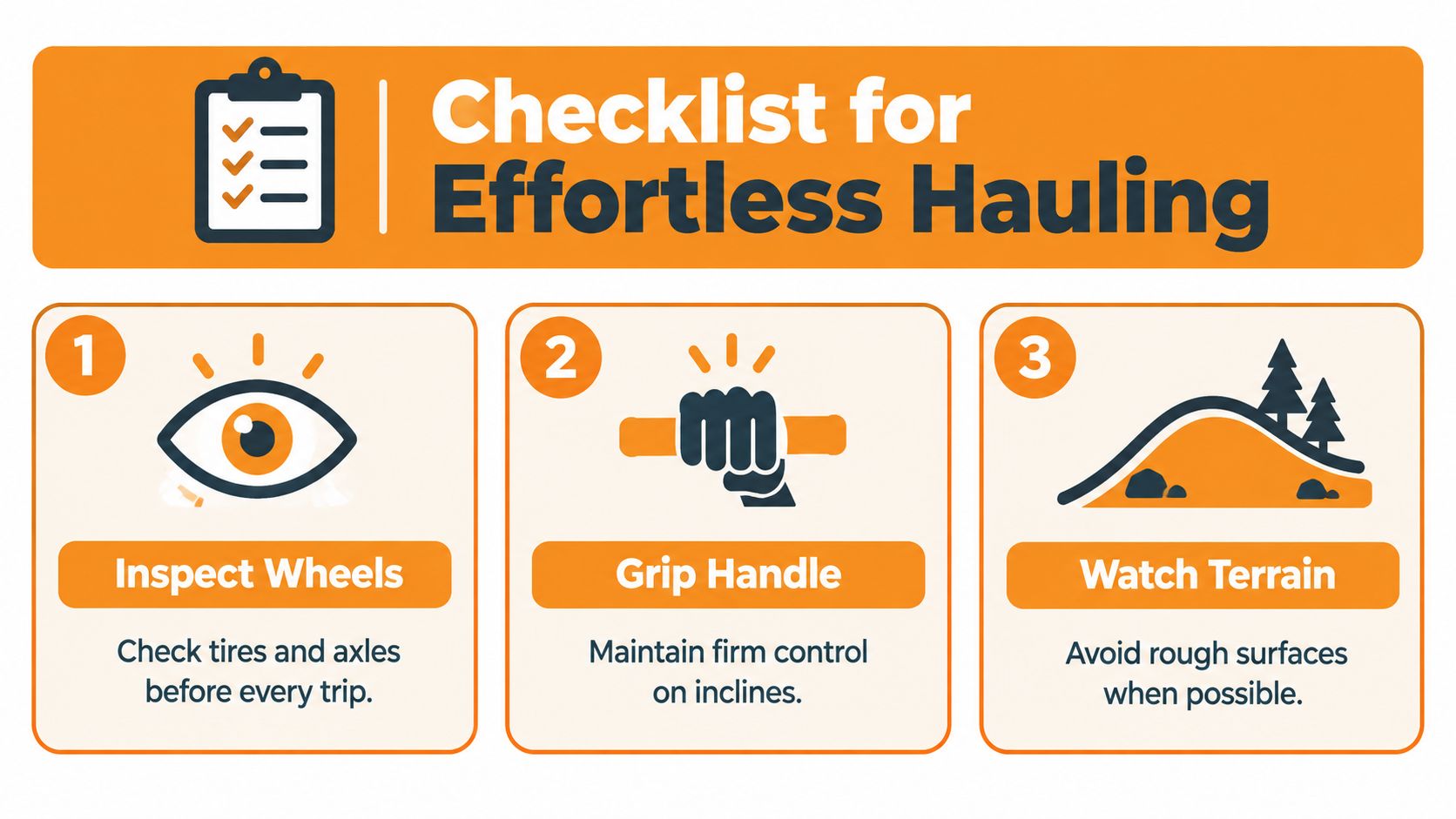
A wagon day goes well when the setup is boring in the best way. Inspect the wheels before you load anything, pack the heaviest gear low and centered, and make sure the handle lets you stand upright instead of hunching forward. The smoother the setup, the less you'll feel it by the end of the walk.
-
Inspect wheels and axles: Look for wobble, debris, and obvious wear before every trip.
-
Balance the load: Keep dense items centered and secure loose gear so it can't shift.
-
Set your handle height: Aim for waist-to-chest level so your posture stays neutral.
-
Pace for the surface: Slow down on grass, sand, gravel, and slopes.
-
Stop when force climbs: If it starts feeling like a dead pull, adjust the route or unload something.
A good hauler should do more than move gear. It should help you carry less fatigue, sit better when you arrive, and stay longer without paying for the trip later. That's the whole point of one trip instead of several.
Ready to stop hauling and start lounging? Get your Lounge Wagon today and make it a one-trip walk to the shore. Visit Lounge Wagon to see how one wagon can help you haul more, sit better, and stay longer.


