TL;DR: A 2-seater picnic bench is worth buying when it gives two adults stable seating without sacrificing portability, comfort, or useful surface area. Choose a fixed wood or composite bench for a permanent setting, a folding model for travel, or a convertible wagon-style design when one product must haul supplies, provide seating, and support compact outdoor living.
Meta description: Choose the right 2-seater picnic bench for comfort, portability, durability, and real outdoor use. Compare styles and make a smarter 2026 purchase.
Last Updated: October 2026
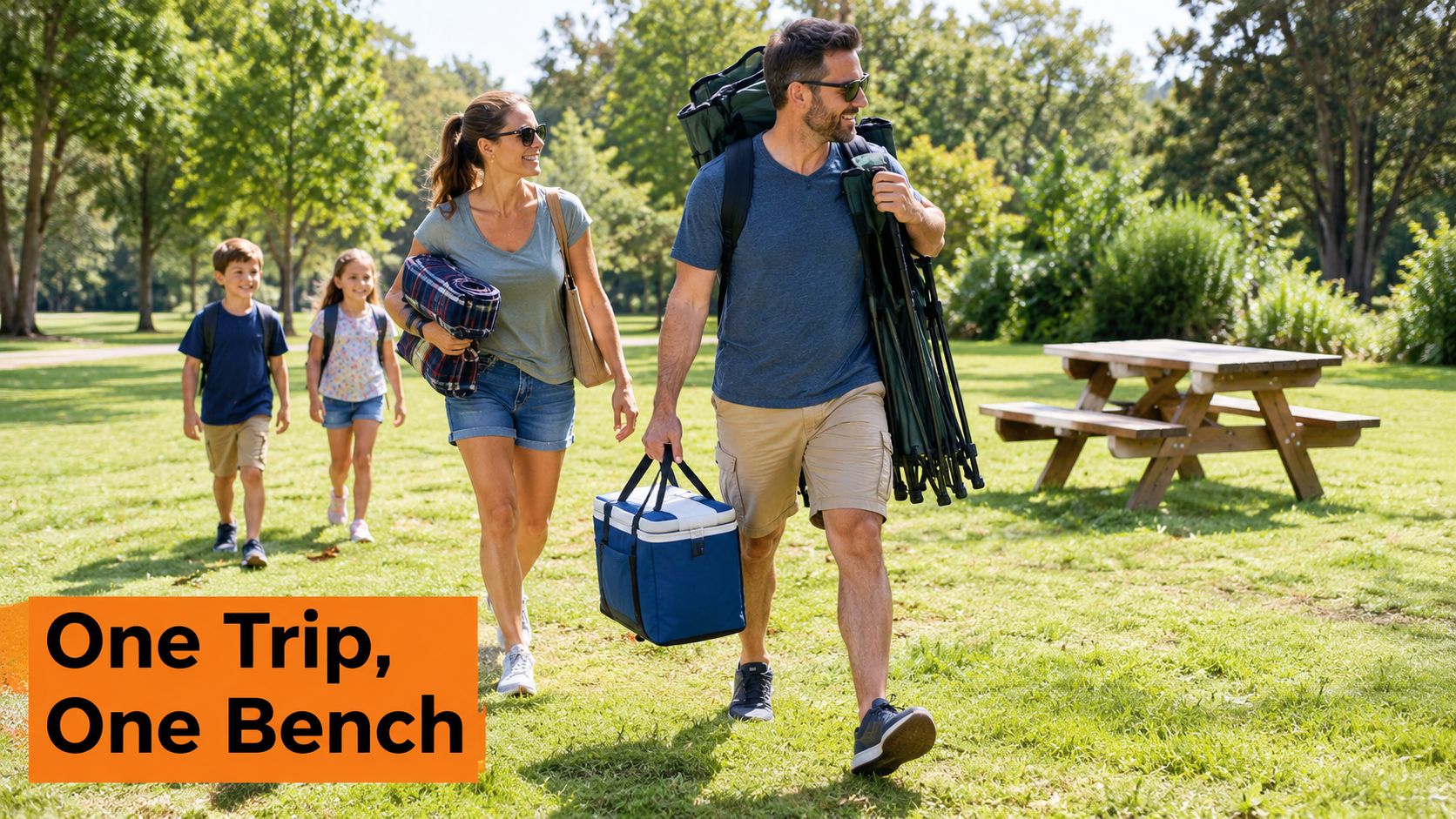
The cooler is in one hand, folding chairs are over your shoulder, a blanket is under your arm, and the children are already asking how much farther it is to the beach. By the time you reach the grass, you've made several trips and lost the relaxed start you wanted.
A well-chosen 2-seater picnic bench can replace much of that scattered setup with one defined place to sit, eat, and organize the essentials. The decision isn't just wood versus metal. It's whether you need a permanent outdoor fixture, a compact folding seat, or a multifunctional design that earns its space every time you leave the house.
Why a 2 Seater Picnic Bench Changes Your Day
At a tailgate, the difference is immediate. Instead of dropping a cooler beside two separate chairs and searching for somewhere to put plates, you have a compact seating zone with a surface for food, drinks, phones, and keys. At a park, the bench gives two adults a stable place to sit while children play, without forcing everyone onto a damp blanket.
The practical advantage is defined function. A bench can provide seating, a tabletop, and a temporary prep station for sandwiches or coffee. A compact design also gives a small patio, balcony, or campsite a more deliberate layout than two loose chairs scattered around a table.
Field rule: If the bench will travel regularly, portability matters more than visual permanence. If it will live in one place, stability and weather resistance deserve priority.
The central choice is a real trade-off:
Portable benches fit in a trunk or storage closet and make sense for beaches, tournaments, festivals, and changing campsites.
Fixed benches feel sturdier and look more integrated in gardens, patios, cabins, and permanent picnic areas.
Convertible benches can combine hauling, seating, storage, and surface space, which makes them useful when cargo room is limited.
For a mobile setup, the Lounge Wagon collection includes a wagon that converts from gear transport into seating for two adults. Its published design combines a reinforced steel frame, 500 lb capacity, padded seating, integrated cup holders, storage pockets, and 10-inch puncture-proof wheels, giving the product a different role from a conventional wooden bench.
The best 2-seater picnic bench isn't the one with the most decorative detail. It's the one that removes the most friction from your actual outing. A bench that stays in the shed because it's too heavy has failed. So has a folding model that technically seats two but leaves both people perched on a narrow edge.
The Main Styles of 2 Seater Picnic Benches
Three designs dominate the category: fixed, folding, and convertible. Each solves a different outdoor problem, and confusing them is the fastest way to buy the wrong bench.
Style
Portability
Stability
Best For
Fixed bench
Low
High
Gardens, patios, cabins, permanent picnic areas
Folding bench
High
Moderate to high, depending on frame
Beaches, parks, stadium lots, festivals
Convertible bench
Moderate
High when correctly deployed
Families and campers replacing several pieces of gear
Fixed benches
A fixed bench is the right answer when the seat has a home. Wood, concrete, recycled composite, and powder-coated metal can all work well outdoors, with material choice determining maintenance and visual character. Commercial park benches are commonly sold in the 4 to 6-foot range, while benches intended for two people often fall around 40 to 53 inches, according to this outdoor bench buying guide.
Fixed models suit a garden patio, cabin porch, dedicated tailgate pad, or community picnic area. They don't need a folding hinge, carry strap, or compact storage profile, so manufacturers can focus on sturdy legs, a supportive backrest, and weather-resistant construction.
Folding benches
A folding bench is the portable workhorse. It collapses for transport, occupies less storage space, and can move from the trunk to the sideline without becoming a project. Look for a frame that locks firmly, feet that won't sink easily into soft ground, and a seat that doesn't flex sharply when both users sit down.
Folding benches are especially useful for parents at soccer complexes, beachgoers moving from the car to the shoreline, and festival visitors who need a place to sit without carrying separate chairs. For readers comparing compact outdoor dining options, this guide to finding a portable outdoor dining set is a useful reference point.
Convertible benches
Convertible designs occupy the middle ground. They may change from a carryable gear hauler into a bench, rotate a backrest into a tabletop, or combine seating with storage. The benefit isn't novelty. It's fewer separate items to pack, carry, and maintain.
A convertible model works best for the car camper, the condo dweller with limited storage, the parent managing a tournament sideline, or the festival regular who needs a mobile base. The Lounge Wagon outdoor folding bench shows how a portable frame can serve as both equipment transport and a place to sit.
Don't choose a convertible mechanism just because it has more positions. Hinges, latches, and moving panels add potential failure points. Choose one only when you'll use the extra functions often enough to justify the added complexity.
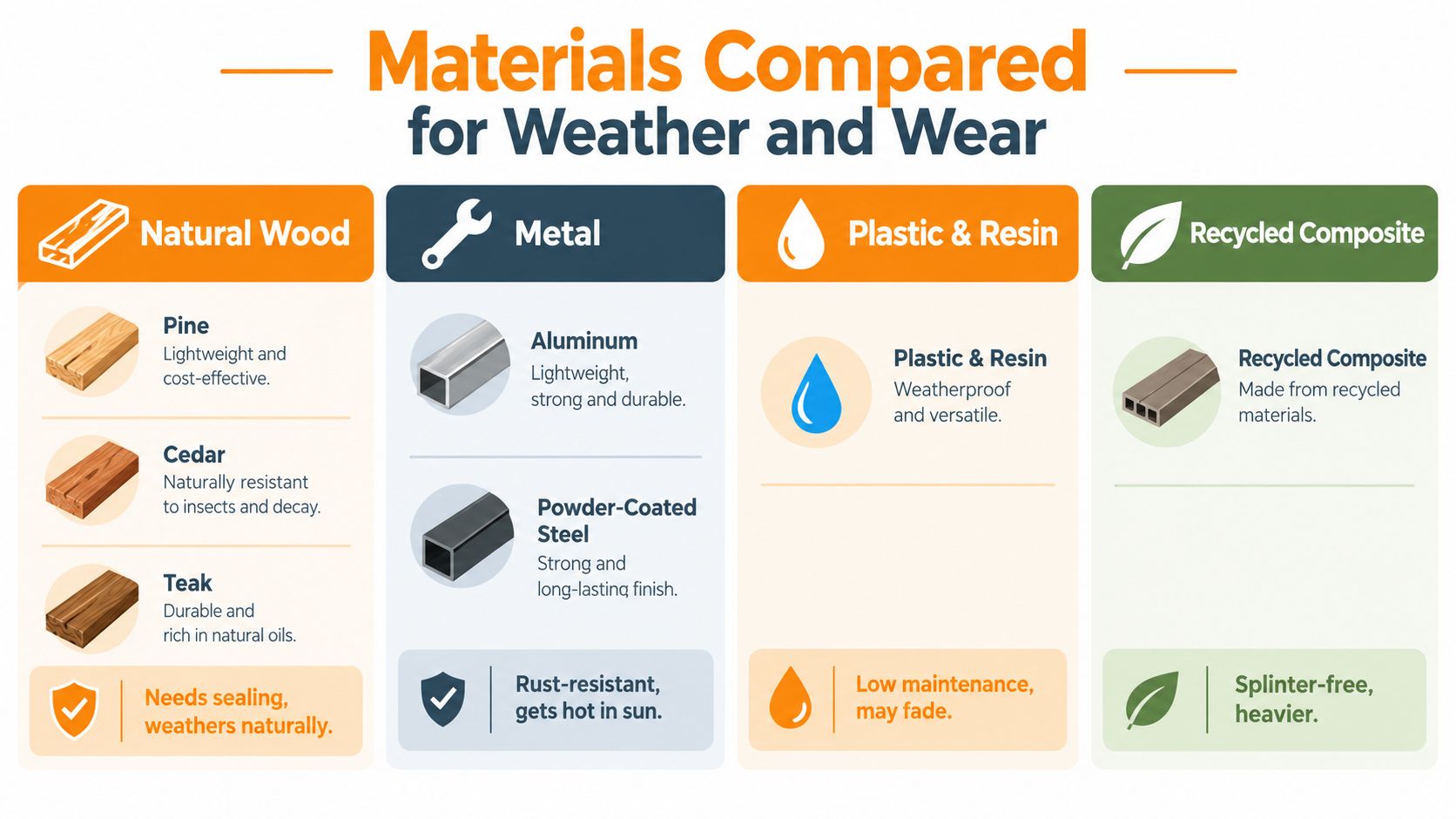
Materials Compared for Weather and Wear
Material determines how the bench behaves after repeated exposure to sun, rain, salt air, grit, and winter storage. The right choice depends less on what looks premium in a product photo and more on where the bench will spend most of its life.
Natural wood
Pine, cedar, teak, and similar woods offer the warmest appearance. Wood blends into gardens and campsites, feels less industrial than metal, and can become a visual anchor rather than a piece of temporary equipment.
The trade-off is maintenance. Wood needs protection from moisture and should be checked for cracking, raised grain, and worn finish. A fixed wooden bench makes sense when you want permanence and accept seasonal care. It makes less sense for a beach traveler who must lift it through sand and rinse salt from every joint.
Metal
Aluminum keeps weight down and resists rust, but it can feel cold in cool weather and hot in direct sun. Powder-coated steel offers a more substantial frame and strong resistance to outdoor wear when the coating remains intact. The Broxap bench buying guide identifies metal, concrete, HDPE, aluminum, and powder-coated steel as strong weather-resistant choices, while noting that concrete benches can last 50 to 100 years.
Metal is my first choice for a permanent public-use bench or a folding frame that needs stiffness. Inspect welds, coating quality, hinge hardware, and contact points where grit can collect.
Plastic and resin
Plastic and resin benches are easy to clean and generally unfussy in wet environments. They suit family use, campsites, and places where food, mud, and spilled drinks are routine. The compromises are appearance, possible fading, and the hollow creak some products develop under load.
Recycled composite belongs in this broad category but feels more substantial. It resists splinters and can deliver a wood-like appearance, though its weight makes it better for fixed placement than frequent transport.
Fabric and aluminum hybrids
Fabric-and-aluminum benches prioritize portability and comfort. A fabric seat can feel more forgiving than a hard slat, while an aluminum frame keeps the carry weight manageable. The weak point is moisture. Fabric can retain water and develop mildew if it gets packed away damp.
Salt-air advice: For coastal use, rinse metal hardware and allow fabric to dry fully before storage. Salt doesn't need to be visible to begin affecting fasteners and frame joints.
Choose material according to the bench's real home:
Garden or patio: wood, composite, or powder-coated steel.
Beach and coastal travel: aluminum or coated steel with washable surfaces.
Camping: resin or a fabric-and-aluminum hybrid.
Heavy public use: concrete, HDPE, or powder-coated steel, as discussed in the material guidance above.
For buyers who want extra function in a permanent setting, an outdoor bench with storage can keep cushions, toys, or garden accessories out of sight. Storage only helps if the lid, hinges, and interior can withstand the local weather.
Sizing Comfort and Real Two Adult Fit
“Seats two” is a capacity label, not a comfort guarantee. Two adults need enough length for shoulder room, enough depth to avoid perching, and a supportive posture that still feels good after the food is gone and the conversation continues.
For a traditional bench, use established accessibility dimensions as a useful baseline. U.S. accessibility standards specify a minimum seat length of 42 inches, a seat depth of 20 to 24 inches, and a seat height between 17 and 19 inches above the ground or floor, according to the U.S. Access Board.
Read the measurements in context
A shorter bench may technically fit two adults, but it can create shoulder contact and force elbows into the tabletop. A deeper seat can feel generous, yet it may make standing harder if the backrest is poorly angled. Armrests and a center divider can improve individual support while reducing the usable width.
A practical assessment should include:
Seat length: Does each person have room to shift position without crowding the other?
Seat depth: Can both users sit back without sliding forward?
Seat height: Can an older adult stand without pushing hard against the table?
Backrest angle: Does the back support a relaxed posture rather than forcing an upright perch?
Frame bracing: Do the legs stay planted when one person sits down first?
A 42-inch model may suit short meals and quick stops, while a longer bench in the 45 to 60-inch range provides a more comfortable compact two-person arrangement, based on common bench dimensions. The longer option usually wins for an afternoon outdoors, provided the frame and seat depth remain practical.
Measurement
Recommended Range
What Happens If Too Small
What Happens If Too Large
Seat length
At least 42 inches for accessible bench seating
Shoulder and elbow crowding
More weight and harder storage
Seat depth
20 to 24 inches for accessible bench seating
Perching and poor thigh support
Harder standing and less upright posture
Seat height
17 to 19 inches for accessible seating
Knees rise and standing becomes awkward
Feet may not sit comfortably on the ground
Clear surrounding space
Enough room for circulation and companion seating
Knees, wheelchairs, and bags compete for space
The bench consumes more usable area
The comfortable fit also depends on load capacity. The Lounge Wagon publishes a 500 lb capacity and 2-in-1 seating configuration, which gives two adults a clearly stated combined-load reference rather than relying only on a vague “two-person” label. Its padded seat, cup holders, and storage pockets also address the comfort gap that a bare folding plank doesn't solve.
For shared public spaces, accessibility requires more than a correctly sized seat. Guidance from Wheels for Wellbeing recommends seat heights of 470 to 480 mm for most seats, with varied seating heights when multiple seats are installed, plus clear knee space of 750 mm high, 500 mm deep, and 900 mm wide at accessible picnic benches. Those clearances determine whether a companion can sit beside a wheelchair user without blocking circulation.
Best Uses From Beach to Tailgate
The same 2-seater picnic bench behaves very differently on sand, grass, asphalt, and a paved patio. Match the frame and footprint to the surface first. Decorative details come later.
Beach
Soft sand punishes narrow feet and heavy designs. Choose a folding aluminum or coated-steel bench with a broad contact area, washable surfaces, and hardware you can rinse after the outing. A lightweight frame matters because the walk from a beach car park is rarely short.
The essential feature is ground stability. Skip oversized umbrellas, built-in speakers, and electric coolers if they add bulk without improving the actual seating experience.
Park
A park installation benefits from weather-resistant wood, recycled plastic, HDPE, or powder-coated steel. Stability matters more than compact folding, particularly when the bench will remain in one location. Public installations also need adequate surrounding clearance, not merely a seat that fits two people.
The best permanent model should feel planted without looking hostile or overly institutional. If theft is a concern, anchoring and site planning matter as much as material.
Tailgate
Tailgates reward speed and organization. A folding or convertible bench should set up without a complicated sequence and leave enough room for coolers, food, and team gear. Cup holders or a small integrated surface can prevent drinks from ending up on the truck bed or ground.
A wagon-style design is especially useful when it carries equipment on the way in and becomes the seating area after arrival. The Lounge Wagon combines 500 lb capacity, 2-in-1 seating, storage pockets, and 10-inch puncture-proof wheels, so the same product can transport gear across grass or gravel before supporting two adults.
Festival and campsite
Festivals favor compact carry profiles, shoulder straps, and quick deployment. Campsites favor easy cleaning and surfaces that tolerate damp grass, cooking mess, and dirt. Resin works well for cleanup, while fabric-and-aluminum designs can provide better comfort if the fabric dries completely before storage.
Secondary uses include a nursery drop-off perch, a fishing spot seat, a backyard stargazing bench, and a sideline base at a youth soccer complex. In each case, buy for the dominant surface and transport method, not for a feature list that looks impressive online.
Use-case test: Name the place where you'll use the bench most often. If you can't name one, prioritize a folding or convertible design that won't punish you when plans change.
The Case for Multifunctional and Convertible Benches
Outdoor furniture is moving toward pieces that work harder in smaller spaces. Layered patios, compact balconies, campsites, and crowded event grounds all reward products that combine functions instead of demanding a separate chair, table, cooler, and hauling solution.
A convertible 2-seater picnic bench can serve as seating during the event, a surface for food, and a transport tool before setup. That makes it especially valuable for families who don't have room in the vehicle for several single-purpose items.
The useful convertible formats
Bench-to-cooler designs put insulated storage beneath the seat. They make sense for short outings where drinks and seating need to travel together, though you should inspect the insulation, drainage, and hinge construction before buying.
Bench-to-table designs rotate or reposition a backrest to create a tabletop. This arrangement saves space, but the mechanism must lock securely. A loose panel creates an unstable eating surface and becomes a nuisance when guests don't understand how it works.
Modular benches connect into larger arrangements. They suit patios and campsites where the group size changes, but they sacrifice some simplicity and can require extra pieces to deliver the intended layout.
The stronger argument for conversion is cost-per-use, not a promised percentage saving. One product that replaces several pieces can reduce packing, storage, and setup decisions. The weaker argument is buying a complex bench for functions you'll never use.
Where convertible designs fall short
Moving parts introduce wear. Hinges can loosen, latches can jam, and added hardware can increase weight. A bench that transforms into several configurations may also confuse guests or take longer to deploy than a simple folding seat.
The best convertible product disappears into your routine. You load it, roll or carry it to the destination, open the seating function, and use the integrated storage or surface without consulting a manual.
The convertible outdoor bench guide is relevant for shoppers comparing that middle ground between a conventional bench and a multifunctional outdoor hauler. The Lounge Wagon is one example of the category, with 2-in-1 seating and a published 500 lb capacity alongside its hauling function.
Buying Checklist and Smart Picks for 2026
A smart purchase starts with the outing, not the product page. Before comparing finishes or accessories, decide whether the bench will stay put, travel by car, or move across sand and grass under its own wheels.
Check the fit before the features
Measure the available storage space, the path from vehicle to destination, and the place where both adults will sit. Confirm the seat length, depth, height, back support, and stated load capacity. A nominal two-person rating isn't enough if the seat forces both users into the center.
Use this checklist:
Primary location: Identify the surface and climate where the bench will spend most of its time.
Transport method: Confirm whether you'll lift it, carry it, roll it, or leave it installed.
Comfort dimensions: Compare seat length, depth, height, and backrest design.
Frame quality: Inspect welds, fasteners, braces, hinges, and locking points.
Weather exposure: Match wood, metal, resin, composite, or fabric to rain, sun, salt, and storage conditions.
Maintenance plan: Decide whether you'll cover, rinse, seal, dry, or store the bench between uses.
Accessibility: Leave clear knee and circulation space when the bench serves a shared outdoor area.
A picnic essentials checklist can help you audit the supporting gear that often determines whether the bench remains convenient. The bench shouldn't force you to carry a separate surface, chair, or storage solution unless those items serve a specific purpose.
Avoid the common buying mistakes
The lowest-priced folding frame often becomes expensive when its joints bend, feet sink, or seat fabric sags. Fixed furniture is another poor choice for a rental property or anyone who regularly changes campsites. Buyers also overlook ground contact, then discover that a narrow-footed bench rocks on grass or disappears into sand.
For buyers comparing portable seating, the portable bench seat guide offers another way to think about transport, setup, and storage. Keep the decision practical: the bench should fit the vehicle, the user, and the destination without requiring a second trip.
Buyer Profile
Top Pick
Style
Material
Best For
Price Tier
Permanent garden owner
Backed fixed bench
Fixed
Wood or composite
Patio conversations and daily seating
Mid to premium
Beach and tournament parent
Lounge Wagon
Convertible
Reinforced steel and padded seating
Hauling gear, then seating two adults
Premium
Festival regular or camper
Folding carry bench
Folding
Aluminum or fabric hybrid
Compact transport and fast setup
Budget to mid
My recommendation is straightforward. Choose fixed wood or composite when the bench is part of the garden or backyard, folding aluminum or fabric when you carry it often, and a convertible model when hauling and seating are equally important. If your outings routinely involve coolers, blankets, sports equipment, or beach supplies, a product with 500 lb capacity and 2-in-1 seating deserves serious consideration because it addresses both the transport problem and the need for a comfortable place to sit.
Lounge Wagon combines a heavy-duty gear hauler with padded seating for two adults, integrated storage, cup holders, and all-terrain wheels. Measure your vehicle and storage space, then visit Lounge Wagon to choose a setup that can carry the load in and become your seat when you arrive.
Choosing a selection results in a full page refresh.
This pad is perfect for kids or dogs to be comfortable inside the moving wagon, and very nice after you set everything up and want to sit for extra padding.
Having the umbrella this summer has been easy to use and a must to make sitting and watching the parade so nice when there isn't any shade. My dogs laid on the wagon padding and enjoyed the day without getting too hot. I enjoyed the shade too.