TL;DR: An outdoor folding bench should do more than flatten for storage. Choose a compact fold-in-half camp bench for short carries and fast setup, or choose a 2-in-1 wagon bench when you need one rolling load, seating for two, and a 500 lb capacity for beaches, fields, festivals, and tailgates.
Last Updated: September 2026
The cooler is in one hand, the canopy bag is over your shoulder, and a folding bench is digging into your opposite arm. You reach the tailgate, drop everything, and realize the chairs are still in the trunk. The second trip brings the speaker and snacks. The third brings sunscreen, towels, and the sandals someone forgot.
That routine turns a relaxed outdoor day into unpaid manual labor. A mobility-first outdoor folding bench solves the actual problem by combining transport and seating, so one person can roll gear to the beach, field, or tailgate and then sit down without unpacking a separate chair.
If you're comparing a classic camp bench with a wagon-bench hybrid, start with this practical guide to capacity, wheels, stability, comfort, and storage. For the hauling side of the decision, the guide to hauling heavy gear to the beach alone is a useful companion.
The Three-Trip Problem Every Outdoor Day Knows
The three-trip haul isn't a minor inconvenience. It creates the worst kind of fatigue, the kind that arrives before the game, concert, picnic, or beach day has even started. You carry the cooler first because it's heavy, then return for seating, then go back for the small items that never fit in your hands.
A conventional folding bench helps with the seating, but it doesn't solve the transport loop. You still need a cart, wagon, or extra pair of hands for blankets, food, shade, and children's gear. That's why the useful question isn't, “Which bench folds smallest?” It's, “What must this bench move before anyone sits down?”
The mobility-first fix
A 2-in-1 wagon bench treats cargo and seating as one job. The wagon carries supplies across a parking lot or grass field, then its bench configuration gives two adults a place to rest. Lounge Wagon describes this format as a reinforced steel-frame hauler with a 500 lb capacity, padded seating for two, integrated cup holders, storage pockets, and 10-inch puncture-proof wheels.
The benefit is straightforward. You load the cooler, canopy, towels, chairs, and sports equipment once, pull the wagon to the destination, and convert it into seating instead of carrying a separate bench. That matters most at crowded youth soccer complexes, long shoreline walks, and tailgates where parking rarely sits beside the perfect spot.
Field rule: If your outdoor day regularly requires a cooler, shade, seating, and loose gear, judge the product as a transport system first and a bench second.
A basic fold-in-half camp bench still has a place. It wins when the car is close, the ground is firm, and compact storage matters more than rolling capacity. But if your arms are already full before you leave the car, a flat bench only handles half the problem.
What an Outdoor Folding Bench Actually Is
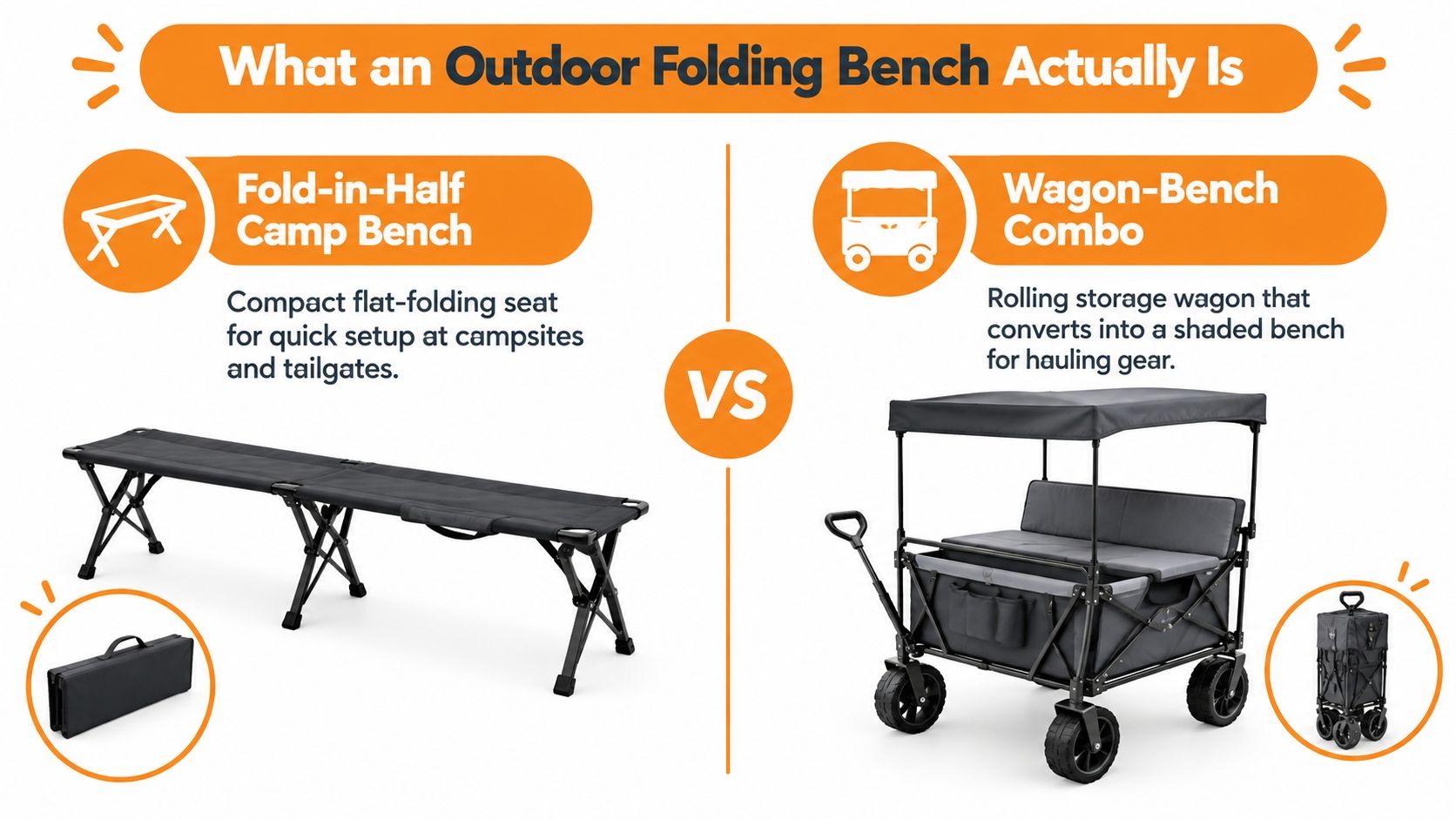
An outdoor folding bench is a portable seat designed to collapse for transport and tolerate repeated exposure to outdoor conditions. The category includes simple hinged seats, fold-in-half camp benches, and rolling wagon systems that convert from cargo carriers into two-person seating.
Those products look similar in a catalog, but they behave very differently outside. A fold-in-half camp bench prioritizes a small packed footprint. A wagon-bench combination prioritizes movement, cargo, and setup flexibility.
Two designs, two buying decisions
A fold-in-half camp bench typically uses a hinged steel or aluminum frame with a fabric seat. The legs fold inward, and a carry handle often lets you move the packed bench like a briefcase. It's a sensible choice for tailgates, campsites, and patios where setup happens close to the vehicle.
A 2-in-1 wagon bench uses a rolling frame, cargo tub, pull handle, and bench seats that become part of the wagon's structure. The product takes more space when packed than a flat camp bench, but the wheels eliminate much of the carrying. The convertible outdoor bench guide covers this distinction in more detail.
Read the mechanism before the marketing
Look for the hardware that controls how the product works:
Hinged steel frames: These support repeated opening and closing, while powder coating helps protect exposed metal from outdoor moisture.
Ripstop fabric decks: These provide a flexible seat surface and can reduce packed bulk, but they need proper drying before storage.
Retractable handles: These turn a wagon into a controllable load rather than something you must push from the side.
Locking pull handles: These keep the handle positioned during movement and reduce awkward steering.
Fold-out bench seats: These give the wagon a second function, allowing cargo transport before seating.
Don't confuse a wagon accessory with a wagon-bench system. A removable seat pad may make a wagon more comfortable, but it doesn't necessarily create a stable two-person bench. A true convertible product should explain how the seat locks, how passengers sit, and whether cargo remains supported at the same time.
The Four Features That Separate Winners From Wobbly
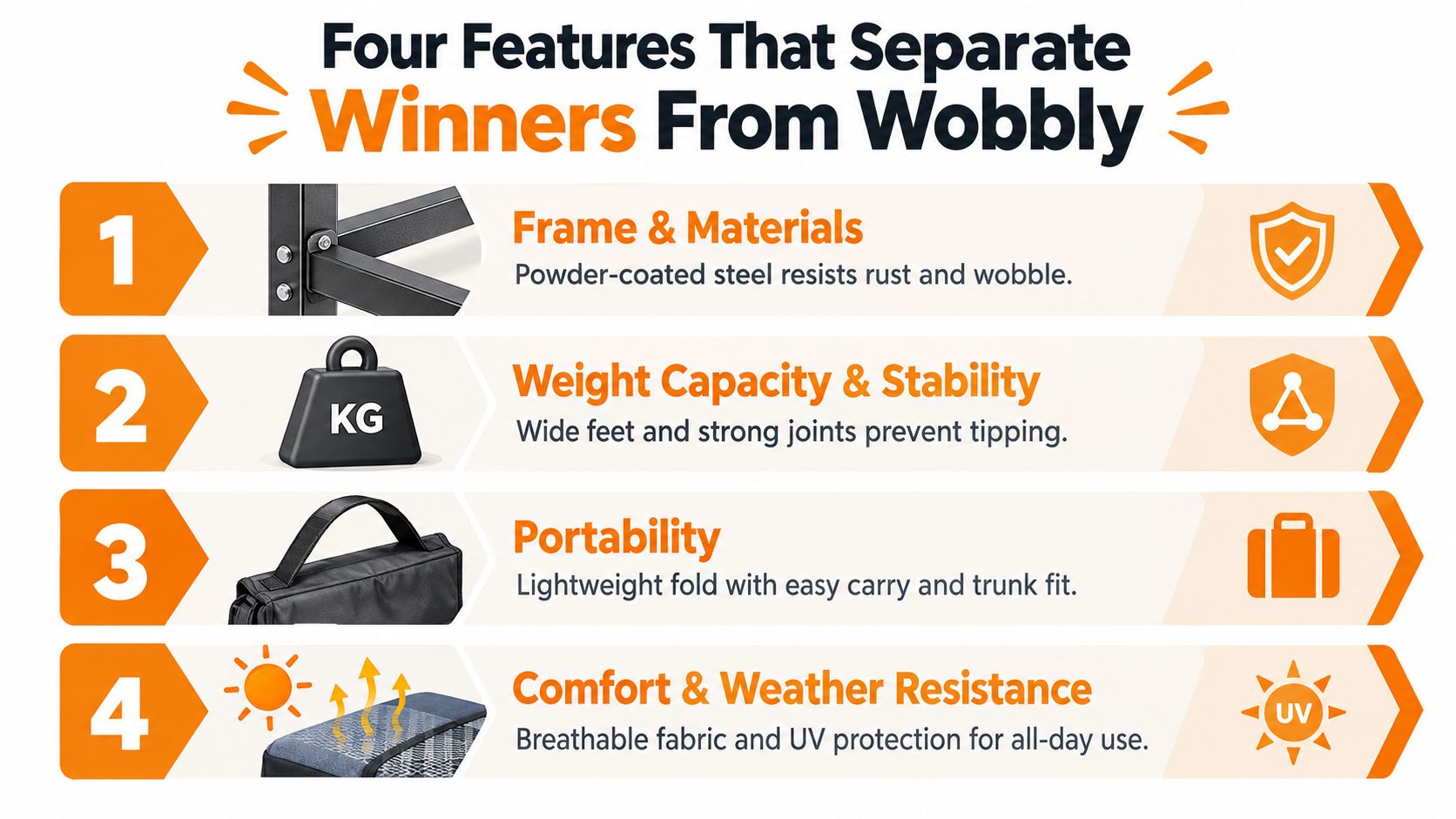
A good outdoor folding bench earns its storage space by doing four jobs well: supporting people, rolling over the terrain you use, keeping riders comfortable, and packing away without becoming a nuisance. Shiny fabric and a long feature list won't rescue a weak frame or undersized wheels.
Frame and materials
Powder-coated steel adds structural stiffness and helps protect the frame from corrosion. Aircraft-grade aluminum can reduce carrying weight while retaining useful support, but the joints, welds, and locking points matter as much as the tubing itself.
Feature to prioritize: rigid frame members, clean welds, and positive locks. Human benefit: the bench feels planted when two people sit down instead of flexing or twisting beneath them.
Wheels and terrain
Narrow plastic wheels may roll acceptably across a smooth driveway, then bog down on grass, gravel, or soft sand. Wide polyurethane wheels and larger diameters spread the load and clear small cracks, roots, and uneven patches more effectively.
Soft ground creates a real mechanical problem. A force calculator lists sand with a rolling-resistance coefficient of 0.2 to 0.3, while beach carts are listed at 30 to 50 in the same reference table (rolling-resistance data). You don't need to calculate the force at the shoreline to feel the difference. You need wheels that don't dig into the surface.
Feature to prioritize: wide, puncture-resistant, all-terrain wheels. Human benefit: you pull instead of drag when the path changes from pavement to grass or sand.
Seating and comfort
Seat height affects entry and exit, especially for grandparents and anyone carrying a tired child. Padded seating, back support, breathable fabric, cup holders, and side pockets matter during long sideline waits because they keep the bench from feeling like temporary equipment.
Feature to prioritize: supportive backrests and a seat that doesn't sag excessively. Human benefit: riders can stay comfortable between matches, sets, or performances without bringing another chair.
Storage and packed profile
A standing-fold wagon may fit a closet better than a flat bench, while a fold-in-half model may slide beneath a bed or into a narrow trunk space. Check the open footprint and folded dimensions together. A seat that fits the closet but cannot carry your actual gear hasn't solved much.
Look for:
Interior cargo space: It keeps coolers, blankets, and loose equipment in one controlled load.
Side pockets: They stop phones, sunscreen, and keys from disappearing beneath larger items.
Cup holders: They keep drinks stable and off the seating surface.
Carry handles: They make short moves manageable when rolling isn't practical.
The right feature is the one that removes a repeated annoyance. Don't pay for a specification you won't use.
Fold-in-Half Camp Bench Versus 2-in-1 Wagon Bench
The fold-in-half camp bench is a compact seat. The 2-in-1 wagon bench is a transport platform that becomes a seat. Treating them as interchangeable leads to predictable disappointment, especially when buyers bring a compact bench to a beach or expect a small camp seat to replace a cargo wagon.
The table below shows the decision logic without pretending that every product in either category uses identical hardware.
Spec
Fold-in-Half Camp Bench
2-in-1 Wagon Bench
Primary job
Portable seating
Cargo hauling plus seating
Load approach
Seated users on a hinged frame
Seated users, wagon structure, and cargo
Wheel system
Usually carried, or uses limited mobility hardware
Integrated wheels designed for rolling
Seating
Typically two-person fabric bench
Two-person bench configuration
Packed profile
Flat or briefcase-style
Folded wagon profile
Terrain fit
Firm ground near the vehicle
Parking lots, grass, gravel, and selected soft terrain
Storage priority
Small packed footprint
One product replacing several items
Setup style
Open legs and lock frame
Roll, unload, lock, and convert
A listed 6 ft fold-in-half bench shows the compact format clearly. One commercial model opens to 72 inches by 11 inches by 16.5 inches, folds to 36 inches by 11 inches by 3.5 inches, and carries a 650 lb per-bench rating (listed folding bench dimensions). Another listing specifies a 1000 lb evenly distributed capacity with a similar 6 ft format (heavy-duty folding bench specifications).
Those ratings describe listed product capacities, not a universal guarantee for every bench or every moving situation. Choose the fold-in-half style when you park close and want the smallest possible seat. Choose a wagon-bench style when the walk, cargo, or terrain is the primary challenge. The 2-in-1 wagon overview explains why the second category trades flat-fold compactness for mobility.
Who Each Style Is Built For
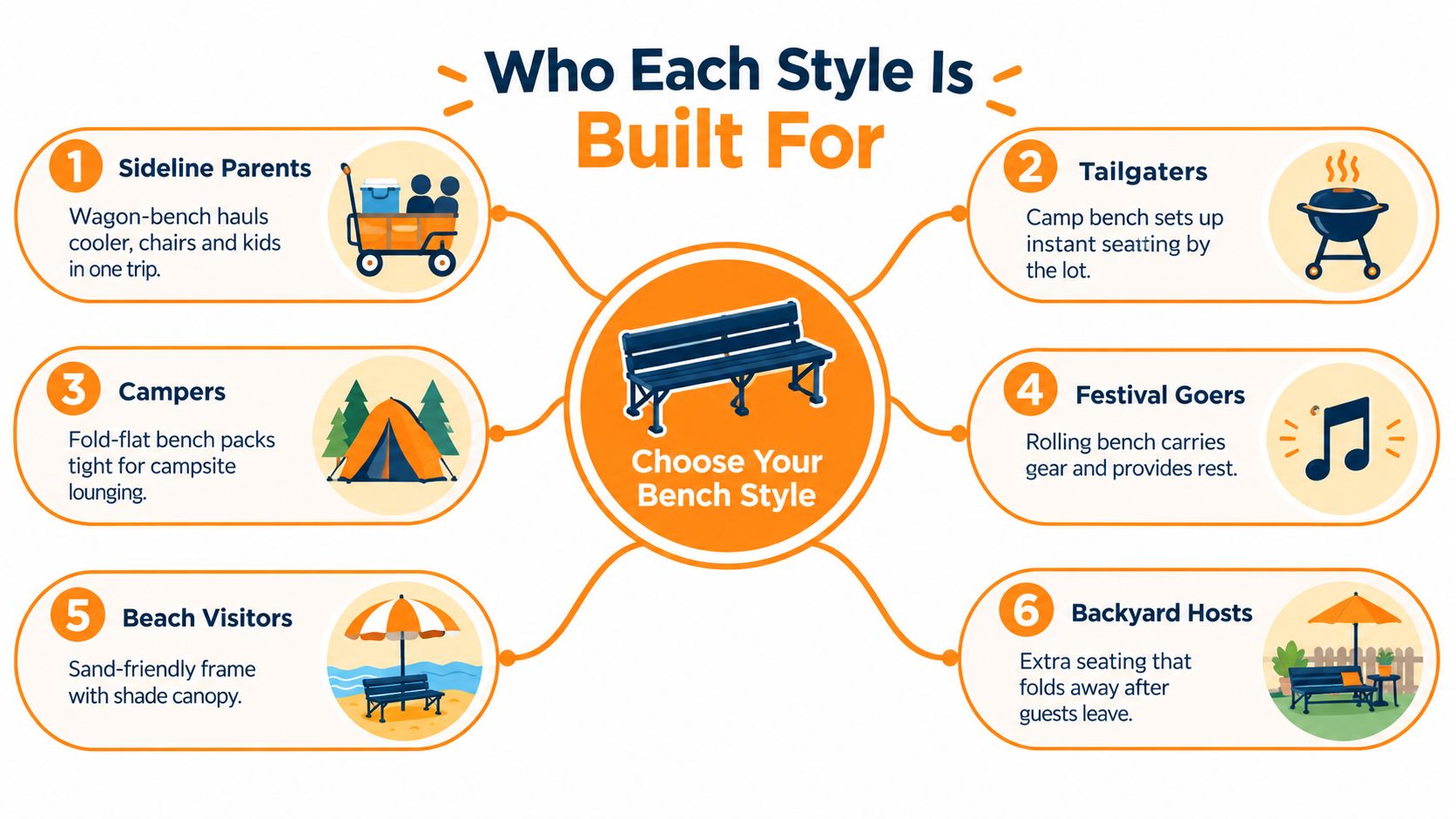
The best outdoor folding bench depends on the day you keep repeating. A tournament parent, beach family, festival visitor, grandparent, angler, and tailgater can all want “portable seating,” but they don't face the same carrying problem.
Sideline parents
At a youth soccer or lacrosse complex, the load rarely consists of one item. It includes a cooler, tent, blankets, game equipment, snacks, and sometimes a stroller. A wagon-bench hybrid collapses those separate trips into one rolling arrival, then provides seating between matches.
A fold-in-half camp bench works only if another carrier handles the equipment. That's fine for a short walk from the car, but it isn't the efficient choice for a full tournament day.
Beach families
Beach access exposes weak wheels quickly. Towels and sand toys are light, but umbrellas, coolers, shade structures, and changing supplies create a bulky load that becomes miserable when wheels sink.
Choose the wagon format when you need oversized, sand-capable wheels and cargo containment. The key benefit isn't just "all-terrain." It's keeping the load together while you cross soft sand instead of making repeated trips along the shoreline.
Festival-goers
Festival visitors often care more about packed size than maximum hauling. If you carry only a blanket, water, and personal items, a fold-in-half camp bench can strap to other gear and set up quickly at a fixed spot.
A wagon-bench hybrid earns its space when it becomes the base camp. It can carry supplies and provide a raised seat with back support, which is more useful than sitting directly on the ground in a crowded venue.
Grandparents
Entry height and stability matter more than flashy folding speed. A wider wagon-bench seat gives older users a more substantial platform for rest breaks at parks, zoos, and parades. The cargo compartment also keeps children's supplies off their laps.
Anglers
An angler moving tackle boxes, bait, rods, and drinks needs more than a seat. The wagon format carries the equipment and offers a rest point between casts. A compact bench is easier to pack, but it adds another object to transport.
Tailgaters
Tailgaters usually benefit from the all-in-one format because the cooler, grill supplies, chairs, and shade gear all compete for trunk space. If your event starts beside the vehicle, a camp bench remains practical. If you must cross a parking field, the wagon-bench option is the more rational pick.
Choose the fold-in-half style for a short carry. Choose the wagon-bench style when the walk, load, or passenger comfort defines the day.
Safety, Stability, and What Weight Ratings Really Mean
Safety deserves more attention than it gets in outdoor folding bench shopping. Hinges create pinch points, passengers can shift weight suddenly, and a person sitting on one end can produce a tipping force that a centered load never reveals.
A static capacity rating tells you how much weight a structure may support under a stated test condition. It doesn't automatically describe what happens when two adults sit down at once, one rider leans outward, the wagon crosses a bump, or the operator brakes on uneven ground.
For a two-seat bench, engineering guidance recommends at least 200 to 300 kg of distributed static load, with additional margin for dynamic loading (bench load guidance). That source also recommends validation with distributed sandbags, concentrated center-load checks, and repeated drop-sit cycles because each test exposes different frame and joint weaknesses.
Five questions to ask before buying
Where was the rating measured? Ask whether it represents distributed static load, concentrated load, or movement under real conditions.
How does the hinge protect fingers? Look for locking hinges, guarded joints, and a clear folding sequence that keeps hands away from closing metal.
Can two adults sit while cargo remains inside? A passenger rating may not cover simultaneous cargo and seating.
Does the wagon have a parking brake or stable lock? A rolling product should stay put when passengers enter, exit, or shift position.
What terrain is approved? Ask about slopes, soft ground, gravel, and braking rather than assuming “all-terrain” means every surface.
End-loading deserves special caution. Two people sitting on one end can shift the center of gravity and increase the chance of tipping, particularly on sloped or uneven ground. Keep the wagon on firm, level terrain when passengers are getting in or out, and distribute cargo instead of piling dense items at one end.
For a deeper look at load limits and towing logic, review the wagon towing capacity guide. A capacity number is useful only when you understand the test behind it.
Buying Checklist and Maintenance for a Long-Lasting Bench
Inspect the structure before you compare colors. A strong outdoor folding bench should show thoughtful decisions at the tubing, welds, pins, fabric, and wheels, not just a high number on the product page.
What to inspect before purchase
Frame tubing: Ask about tubing diameter and wall thickness. Heavier construction can resist flex, while poorly matched tubing can make the bench feel unstable.
Weld points: Look for consistent welds without visible cold spots, gaps, or rough interruptions. Weak welds can become failure points under repeated loading.
Hinge and locking pins: Open and close the mechanism. The pins should engage cleanly and resist springing back out.
Fabric denier and UV treatment: A stated fabric specification helps you compare abrasion resistance, while UV treatment supports longer outdoor use.
Wheel tread: Match the tread to the ground you cross. Smooth hard wheels suit firm paths better than wide terrain-focused wheels.
Folded dimensions: Measure the trunk, closet, or garage space first. A product that technically folds but blocks access to everything else will become a storage problem.
Maintenance that prevents avoidable damage
Salt, chlorine, sand, and mud attack outdoor equipment through repetition. Rinse the frame and wheels after beach or pool use, then dry the fabric completely before folding it away. Moisture trapped in a folded seat creates odors and can shorten fabric life.
Use silicone spray on hinges and folding joints twice during the active season, retighten loose bolts, and inspect pneumatic tires for proper pressure when applicable. Store the bench indoors or beneath a breathable cover, rather than sealing damp fabric inside plastic.
The wagon maintenance guide offers a useful routine for keeping rolling hardware functional. For off-season storage, hang a foldable frame vertically when the design permits it, and rotate which end faces upward so foam padding doesn't stay compressed in one position.
Replace the bench when you find:
Frayed stitching: The seat may no longer distribute weight evenly.
A bent frame: Straightening it can hide a weakened structure.
Seized hinges: Forced folding can damage locks and pinch protection.
Cracked wheels: A damaged wheel can collapse or steer unpredictably.
Stop Hauling and Start Lounging
An outdoor folding bench isn't merely another piece of patio furniture. It's a logistics decision. The right format removes the repeated annoyances that make outdoor days feel harder than they should, including multiple trips, sore arms, a separate cooler haul, and the search for a clean seat.
A 2-in-1 wagon bench changes the arrival sequence. Gear goes in the basket, the cooler stays nested underneath, and two adults can sit once the wagon reaches the field, beach, concert, or tailgate. The 500 lb capacity and 2-in-1 seating concept are meaningful when they replace a separate cart, a pair of folding chairs, and a blanket with one coordinated system.
For broader inspiration on arranging functional outdoor spaces, these outdoor seating ideas can help you think about where a portable bench fits after the hauling is done. A compact fold-in-half bench remains the right tool for short carries and tight storage, but a wagon-bench hybrid makes more sense when the day involves distance, gear, or passengers.
Visit the Lounge Wagon product page to compare current colors, weight ratings, pricing, and verified buyer reviews before you decide. The right outdoor folding bench should save effort before it provides comfort, and a one-trip arrival is the clearest proof that you chose the right format.
Lounge Wagon combines a heavy-duty gear hauler with 2-in-1 seating for two adults, a 500 lb capacity, and terrain-ready wheels for beach, field, festival, and tailgate use. Visit Lounge Wagon to turn your next outdoor day into a one-trip walk from the car to your seat.
Choosing a selection results in a full page refresh.
This pad is perfect for kids or dogs to be comfortable inside the moving wagon, and very nice after you set everything up and want to sit for extra padding.
Having the umbrella this summer has been easy to use and a must to make sitting and watching the parade so nice when there isn't any shade. My dogs laid on the wagon padding and enjoyed the day without getting too hot. I enjoyed the shade too.