A true 2-seater bench with table combines a 500 lb rated gear hauler and a comfortable double seat in seconds, so you can carry the essentials and sit without making separate trips. For beach days, tournaments, festivals, and fishing spots, that integrated format turns three-trip walk into one manageable haul.
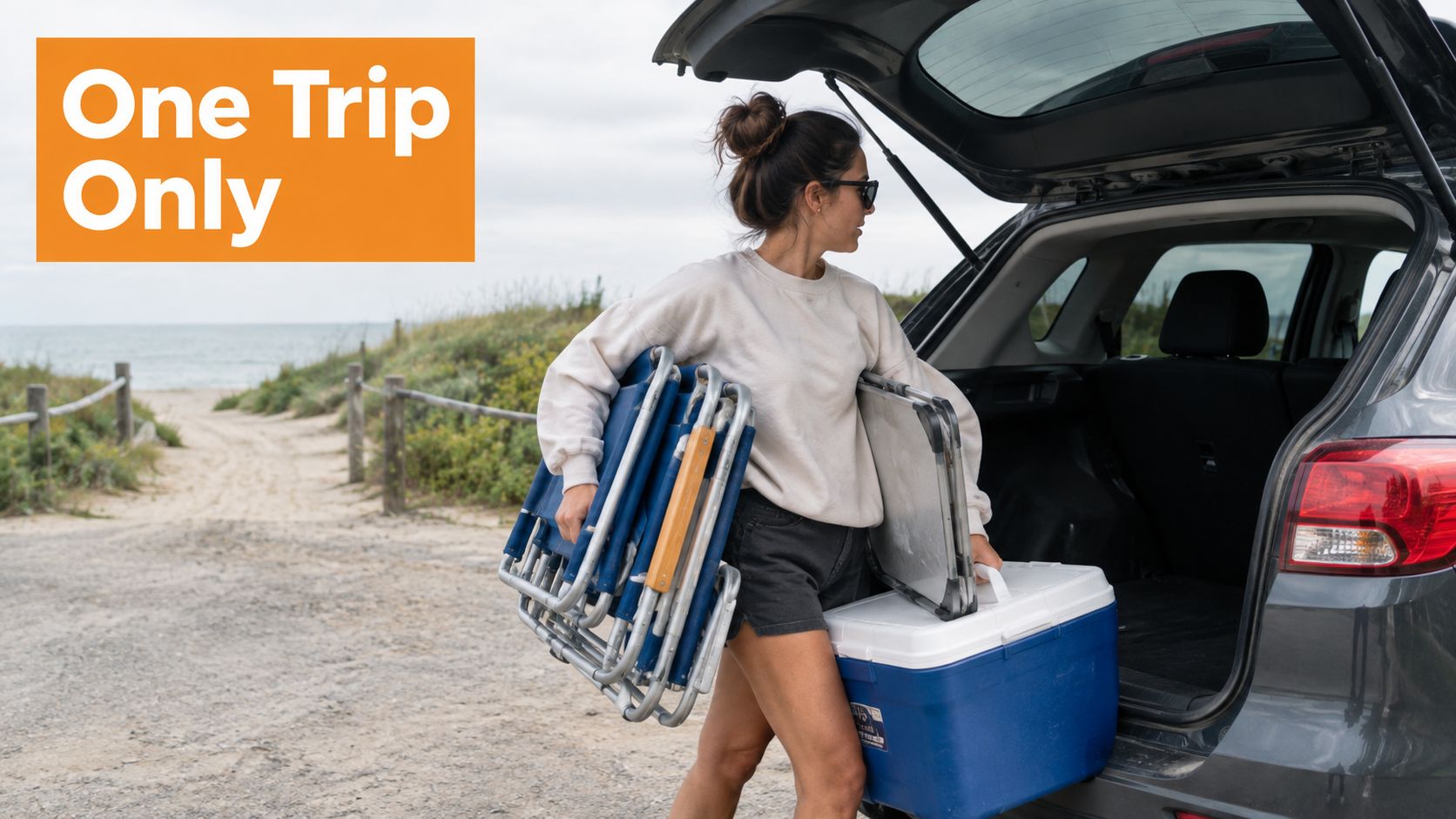
The exhausting version of an outdoor morning starts at the trunk. A cooler sits in one arm, folded chairs hang from the other, and a collapsible table balances against your hip while beach toys, towels, and shade gear wait for another trip. By the time you reach the sand, you're already tired.
The smarter answer is a 2 seater bench with table that carries the load first and becomes seating when you arrive. The Lounge Wagon is built around that practical change, combining a gear hauler with a padded double seat, integrated table space, and outdoor storage in one footprint. You can view the Beach Day Bundle before your next shoreline trip.
Stop the Three-Trip Walk to the Sand
The three-trip walk begins before anyone reaches the shoreline. One trip carries the children's bags, another handles separate chairs and shade, and the final return collects the cooler or the beach blanket left beside the trunk. By then, the person doing the hauling has spent the opening part of the day managing equipment instead of enjoying it.
The problem is logistical separation. A freestanding chair, folding table, and standard wagon each demand space in the car, a hand during transport, and attention during setup. Combining those jobs in a 2 seater bench with table gives the group one organized load to move and one place to stop.
The published Lounge Wagon specification lists a 500 lb capacity, and its 10-inch puncture-proof wheels are designed for movement across sand, grass, and gravel. The benefit is fewer separate objects to carry and supervise.
Why integrated gear changes the morning
Separate seating and a freestanding table also create a setup problem on a crowded shoreline. You need room to park the wagon, space to unfold the chairs, and ground level enough for the table to stand securely. An integrated bench-table unit reduces those decisions to one piece of equipment.
One loading zone: The cooler, towels, toys, and shade accessories travel together.
One seating solution: Two adults use the padded bench without carrying separate chairs.
One service surface: Food, drinks, sunscreen, and small essentials stay within reach.
One return route: Packing up sends the same load back to the car without another equipment run.
For families comparing large beach carts, the large beach cart guide provides a useful framework for judging cargo volume and everyday maneuverability. Check how easily the cart handles the route, then ask whether it gives adults a comfortable place to sit and keep supplies close.
A practical rule helps: outdoor gear should carry the load, provide the seating, and offer a usable surface without requiring another separate item after arrival. That is how an integrated bench turns the Three-Trip Walk into one controlled haul.
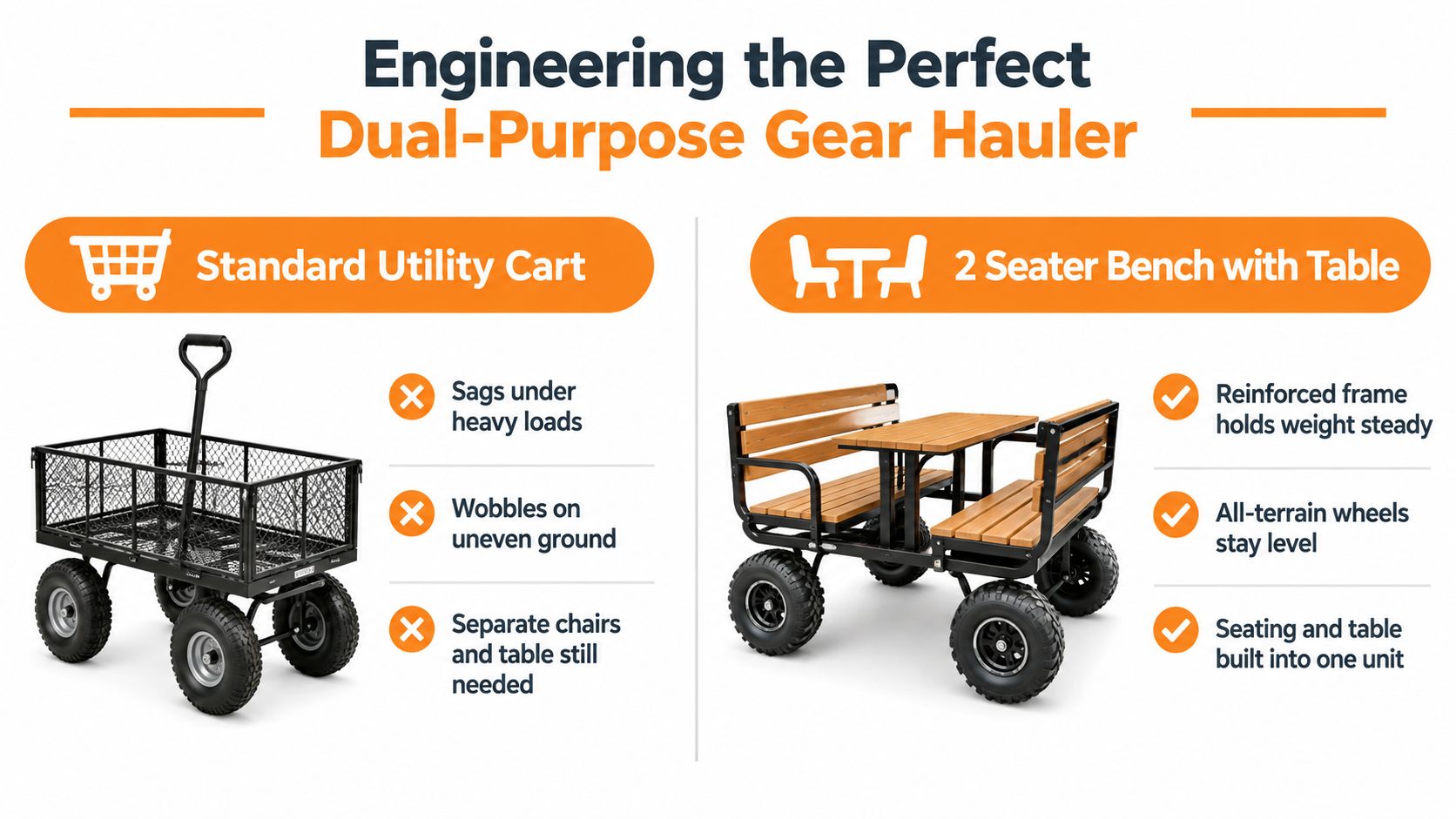
Engineering the Perfect Dual-Purpose Gear Hauler
A wheeled basket and a genuine bench-table hauler aren't interchangeable. The basket may carry equipment, but it doesn't automatically provide a stable sitting structure, a usable tabletop, or controlled support when people lean, shift, and reach for drinks.
Outdoor bench guidance places emphasis on reinforced frames, cross-bracing, and non-slip feet, with published bench capacities ranging from 600 to 800 lb in commercial equipment listings at Lowe's park equipment. That supports a practical design principle: a two-adult unit needs more than enough static width. It needs lateral stability and a frame that manages movement.
What the frame has to handle
The load isn't limited to the people sitting down. A parent may pull the wagon over uneven ground, stop abruptly, lean on the side, or reach across the table. Those actions create dynamic forces that a loose basket or narrow-legged stool may handle poorly.
A reinforced steel frame gives the base a more rigid structure. Wider leg spread and triangular reinforcement improve resistance to sway, while non-slip contact points help keep the unit from shifting when the occupants move. The table also needs enough support to remain steady while holding food and drinks.
The heavy-duty wagon with 500 lb capacity provides a closer look at the hauling role. Its stated capacity is 500 lb, which gives the two-in-one design a clear purpose, moving substantial outdoor gear before serving as a double seat.
The conversion should be simple
A transformation mechanism only helps if people will use it during a busy day. Side panels that lower to expose padding are more practical than a complicated assembly requiring tools, loose parts, or a perfectly clear setup area.
The best workflow is straightforward:
Load the cargo bed with the heavier items low and the frequently used items near the top.
Pull the wagon to the event, beach, field, or pier.
Lower the relevant panels and position the table surface.
Use the bench for two adults while keeping essentials in the integrated storage areas.
That arrangement keeps the gear organized without turning the seating conversion into another chore. It also explains why a 2-in-1 seating design is more useful than a standard wagon with an added cushion.
Finding the Right Seat and Table Dimensions
A two-seater bench with table earns its place in the gear plan only when the proportions work for real adults. A seat that sits too low makes standing difficult after a long tournament or fishing session. A tabletop that sits too high raises the shoulders and makes eating, serving, or working uncomfortable. The relationship between the two surfaces matters more than either measurement alone.
For adult outdoor bench-and-table configurations, a seat height of 17 to 18 inches and a table height of 28 to 30 inches are typical targets, according to outdoor picnic-table geometry guidance. Recommended knee clearance is about 10 to 12 inches, giving adults room to slide into position without excessive hip compression.
Measure the sitting experience
Check these dimensions before choosing an integrated bench:
Seat height: Aim for the adult range of 17 to 18 inches when people will sit for extended periods.
Table height: Look for approximately 28 to 30 inches so the surface supports meals, serving, and casual laptop use.
Knee space: Allow about 10 to 12 inches between the seat and tabletop for easier entry and leg comfort.
Bench length: A two-person bench is commonly 120 to 150 cm long, according to Tectona's bench guidance. That range helps prevent shoulder-to-shoulder crowding.
For a closer look at portable table geometry and function, see this portable outdoor table guide. These practical table tips for cafes also provide useful context on tabletop proportion and usability, even though the setting is different.
Check access and shared use
The U.S. Forest Service accessibility guide specifies table knee space of at least 30 inches wide, 19 inches deep, and 27 inches high, with toe clearance of at least 9 inches extending an additional 5 inches beyond the knee area. It also places the bench front edge between 17 and 19 inches above the ground and says bench components should withstand 250 pounds applied vertically or horizontally at any point. Review the Forest Service accessibility guide for the full criteria.
Those figures matter when adults and children share one unit, or when users have different mobility needs. Wheels for Wellbeing recommends most seats sit 470 to 480 mm above the surface, while varied installations should include seating at 380 mm, 480 mm, and 580 mm. One portable bench cannot fit every body equally, so choose dimensions around the people who will use it and the length of their breaks.
Transforming Your Outdoor Event Experience
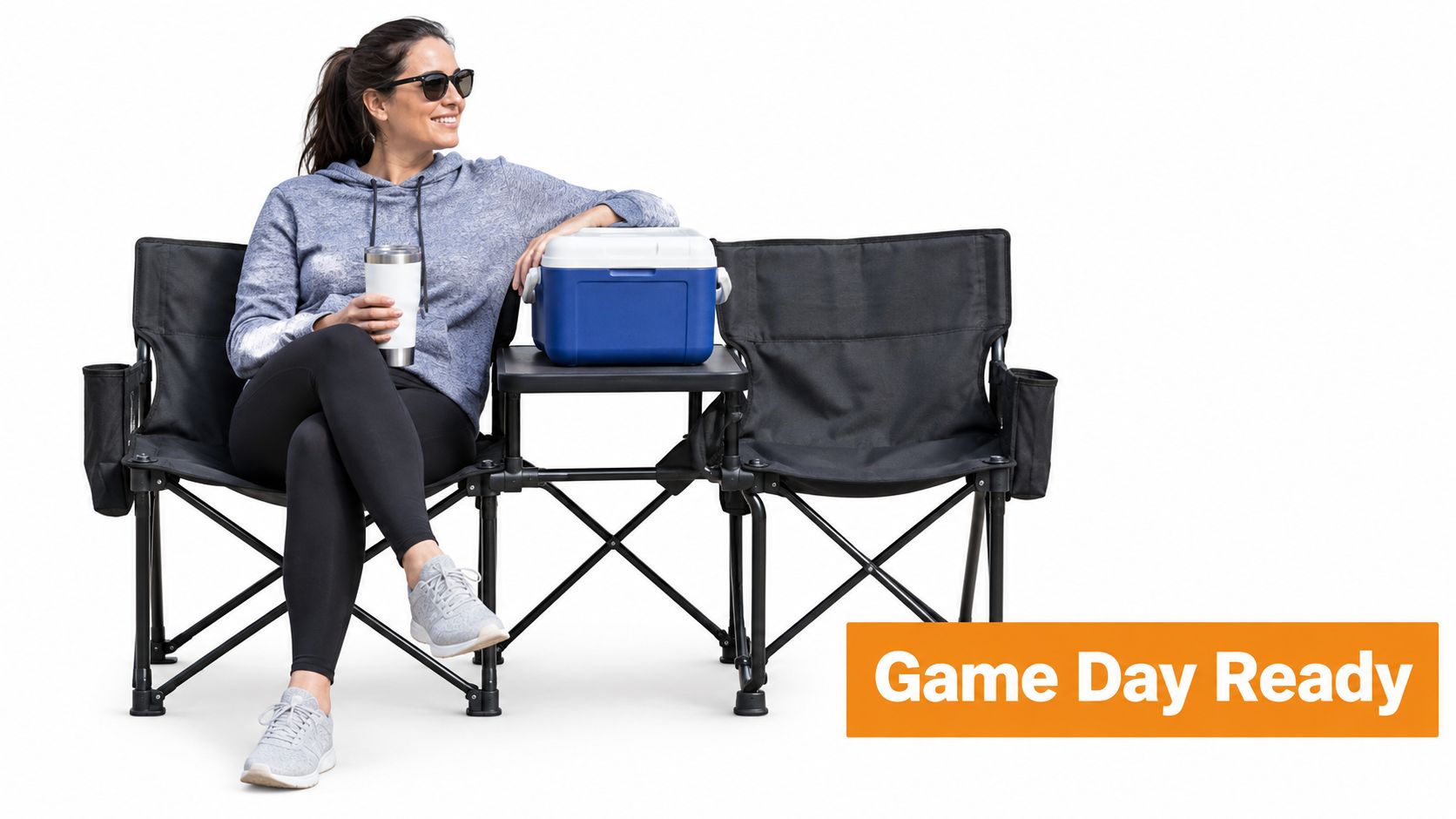
At a youth soccer complex, the same wagon may begin the day carrying a team cooler, canopy parts, blankets, and sideline supplies. Between matches, it becomes a place for two parents to sit without searching for a bench or spreading chairs into a busy walkway.
That change is valuable because event furniture has to perform twice. It must move equipment through grass and gravel, then support rest when the adults managing the equipment need a break.
Match the setup to the audience
The Sideline Elite, tournament parents who spend long days at soccer or lacrosse complexes, benefit from keeping the cooler and seating together. The Sand-Sovereign family needs a cart that can carry umbrellas, sand toys, towels, and refreshments without adding another chair load.
The same logic works in other settings:
Festival and market visitors gain a defined home base for blankets, purchases, and drinks.
Grandparents and children get a transport system that also supports frequent rest stops.
Mobile anglers can keep tackle boxes, bait buckets, and rods in the cargo area while using the bench during long waits.
Tailgaters and campers reduce the number of separate items competing for trunk space.
Event volunteers and coaches can move signage, water, and supplies, then sit during registration or quieter periods.
A crowded outdoor layout also needs clear circulation. These layout tips for your outdoor celebration are helpful when deciding where a combined hauler and seat should stand without blocking guests.
The product's value appears in the transition between tasks. You aren't only transporting equipment, and you aren't only bringing a chair. You're carrying a temporary base camp that supports serving, sitting, and storage.
A standard wagon can be the right choice when the only requirement is moving loose equipment. It becomes less convincing when the group also needs a table and a comfortable place for two adults to sit.
The distinction is functional. A basic utility wagon generally prioritizes an open cargo basket, while an integrated bench adds a seating surface, table relationship, and support structure. Outdoor furniture durability also depends on material and construction choices, so this overview of cast iron outdoor furniture durability offers useful context when comparing long-term outdoor use.
Feature Comparison Standard Wagon vs Lounge Wagon
Feature
Standard Utility Wagon
Lounge Wagon
Primary role
Cargo transport
Cargo transport and 2-in-1 seating
Seating
Usually requires separate chairs
Padded seat for two adults
Table
Usually separate
Integrated table function
Stated load capacity
Varies by model
500 lb, according to the publisher's product information
Wheel description
Varies by model
10-inch puncture-proof wheels
Organization
Open basket or loose bags
Cargo bed with storage pockets and cup holders
Setup
Unload, then assemble separate furniture
Convert the hauler into seating after arrival
The table shows why the 500 lb capacity matters beyond a headline figure. It describes a product intended to haul substantial gear before it becomes a resting place, rather than a chair that happens to have wheels.
Where the standard option still works
A standard wagon may make sense for short transport jobs, light loads, or users who already own chairs and a table they prefer. It can also be easier to replace one component at a time.
The integrated approach works better when the repeated problem is coordination. If every beach trip, tournament, or festival involves carrying three separate furniture pieces, combining those roles reduces handling and simplifies packing. The Lounge Wagon versus standard beach wagon comparison can help you assess that trade-off against your existing setup.
Built for Real-World Endurance and Travel
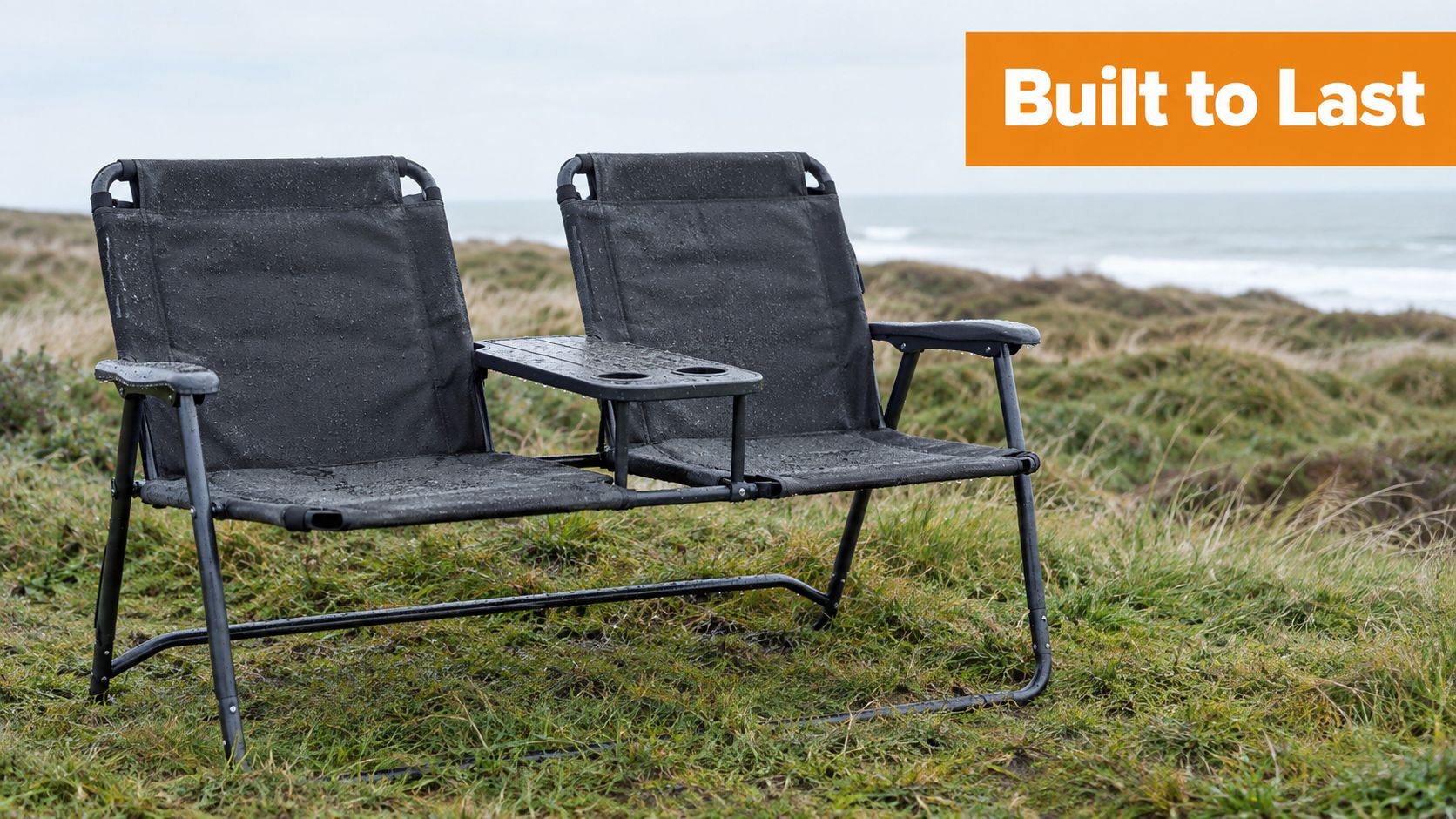
Outdoor furniture faces more abuse than indoor furniture. Sand works into hinges and wheels, rain finds exposed metal, and ultraviolet exposure weakens fabric over time. A bench-table hauler also gets folded, loaded, pulled, unloaded, and stored repeatedly.
That makes material selection a practical issue, not a luxury detail. 1000D polyester gives the cargo and seating areas a heavy-duty fabric reference, while powder-coated steel provides a rigid frame designed for repeated outdoor handling.
Look beyond the first setup
The right construction should support different surfaces and routines:
Rocky jetties: Stable wheels and a rigid base reduce frustration when the path isn't smooth.
Sandy shorelines: Wide, puncture-resistant wheels help keep the haul moving across soft ground.
Muddy festival fields: Durable fabric and a cleanable frame are easier to live with after wet weather.
Grass sports fields: Storage pockets and cup holders keep smaller essentials accessible during play.
Road trips: A dual-purpose unit can reduce the number of loose chairs and side tables packed into the vehicle.
The best durability feature is the one that prevents replacement. Cheap fabric, weak joints, and exposed hardware can turn a useful outdoor tool into another item that needs repair or replacement after repeated travel.
Get Your One-Trip Outdoor Lifestyle Today
Start with the route you make most often. If the answer is a beach access path, evaluate wheel performance, cargo space, and how easily the unit converts once you reach the sand. If it's a sports complex, focus on the cooler, canopy, blankets, and whether two adults can sit without taking up a second footprint.
Then check the seating geometry. Adult users should compare the seat and table relationship against the 17 to 18-inch seat height, 28 to 30-inch table height, and 10 to 12-inch knee-clearance guidance cited earlier. Mixed-height families may also need to decide whether a single fixed bench is suitable for everyone or whether additional seating should remain available.
Use a simple buying checklist
Before ordering a 2 seater bench with table, confirm:
Capacity: The published product specification lists a 500 lb capacity, which is relevant when cargo and users share the same unit.
Seating: Verify that the design is a genuine 2-in-1 gear hauler and double seat, not merely a wagon with a hard lid.
Wheels: Look for wheels suited to your route, especially if you'll cross soft sand, gravel, or uneven grass.
Storage: Check for pockets, cup holders, and a cargo bed that keeps frequently used items close.
Conversion: Choose a mechanism you can operate without tools or loose parts.
Materials: Look for reinforced steel and durable outdoor fabric when the unit will travel regularly.
For a closer look at the portable table function, see the portable outdoor table guide. If sports are the main use, shop the Sports Wagon accessories to tailor the setup for coolers, field supplies, and sideline comfort.
The practical test is simple. Can one person load the gear, move it to the destination, convert it without a production, and sit down before the day becomes tiring? If yes, the integrated format has solved the logistical collapse of separate chairs, tables, and haulers.
Ready to stop hauling and start lounging? View the Lounge Wagon product page and choose a setup that turns the three-trip walk into one organized arrival.
Lounge Wagon combines a 500 lb gear hauler, comfortable 2-in-1 seating, and table functionality for beaches, tournaments, festivals, and outdoor travel. Visit Lounge Wagon to make your next outdoor day a simpler one-trip experience.
Choosing a selection results in a full page refresh.
This pad is perfect for kids or dogs to be comfortable inside the moving wagon, and very nice after you set everything up and want to sit for extra padding.
Having the umbrella this summer has been easy to use and a must to make sitting and watching the parade so nice when there isn't any shade. My dogs laid on the wagon padding and enjoyed the day without getting too hot. I enjoyed the shade too.