TL;DR: The right outdoor event seating solution should move your cooler, chairs, shade gear, and personal items, then give you a stable place to sit. A convertible wagon reduces hauling, handles grass and sand more effectively than a chair stack, and keeps comfort, visibility, circulation, and accessibility in the same plan.
Last Updated: August 2026
The exhausting part of a tournament Saturday rarely starts at the field. It starts at the car, when you realize the chairs are in the trunk, the cooler is by the front door, the kids' gear is in the back seat, and the shade tent is somehow under everything else. Three hot walks across a sun-baked parking lot later, your team is warming up and you're still assembling outdoor event seating.
That routine burns time, tangles straps, loses water bottles, and leaves you with a chair leg sinking into the grass. I've hauled enough gear through tournament complexes, beach access points, and festival crowds to know the problem isn't finding a seat. It's moving the seat and everything else together. A folding wagon that converts from a 500 lb-capacity gear hauler into 2-in-1 seating addresses that logistics failure in one piece of equipment. You can see the wagon-to-chair design before deciding whether it fits your event routine.
The Three-Trip Problem and the One-Piece Fix
A hot tournament morning exposes weak gear plans quickly. The cooler goes first because it is heavy. Then come the folding chairs, umbrella, water bottles, and the bag nobody remembers until it is already too late.
The second trip turns into a scramble. Someone needs sunscreen, a ball pump, or a jacket, while the equipment that looked manageable beside the car becomes awkward halfway across the lot. By the third trip, the cooler is sweating, the grass is bright, and warmups are underway before the sideline setup is ready.
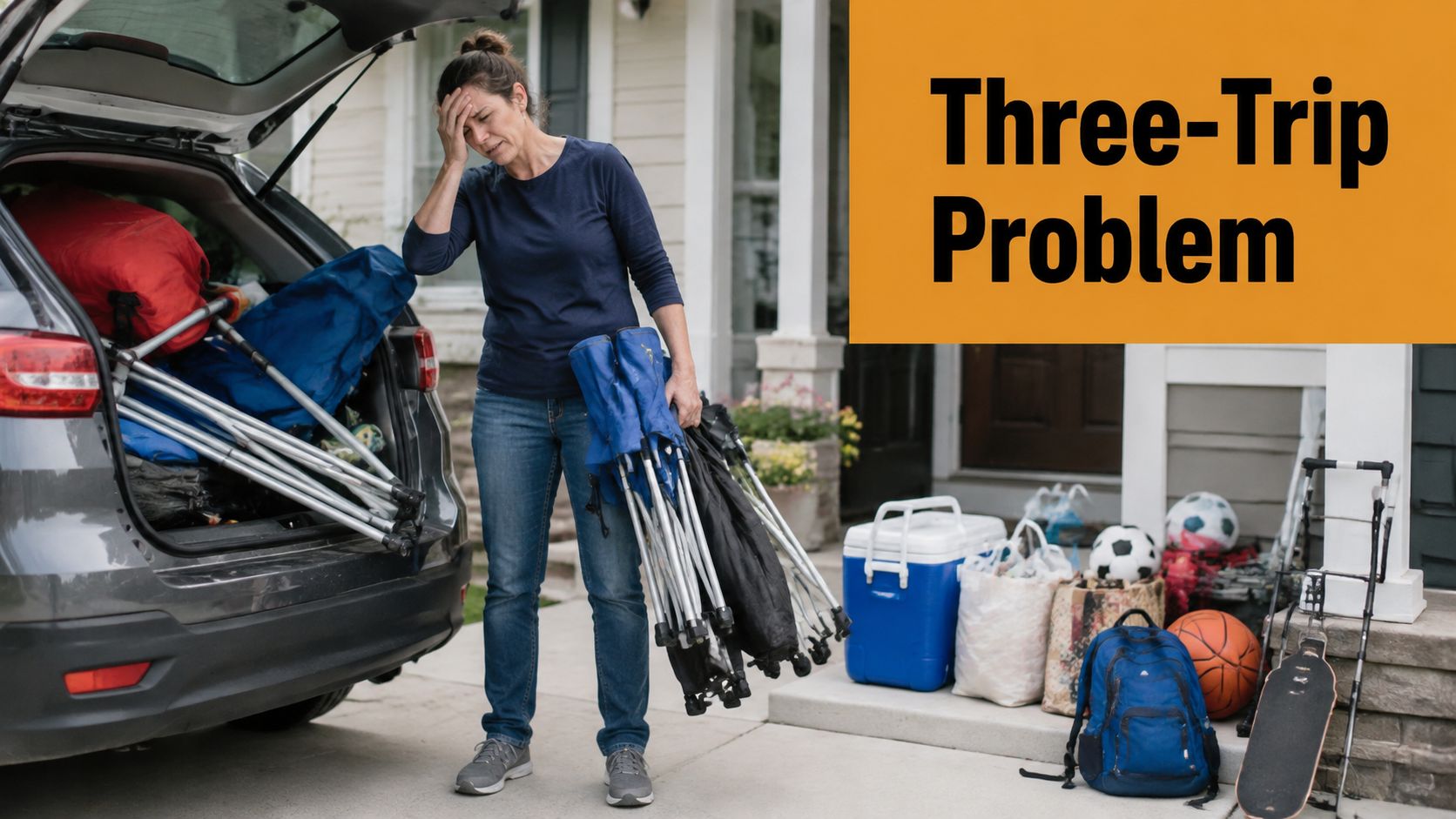
The standard chair-plus-cart stack creates two separate jobs. One product carries the equipment, and another provides the seat. You end up managing extra handles, folded frames, and loose pieces in a sedan or crowded SUV.
What the convertible approach changes
A 2-in-1 wagon puts those jobs in one sequence. Load the cooler, shade supplies, bags, and chairs into one hauler, pull it to the sideline, then convert the wagon into a bench instead of unpacking a separate seat. Lounge Wagon's published product information lists a reinforced steel frame, a 500 lb capacity, 10-inch puncture-proof wheels, and seating for two adults with a padded seat, backrest, cup holders, and storage pockets. You can review the wagon-to-chair design before deciding whether it matches your event routine.
This design addresses a core problem: outdoor event seating must support movement and visibility as well as comfort. At Olympia, spectators used raw hillsides, while the Roman Colosseum developed tiered seating at scale with about 50,000 seats and 78 exits, according to SeatData's seating history. The same principle applies at a youth soccer complex. A seat should support people without restricting circulation.
Field rule: If your setup needs a separate cart, chair, cooler carrier, and side table, you are managing a pile of gear instead of one working system.
The Main Types of Outdoor Event Seating Explained
Different venues punish different seating choices. A folding chair that works beside a paved parade route can be miserable on a beach, while a blanket that feels perfect at a low-key festival becomes useless after rain or when children need frequent changes.
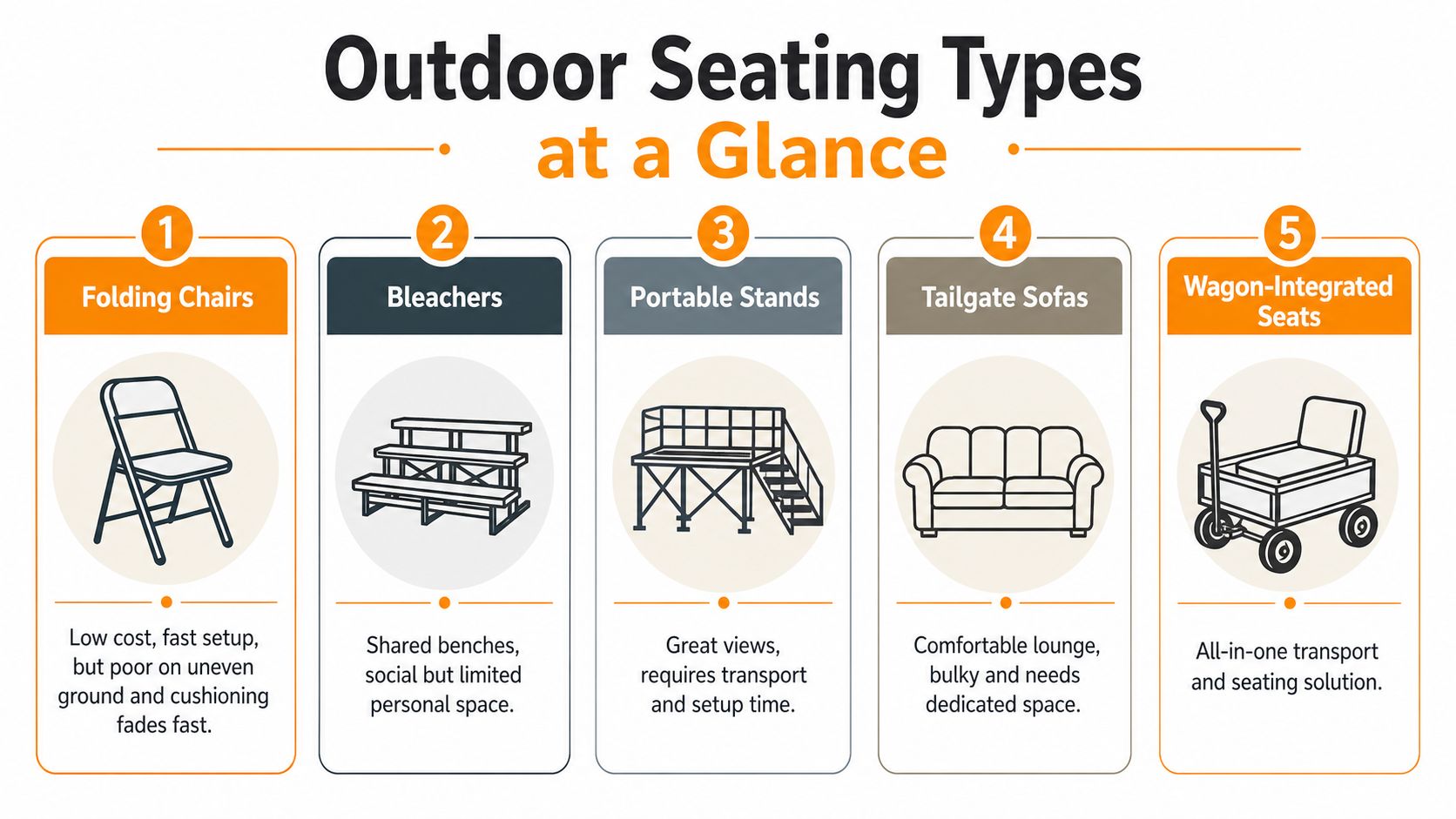
Folding chairs
Folding chairs win on price, familiarity, and quick setup. They're sensible for a paved concert lawn, a backyard gathering, or a sideline where you're close to the vehicle and the ground is firm.
Their weakness shows up on uneven turf. Narrow feet can sink or rock, and thin padding gets old during a long tournament day. They also solve only the sitting problem, so you still need a carrier for the cooler, shade, bags, and children's supplies.
Bleachers and portable stands
Bleachers offer shared seating and a raised view at stadiums, school fields, and organized sports venues. They're social and efficient, but they give you little personal space and can be harsh on backs during extended waits.
Portable stands improve sightlines but demand transport and setup. They make sense for event organizers who control the site, not for a parent navigating a crowded Florida Gulf Coast beach or a festivalgoer moving between stages.
Blankets and tarps
Blankets are excellent for low-profile festival seating, picnics, and dry grass. They pack small, spread quickly, and let a group define its own patch of ground.
They fail when the surface gets muddy, when the ground is uneven, or when anyone needs firm back support. With small children, the blanket often becomes another item to carry rather than a complete seating plan.
Benches and picnic tables
Benches and picnic tables provide dependable support at tailgates and community parks. They're familiar, sturdy, and useful when the venue already has them in place.
The catch is availability and mobility. A fixed bench won't help at a dispersed tournament field, and a movable picnic table is too heavy for most families to treat as portable outdoor event seating. For event rentals, it can help to compare event gear hire when the venue needs a coordinated setup rather than personal carry-in equipment.
Wagon-integrated seats
A wagon with integrated seating handles transport first and sitting second. You pull the cooler, chairs, shade gear, and bags together, then lock the handle or deploy the seat structure at the destination.
That's why the format suits sideline parents, beach families, and festival crowds who need a base camp without carrying a chair-plus-cart stack. The practical details are covered in this guide to portable outdoor seating.
How to Compare Seating Options Before You Buy
Ignore showroom comfort until you've measured the whole outing. The useful question isn't whether a chair feels good for five minutes. It's whether your setup gets from the car to the viewing area without repeated trips, survives the ground, and remains usable after hours outside.
Use these six criteria:
-
Portability: Count trips from the car, not just the product's listed weight.
-
Comfort: Look for seat height, back support, and padding that suit longer waits.
-
Capacity: Consider people and gear, not only the number of seats.
-
Terrain: Think about grass, gravel, sand, slopes, and soft ground.
-
Setup time: Favor a system that reaches a usable configuration quickly.
-
Storage footprint: Check whether it fits your actual trunk, not an imaginary garage.
Outdoor Event Seating Comparison
| Seating Type |
Portability |
Comfort for 4+ Hours |
Capacity |
Terrain |
Setup Time |
Storage Footprint |
| Folding chairs |
Moderate, multiple pieces |
Moderate |
One person per chair |
Best on firm ground |
Fast |
Compact when folded |
| Blankets |
Excellent |
Low without added support |
Group seating on the ground |
Good on dry, level grass |
Very fast |
Very compact |
| Bleachers |
Poor for personal transport |
Low to moderate |
Shared seating |
Venue-dependent |
None for attendees |
Not personal gear |
| Benches |
Poor |
Moderate to high |
Several people, space dependent |
Stable when placed well |
Fast if already available |
Large |
| 2-in-1 wagon bench |
High, one loaded hauler |
High when properly positioned |
Gear hauling plus seating for two adults |
Grass, gravel, and sand dependent on wheel and footprint design |
Quick conversion |
Larger than a single chair |
The chair-plus-cart stack looks cheaper and more modular, but it splits the job across multiple objects. A blanket wins for minimal packing. Bleachers win when the venue supplies them. Benches win at a fixed tailgate.
For families and parents who repeatedly carry both equipment and seats, the 2-in-1 wagon bench has the strongest logistics profile. It doesn't replace every venue's fixed seating, but it removes the most common duplication: one product to haul and another to sit.
Comfort and Mobility Tradeoffs Most Buyers Miss
Comfort isn't just padding. It's the relationship between seat geometry, ground contact, visibility, and how often you have to stand up to retrieve something from the car.
Project for Public Spaces lists a comfortable public bench height at about 18 inches, with a seat-back angle of 95 to 105 degrees, a seat surface angled 2 to 10 degrees off horizontal, and a bench seat depth of 12 to 18 inches for benches with backs. Those benchmarks appear in its movable seating guidance, and they're useful because they translate vague comfort claims into physical checks.
The tradeoff table
The table below uses only qualitative comparisons where product-specific measurements aren't verified. Don't assume a listed chair weight or wheel size unless the manufacturer provides it for the exact model.
| Seating Type |
Seat Height |
Weight |
Wheel Diameter |
Best Session Length |
Mobility Score |
| Folding chair |
Model-dependent |
Model-dependent |
None |
Short to moderate waits |
3/5 |
| Blanket |
Ground level |
Minimal |
None |
Short sessions on dry ground |
4/5 |
| Bleachers |
Venue-dependent |
Not attendee-carried |
None |
Short to moderate waits |
1/5 |
| Bench |
Fixed or model-dependent |
Often heavy |
None or small casters |
Long sessions when stationary |
2/5 |
| 2-in-1 wagon bench |
Product-dependent |
Product-dependent |
Product-dependent |
Moderate to long waits |
4/5 |
For portable seating, stability depends more on footprint and ground contact than weight alone. Portable seating guidance identifies a typical travel-seat weight range of 1 to 3 kilograms, while recommending a leg spread and footprint of at least about 28 centimeters for lighter users and 32 centimeters for heavier users. Larger contact pads help distribute load on grass and reduce sinking and rocking, as explained by Sitpack's outdoor seating guidance.
A deep recline may feel luxurious at a tailgate, but it can be awkward to move through crowds. Mobile comfort means the seat is available when fatigue arrives, and you can orient it toward shade or a clear sightline without making another trip. For a closer look at that balance, use Lounge Wagon's guide to comfortable outdoor seating.
Setup Tips for Festivals, Sidelines, and Tailgates
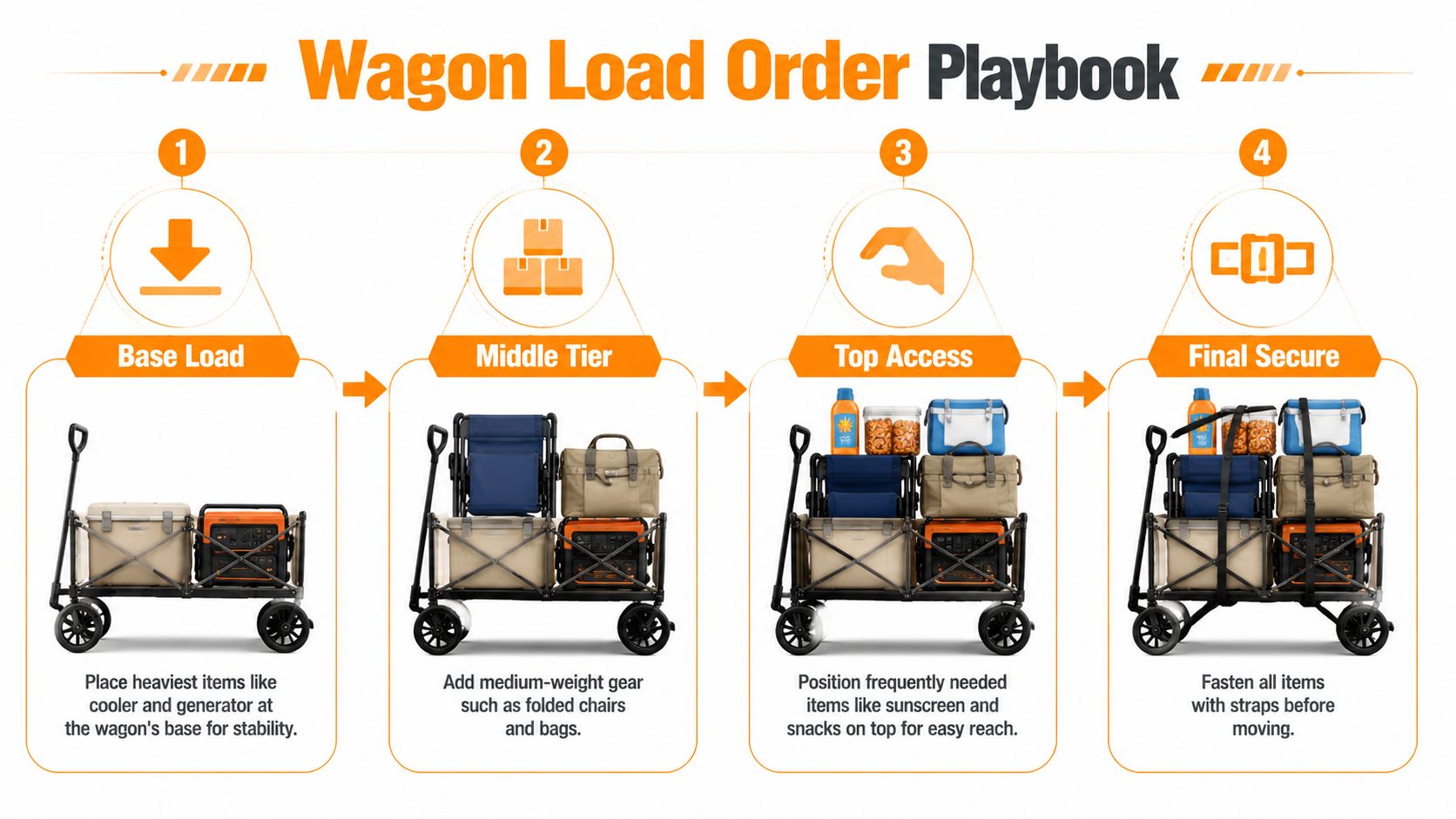
Load the wagon from the ground up. Put the cooler or other dense equipment at the base, add medium-weight bags and folded gear above it, and keep sunscreen, snacks, and water accessible at the top.
That arrangement keeps the center of mass low and prevents the load from shifting when you pull across grass or gravel. Secure loose items before moving, especially when the route includes ramps, curbs, or a slope.
Build the layout around heat and movement
Summer seating needs shade and airflow. Guidance from CSE Services recommends placing chairs and tables in shade during event hours, leaving room for air movement, and keeping walkways clear so seated guests can move without crowding.
At a sideline, place the seating where parents can see the field without forcing people to cross the team's movement lane. At a festival, leave an obvious route between your seating patch and the nearest exit or restroom path. At a tailgate, orient the bench toward the social area, but don't let it become a barrier between the vehicle and food table.
Match the setup to the venue
-
Sidelines: Keep the cooler low, place water within reach, and preserve the team's equipment path.
-
Festivals: Use a compact home base with clear sightlines and enough room for people to pass behind it.
-
Tailgates: Put the wagon near the vehicle, shade, and food, then convert it into seating once the heavy unloading is finished.
-
Beach access: Test the route before loading fully. Soft sand changes how every wheel and footprint performs.
For local festival planning, practical guides such as what to do at Gisborne food festival can help you think through food, weather, and movement before choosing where to establish a base. Lounge Wagon's festival seating guide applies the same principle to a mobile seating setup.
Accessibility and Inclusive Layouts for Outdoor Events
Accessibility isn't satisfied by labeling an event accessible and placing one chair at the edge of the site. Temporary events need seating that works for people with limited stamina, mobility devices, caregivers, and companions in real conditions such as grass, gravel, sand, and changing weather.
Design the route and the seat together
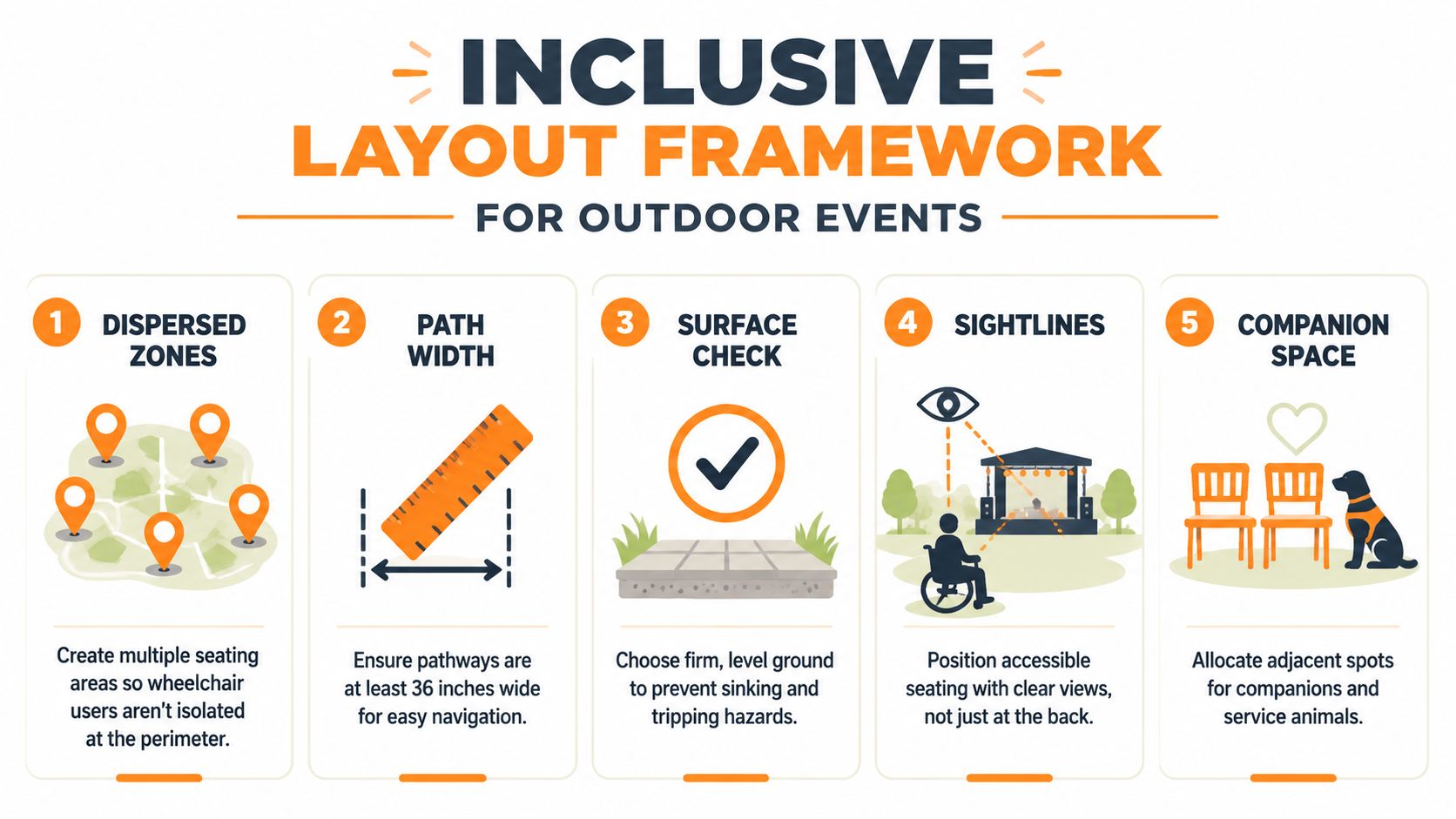
The U.S. Access Board's accessibility guidance emphasizes varied seating types, accessible routes, shaded resting areas, and dispersed wheelchair and companion spaces. That means a wheelchair user shouldn't be pushed into a distant corner because the main viewing area is crowded.
Use firm, level ground where possible. A narrow path through soft grass or uneven gravel may be technically open but practically unusable, particularly for someone using mobility equipment or conserving energy for a long day.
Check the human experience
Ask questions that reveal failures before guests arrive:
-
Can someone transfer safely: Is the seat height practical, firm, and supported?
-
Can companions sit beside them: Are adjacent spaces available instead of isolated seating?
-
Can guests keep a clear view: Does the layout preserve sightlines rather than placing accessible seating behind a crowd?
-
Can people rest in shade: Are shaded zones distributed across the event area?
-
Can mobility devices approach: Is the surface firm enough to prevent sinking, rocking, or sudden stops?
Public seating guidance places a comfortable bench height around 18 inches, while accessibility references may specify different ranges and requirements depending on the seating type and applicable standard. Use firm back support and adequate clearance rather than treating one measurement as a universal answer.
Beach events need extra care. Kempsey Council's beach-wheelchair safety guide advises pulling a beach wheelchair backward through dry, soft sand or up a slope with two people, and requires a safety belt on dry land. Massachusetts beach-wheelchair rules limit use to one person at a time and prohibit use on dunes, rocks, or uneven areas.
Inclusive layouts usually make every guest's day easier. Wider routes, stable seating, shade, and clear views reduce crowding and unnecessary fatigue for parents, older adults, and children too.
Real-World Setups for Parents, Beach Families, and Festival Fans
Outdoor event seating earns its place when it solves two jobs: moving the load and giving people a reliable place to sit. That matters at tournament sidelines, beach access routes, and festival lawns, where a chair plus cart means more equipment to control.
The tournament parent
A tournament load often includes a cooler, water, folding shade, jackets, sports bags, and personal items. A convertible hauler keeps those pieces together, then becomes a 2-in-1 seating setup for two adults between matches.
The key benefit is fewer objects to track as the schedule changes. One unit stays with the family as they move from the car to the sideline, then serves as seating during the wait. The hauling and seating functions are presented as one system in the product configuration.
The beach family
Beach gear is bulky, soft, and difficult to pull through deep sand. Load towels and clothing above the heavier cooler, keep children's essentials within reach, and choose a shaded destination before unloading. A hauler reduces the chair-plus-cart stack, leaving fewer separate pieces to drag across the access route.
A wagon bench gives an adult a firm place to sit while managing children, changing layers, or sorting sand toys. Review the Beach Day Bundle and match its contents to your route and load before packing.
The festival couple
Festivalgoers may carry water, extra layers, a blanket, and purchases while looking for a grassy viewing area. A wagon that converts into seating creates a base without adding separate bag chairs to the carrier.
It also supports an easy rotation between shade and sightlines. Pack only what you will use, keep walkways open, and check Lounge Wagon's outdoor gear collection for the available configuration before leaving. The practical test is simple: the same piece should carry the load, wait beside you, and provide a dry place to sit.
Make It a One-Trip Day and Stay Longer
Every trip back to the car steals part of the day. The better target is simple: load once, pull once, and keep the seat available when the waiting begins.
A 500 lb-capacity hauler that also provides 2-in-1 seating replaces the chair-plus-cart stack with one coordinated piece of gear. It won't solve a bad venue layout or make soft sand behave like pavement, but it can reduce the number of separate items you manage at the event.
Before leaving home, check:
-
Wheel condition: Make sure the wheels are ready for the surface you'll cross.
-
Seat or lid lock: Confirm the conversion hardware is secured before loading.
-
Load order: Put dense gear low and frequent-use items within reach.
For heavy beach equipment and solo loading ideas, review how to haul heavy gear to the beach alone. Then choose seating based on the whole outing, not the chair alone.
If you're ready to stop making three trips across the parking lot, visit Lounge Wagon to explore a 500 lb-capacity gear hauler that converts into 2-in-1 seating for two adults. Load your event gear once, pull it to the sideline, beach, or festival lawn, and sit longer.


