The best wagon for beach gear combines sand-ready wheel design, enough capacity for a complete setup, and seating after arrival. Lounge Wagon's 500 lb capacity and 2-in-1 seating help consolidate coolers, chairs, umbrellas, towels, and toys into one pull, then create a comfortable place to rest at shore.
Last Updated: October 2026
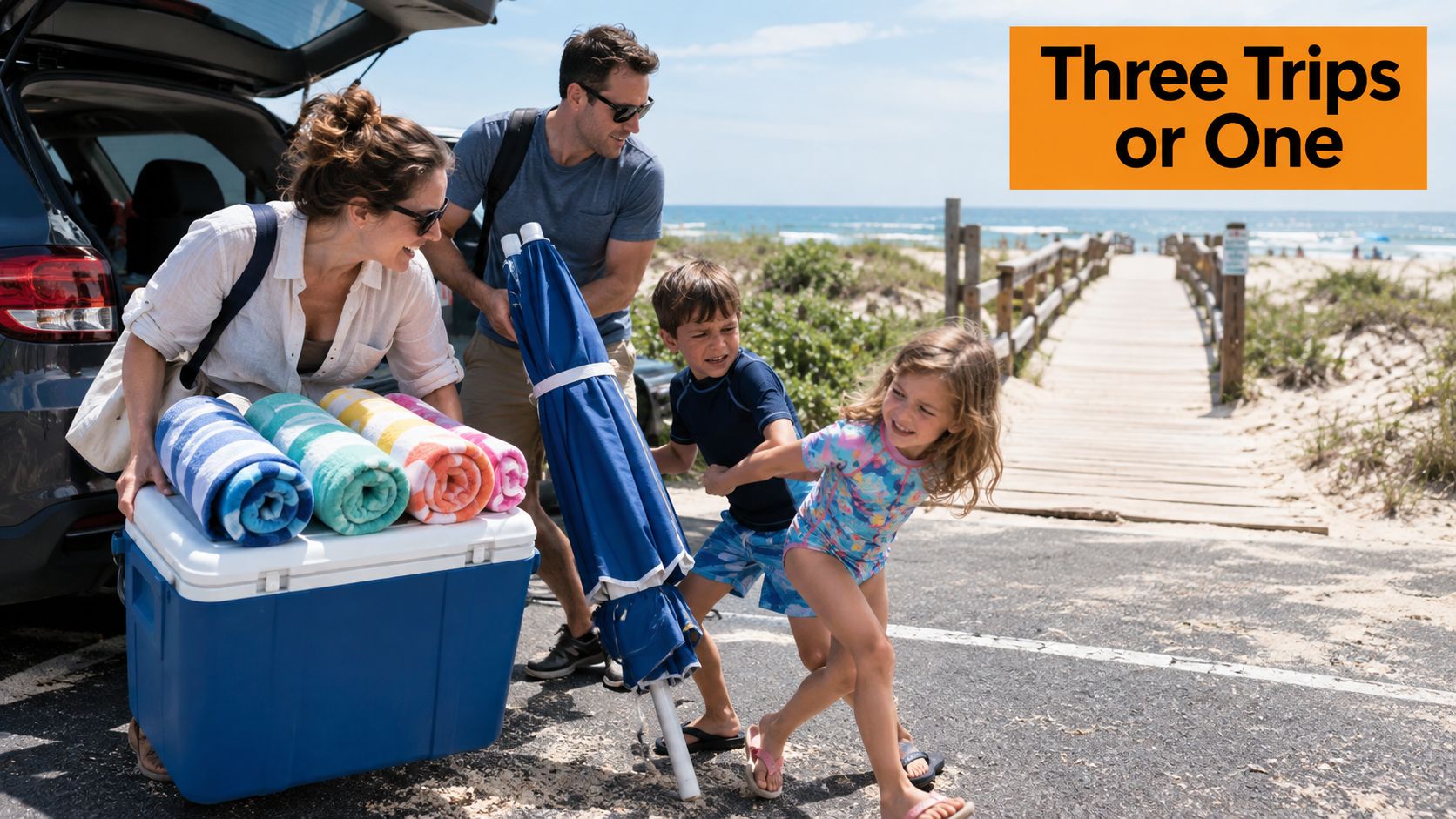
The three-trip walk from the parking lot has a way of ruining a beach morning before anyone reaches the water. One parent is balancing a cooler and folded umbrella, another is carrying towels and sand toys, and the kids are already asking how much farther. By the time everyone reaches the shoreline, someone still has to go back for the chairs.
That routine is more than inconvenient. Walking on sand can require 2.1 to 2.7 times more energy than walking on a hard surface at the same speed, as summarized from research published in the Journal of Experimental Biology. A wagon for beach gear reduces the number of separate loads, but only if its wheels and frame are suited to loose sand.
The Three-Trip Problem on the Sand
A paved path can make almost any utility cart feel capable. The test begins when the boardwalk gives way to dry, loose sand and every wheel starts pressing into a surface that moves under load. Research on rolling resistance found that sand can produce resistance coefficients 4.5 to 15 times higher than gravel, grass, and bituminous surfaces, with terrain having the largest effect on how hard a load is to move. See the comparative rolling-resistance research for the underlying mechanics.
A family carrying a cooler, shade canopy, chairs, towels, and toys often ends up making separate trips because the first load is too heavy or awkward. The second trip takes away setup time, while the third usually happens after everyone has already settled in and discovered that one important item is still in the car.
Practical rule: Judge a beach hauler by whether it reduces the number of difficult crossings, not by how smoothly it rolls through an empty parking lot.
The Lounge Wagon 2-in-1 is designed around that one-walk problem. Its 500 lb capacity gives families room to consolidate bulky equipment, while its 2-in-1 seating means the wagon remains useful after the haul. The large beach cart guide is useful for planning the kind of load that needs to cross the sand.
Pack the cooler low, place chairs and towels above it, secure the umbrella, and keep smaller items in reachable pockets. The goal isn't to fill the wagon with everything you own. It's to make one composed pull from the car to the setup spot, then avoid another walk because the seating or shade was left behind.
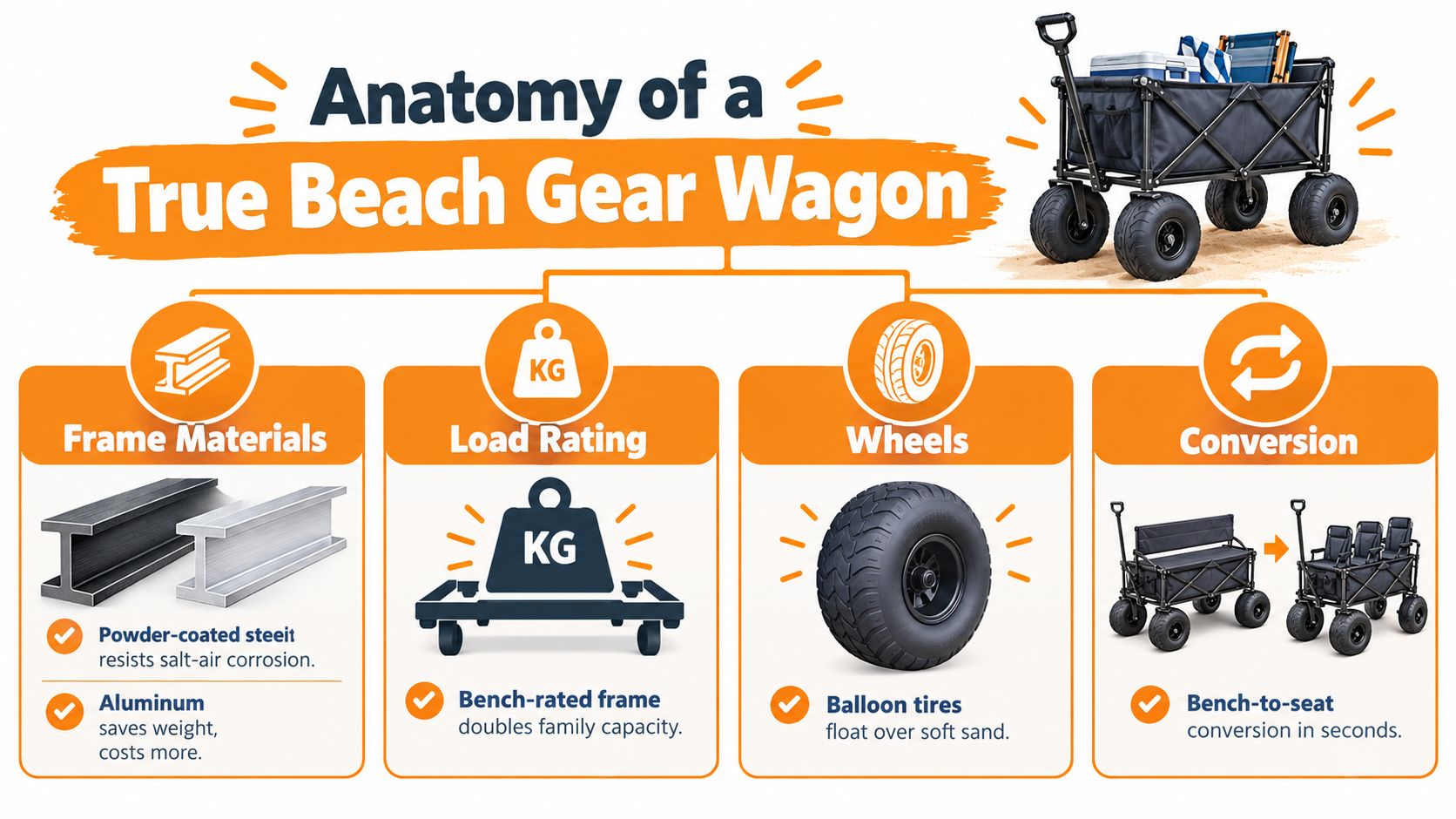
Anatomy of a True Beach Gear Wagon
A beach-ready wagon has four jobs. It must carry a dense load, move across changing surfaces, survive salt and rinse water, and remain useful after arrival.
Frame and load support
A reinforced steel frame gives a loaded hauler the stiffness needed to keep its wheels aligned when the ground isn't level. Powder-coated steel is a practical choice for coastal use because the coating adds a protective barrier against salt-air exposure. Aluminum can reduce weight, but it generally comes with a higher material cost and still needs careful attention to joints and hardware.
A 500 lb capacity is meaningful only when the frame, axles, seat platform, and wheel layout can support the load together. For a family wagon, the useful benefit is simple. You can combine a cooler, chairs, umbrellas, towels, and toys instead of turning each category into a separate carry.
Wheels and ground contact
Large, sand-capable wheels are more useful than small hard-plastic casters that dig into loose ground. A compliant tire or broad wheel profile can increase the contact area beneath the load, helping the wagon stay closer to the surface instead of cutting a trench.
The same wheels should also handle grass, gravel, and boardwalk transitions. A beach-only wheel that struggles on a parking lot creates its own inconvenience.
Fabric and daily cleanup
Coated polyester or Oxford fabric is well suited to wet towels, sunscreen spills, and ordinary hose-down cleaning. The practical test is whether the fabric dries without holding grit in every fold and whether the seams remain stable after repeated loading.
A one-step folding mechanism matters because a wagon that takes apart awkwardly will be left in the garage. Handle height, cup holders, side pockets, and a cargo net also affect how easily a family can pull, park, and reach essentials.
The steel-frame beach gear guide provides another way to evaluate frame construction. The Lounge Wagon 2-in-1 checks the practical boxes that matter most here: reinforced support, high carrying capacity, foldable storage, sand-capable wheels, and conversion into seating.
How Sand Changes the Way Wheels Perform
Sand doesn't respond to a wagon's marketing label. It responds to contact pressure, tire load, print length, and sand strength. Field testing across Atlantic, Gulf, and Pacific coastal sands found that vehicle performance could be predicted from tire load and footprint characteristics, with a practical performance limit near 10 psi for the tested vehicle tires. The field research on tire performance in sand also found that tire width was less important when it didn't change the load distribution or footprint length.
That distinction matters when shopping for a wagon for beach gear. A nominally large wheel can still sink if the load is concentrated over a short contact patch. A broader, lower-pressure tire may support the same load more effectively, while a rigid solid wheel can't reproduce the way a pneumatic tire deforms around loose grains.
Three surfaces, three different tests
On boardwalk concrete, small wheels may roll acceptably because the surface supports them. The weakness appears when those wheels meet sand.
On packed wet sand near the waterline, many wheel designs perform better because the surface has more strength. A wagon still needs stable tracking, because ruts and shells can twist the front end.
On dry loose sand farther inland, sinkage and rolling resistance become the deciding factors. Large-diameter wheels, suitable tread geometry, and even weight distribution matter more than a generic all-terrain label.
Experimental research on rigid wheels also found that increasing wheel diameter generally reduces rolling resistance more effectively than making a corresponding increase in wheel width. The wheel-geometry study supports evaluating diameter, sinkage, surface profile, and load transfer together.
A buyer's wheel checklist
Contact patch: Look for a wheel shape that spreads load instead of concentrating it.
Diameter: Favor a larger diameter when soft sand is part of the route.
Tire construction: Puncture-proof wheels improve reliability, but rigid construction may sacrifice compliance.
Load distribution: Keep dense items centered and low so one wheel doesn't carry a disproportionate share.
Terrain transitions: Test how the wagon moves from pavement to packed sand and then into dry sand.
The beach cart guide for soft sand gives shoppers a product-specific place to examine wheel details. Don't choose on wheel diameter alone. Ask how the wheel, axle, frame, and loaded footprint work as a system.
Loading and Converting the Wagon at the Shore
A good load starts with the items that create structure. Fold beach chairs along the back wall, place the soft cooler above them, slide umbrellas into the corner straps, and finish with a flat tote containing towels and sand toys.
This arrangement keeps the dense cooler from sitting on top of soft gear and leaves smaller items accessible. It also prevents an umbrella from shifting diagonally when the wagon crosses a rut.
A reliable loading sequence
Place chairs against the back wall. They create a stable base and remain easy to remove at the destination.
Set the cooler low and near the axle. A centered heavy load reduces nose lift and makes the handle easier to control.
Secure umbrellas vertically. Corner straps or side sleeves stop long items from sliding across the cargo.
Add towels and toys last. A flat tote works as a top layer and keeps wet items from soaking everything below.
Use a bungee only for containment. The cord should stop movement, not compress the load or interfere with folding.
Keep the stack below the load line and check that nothing blocks the latch or wheel path. On soft turns, an unbalanced wagon can lean, so distribute the weight rather than placing every dense item on one side.
At the beach, park on the firmest available patch and set the wheels before opening the seating platform. Release the latch, deploy the backrest, and check that the seat surface is fully supported before anyone sits down.
The 2-in-1 seating is most useful when the conversion doesn't become another setup project. Keep cup holders and storage pockets available for water, sunscreen, phones, and small snacks, while heavier gear stays on the ground or inside the cargo area.
A seat height near the mid-400-millimeter range can support easier sit-to-stand movement when users can place both feet securely on the ground. Research on older-adult seating discusses seat heights around 430 mm in some settings and 470 mm when paired with a footrest, with actual comfort depending on seat depth, cushion compression, and backrest angle. Those recommendations are summarized in this seating ergonomics research.
The wagon-to-chairs conversion guide shows the same basic principle. Carry the gear once, then use the wagon as part of the sitting area instead of unloading a separate bench.
Lounge Wagon vs Generic Beach Carts
Generic beach carts can be useful for a narrow job, particularly when the route is firm and mostly straight. A wagon for beach gear becomes more practical when the outing includes bulky family equipment, uneven transitions, and a need for seating after arrival.
The table below separates the supplied Lounge Wagon specifications from generic categories where the available information doesn't establish a single standard.
Lounge Wagon vs Generic Beach Carts Spec Comparison
Feature
Lounge Wagon
Generic Beach Cart
Wheel size
10-inch puncture-proof wheels
Varies by model
Tire type
Sand-capable, all-terrain wheel design
May use narrow plastic or mixed-terrain wheels
Frame material
Reinforced steel frame
Varies by model
Weight capacity
500 lb
Common ratings vary, so verify the manufacturer specification
Folded footprint
Foldable storage design
Varies by model
Convertibility
2-in-1 hauler and double seating
Usually hauling only
Salt-resistant hardware
Coastal maintenance still required
Verify hardware and care guidance
The 500 lb capacity is useful because it creates room for a full beach setup, but capacity never overrides wheel mechanics. Sand increases rolling resistance, and a heavily loaded wagon still needs an effective contact patch and balanced cargo.
Generic carts often win on simplicity. A two-wheel design can track efficiently in a straight pull, while some four-wheel layouts are easier to park and maneuver on hard ground. The trade-off appears when front wheels drag, narrow wheels sink, or a cart stops being useful as soon as the cooler and chairs come out.
Lounge Wagon's differentiator is the 2-in-1 seating. Instead of hauling a wagon plus separate seats, the same frame supports transport first and a resting place later. That doesn't make every route effortless, and no wheel design eliminates the physics of dry sand. It does make the total equipment plan more compact and reduces the chance of a second chair trip.
Salt Sand and Sun Maintenance Routine
Coastal gear lasts longer when cleaning happens on the same day as use. Salt residue can remain inside wheel bearings and folding joints, while sand works into axles and latches. UV exposure also weakens polyester fibers and stitching over time, especially when the wagon stays folded while damp.
Start with a fresh-water rinse. Focus on wheel wells, axles, hinges, fabric folds, and the underside of the frame, then use a soft or medium bristle brush to loosen grit that a hose leaves behind.
The end-of-day routine
Rinse with fresh water: Remove salt before it dries into a harder residue.
Brush the wheel wells: Clear sand from the areas where wheels, axles, and frame members meet.
Dry in shade: Let fabric and frame dry with airflow, but avoid baking wet material in direct sun.
Inspect the folding latch: Confirm that the mechanism opens and closes without grit binding the contact points.
Check the fabric: Look for frayed stitching, UV wear, or seams that no longer repel water.
Store it clean: Don't fold a wet, sandy wagon into a closed vehicle or storage corner.
A mild vinegar-and-water wash can help remove white haze from aluminum parts, but rinse afterward and avoid leaving acidic solution on hardware. Keep cleaners away from padded seating unless the care instructions specifically allow them.
For the vehicle that carries the wagon home, this guide to professional car interior cleaning offers practical advice for dealing with sand in carpets, seats, and cargo areas.
A quarterly inspection
At the start of each season, check the bearings and axles for rough movement, inspect hardware for corrosion, examine fabric for sun damage, and confirm tire pressure or wheel condition. Re-silicone fabric seams every six months when the material and care instructions call for it, and never assume a sealed seam remains protected after repeated folding and salt exposure.
The wagon maintenance guide is the right place to confirm care steps for the specific frame, fabric, wheels, and folding hardware. Maintenance isn't glamorous, but it keeps a beach hauler ready for the next saltwater weekend.
Who Actually Uses a Beach Gear Wagon
A beach wagon earns its space when it solves two jobs in one pull. Sand increases rolling resistance, especially under narrow or underinflated wheels, so a loaded cart can become difficult to move before the shoreline is even in sight. Buyers should check wheel width, tire firmness, handle control, cargo stability, and whether the frame can convert into a useful seat. The right design reduces the second and third trips that drain a beach morning.
Seven real weekend jobs
The multi-child family needs room for a cooler, shade equipment, sand toys, towels, and spare clothes. A wagon keeps the load together while children move between the car and shoreline, rather than leaving parents to divide heavy gear among several arms.
The retired couple may prioritize predictable handling, chairs, a canopy, and easy access to water. A supported seat provides a practical rest point without adding a separate bench to the packing list.
The surfer can use the cargo area for a wetsuit, towels, changing supplies, and smaller shoreline equipment. A seat also gives the surfer a stable place for wax checks, gear adjustments, or waiting between conditions.
The senior grandparent often carries picnic supplies alongside items for grandchildren. A firm, supported seat works well when both feet can reach the ground securely and the frame remains steady during use.
The dog owner has a different set of small items: towels, water, a collapsible bowl, treats, and a leash. Side pockets keep those supplies reachable without forcing anyone to unpack the main compartment.
The RV traveler moves equipment between a campsite, parking area, and shoreline. Foldable storage matters because the wagon must share limited vehicle and campsite space with other gear.
The group host may load umbrellas, snacks, towels, and shared seating for a beach birthday or coastal gathering. The wagon then serves as a movable supply point, keeping bags from spreading across the sand.
The Lounge Wagon's 500 lb capacity and 2-in-1 seating address the same practical problem: transport and downtime happen in one product. A hauler that becomes a bench can remove the need to carry separate seating, provided its wheels and handle are suited to the surface. The same setup can serve soccer complexes, farmers-market lots, festivals, and grassy event fields, where carrying gear is only half the task.
For a complete setup, review the Beach Day Bundle and match the included storage, shade, and cleanup pieces to the group using it. Lounge Wagon makes sense when the wagon carries the cooler, chairs, shade, and smaller essentials in one organized pull, then gives everyone a usable base once the gear is down.
Choosing a selection results in a full page refresh.
This pad is perfect for kids or dogs to be comfortable inside the moving wagon, and very nice after you set everything up and want to sit for extra padding.
Having the umbrella this summer has been easy to use and a must to make sitting and watching the parade so nice when there isn't any shade. My dogs laid on the wagon padding and enjoyed the day without getting too hot. I enjoyed the shade too.