A two seater bench should do more than provide room for two people. The most useful version also hauls equipment, rolls across outdoor terrain, supports comfortable rest, and replaces a separate wagon and chairs. For field days, beaches, festivals, and parks, that 2-in-1 design can turn a tiring multi-trip routine into a simpler arrival and a more comfortable stay.
Last Updated: August 2026
The Three-Trip Problem That Ruins Every Outdoor Day
The first trip carries the cooler. The second takes the canopy, soccer bags, beach toys, and blankets. By the third walk, someone's balancing folding chairs under one arm while dragging a reluctant child with the other. You haven't reached the sideline or shoreline, and the day already feels like work.
Tournament parents know this routine well. At a youth soccer complex, the distance from a parking area to the correct field can make separate trips especially frustrating. At the beach, soft sand turns every overloaded carry into a slow, uneven haul. At a festival, the crowd makes repeated trips worse because you lose your place and your group's home base.

A convertible two seater bench addresses that logistics problem by combining transport and seating. You load the wagon once, roll it to the destination, then use the same platform as a place for two adults to sit. The practical value isn't just fewer items in the trunk. It's fewer decisions, fewer loose chairs, and less energy spent before the event begins.
The Lounge Wagon's Beach Day Bundle fits this use case because the product is designed as a gear hauler that converts into seating. Its listed 500 lb capacity and 2-in-1 seating format address the two jobs buyers usually solve with separate equipment.
Field rule: If you need a wagon and seating at the same destination, compare the combined footprint and setup time, not just the wagon price.
A standard folding chair may be lighter to carry by itself, but it doesn't haul a cooler across the field. A conventional utility wagon transports gear, but it leaves you searching for somewhere to sit. The two seater bench earns its place when the same piece of equipment must move supplies and support rest throughout a long outdoor day.
What Exactly Is a Convertible Two Seater Bench
At a tournament sideline or crowded beach, the useful question is not whether a bench looks comfortable. It is whether one piece of gear can move the cooler and bags, then give two adults a proper place to sit. A convertible two seater bench combines portable hauling, a supporting frame, and shared seating in one setup.
During transport, its frame and wheels carry coolers, sports equipment, picnic supplies, or beach gear. Once you arrive, the cargo platform becomes a seat with back support. That change matters after a long day outside, when sitting on the ground or balancing on separate low chairs becomes tiring.
Width determines whether the product works for two adults or merely carries that label. A practical two-person bench needs usable side-by-side space, with room to sit without pressing shoulders or restricting movement.
Seat height and depth also shape comfort. A bench that sits too low can make standing difficult, while inadequate depth leaves little support for the thighs. Back support should hold the upper body without forcing an awkward posture. These details matter during a full game, tournament, picnic, or beach session, not only during a brief stop.
The Lounge Wagon is described as a 2-in-1 gear hauler and luxury bench, with seating for two adults and a listed total capacity of 500 lb. Its reinforced steel frame and 10-inch puncture-proof wheels support the shift from loaded transport to seated use. You can view the Lounge Wagon's full product details before comparing it with a standard folding chair or fixed bench.
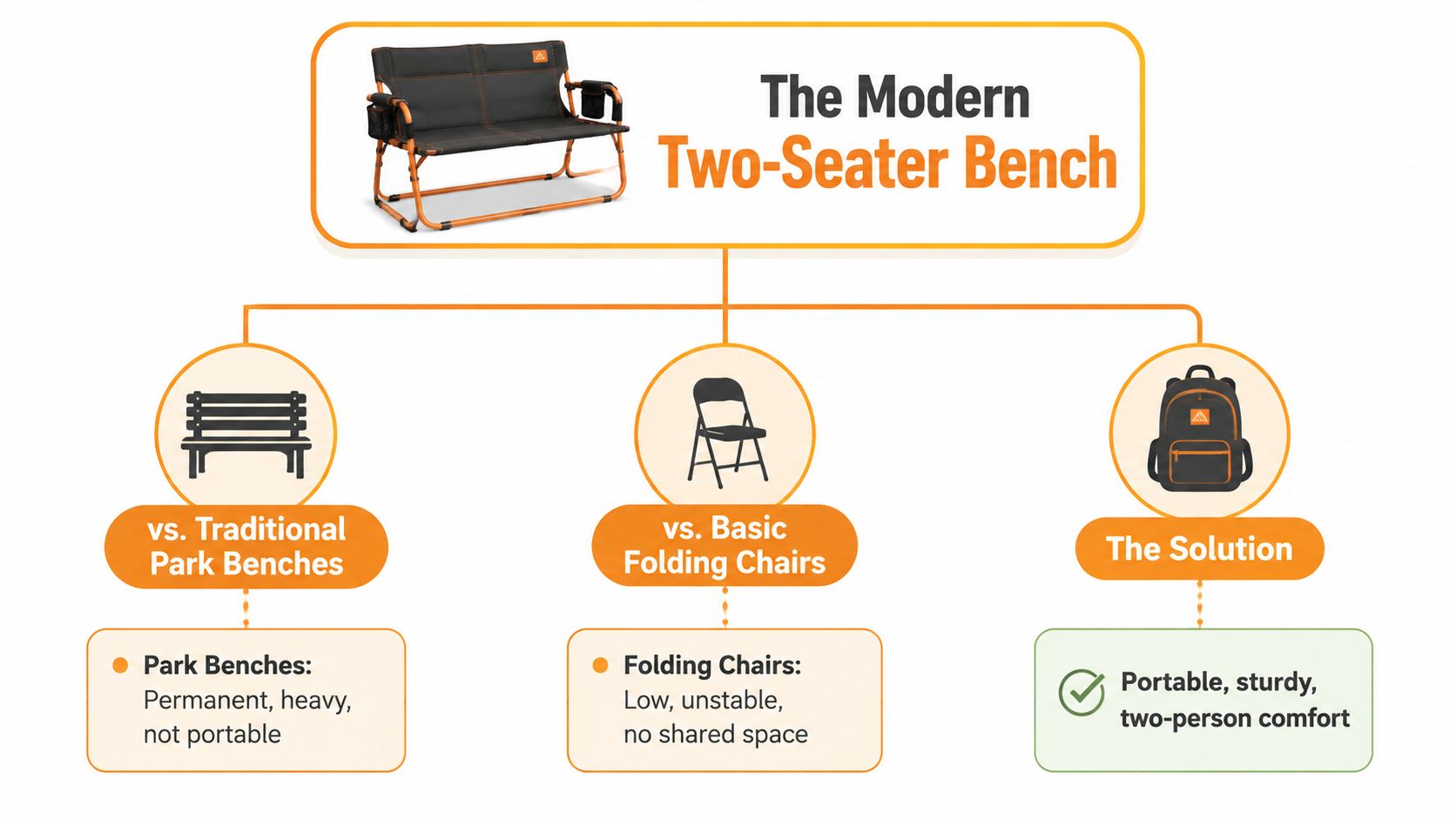
What it isn't
A convertible bench is mobile equipment, so it should be assessed for cargo handling, seating stability, storage, and setup rather than decorative appearance. It is also more than two camping chairs attached to a cart. The useful distinction is the shared system: one frame, one transport platform, and one seating arrangement.
That format works best when the same destination requires both equipment transport and seating. A standard chair may be easier to carry alone, but it cannot haul a cooler across the field. A utility wagon moves supplies, but it leaves seating as a separate problem. The convertible utility cart guide explains the broader category and helps clarify the trade-off between cargo space, shared seating, compact storage, and overall balance.
Materials and Construction That Actually Last Outdoors
Outdoor seating fails in predictable ways. Frames loosen, fabric holds heat or moisture, wheels struggle in sand, and hardware begins to corrode when owners treat “all-weather” as a maintenance plan. A two seater bench needs construction that matches the surfaces and climate where it will be used.
Powder-coated steel provides a rigid structural base and can handle the repeated loading and unloading associated with coolers, sports bags, and event supplies. Aluminum reduces weight and resists some forms of corrosion, but buyers should examine how the frame handles concentrated loads and connection points. The right choice depends on whether portability or maximum structural stiffness is the priority.
Fabric matters just as much. A heavier 1000D Polyester surface can provide a more substantial feel and better resistance to abrasion than basic nylon, while lighter fabric may pack and handle more easily. Neither fabric automatically guarantees comfort. Research on public seating emphasizes that temperature, roughness, and hardness influence tactile comfort, so a seat that survives weather but becomes hot, slick, or unpleasant may still go unused. See the practical comparison in this durable beach wagon guide.
| Component |
Premium Option |
Budget Option |
Best For |
| Frame |
Powder-coated steel with reinforced joints |
Light aluminum or basic tubular frame |
Frequent hauling and heavier loads |
| Seat fabric |
Heavy outdoor polyester with padded support |
Standard nylon or thin woven fabric |
Long events and repeated outdoor use |
| Wheels |
Large puncture-resistant wheels with stable tread |
Smaller solid or narrow wheels |
Sand, grass, gravel, and uneven paths |
| Hardware |
Corrosion-resistant fasteners and protected connections |
Standard exposed hardware |
Coastal air and humid storage areas |
Wheel construction often decides whether the product feels useful or frustrating. Guidance for camping wagons commonly places all-terrain wheel diameter around 10 to 12 inches for soft sand and loose gravel, with 10 inches identified as a minimum in that context. Larger, treaded, foam-filled, or rubber tires spread contact more effectively, which means less dragging and fewer corrections when the surface changes.
The trade-off is straightforward. Large wheels and a reinforced frame can make a wagon heavier to lift into a vehicle, but smaller wheels may force you to pull harder across beach sand or rough grass. Accessories should support the same system rather than create another loose load. An Adventure Backpack Cooler can keep refreshments organized while preserving cargo space for blankets, equipment, and personal bags.
Real-World Use Cases for Every Type of Outdoor Enthusiast
A two seater bench proves its value between activities. At a tournament, beach, festival, or park, the same equipment can move the day's supplies and provide a stable place for two adults to rest. That dual purpose addresses the hidden problem with outdoor logistics: every separate chair, cooler, and side table creates another item to carry, load, and keep track of.
The Sideline Elite
A tournament parent may arrive with a team cooler, canopy, blankets, balls, and personal bags. The challenge is finding a reliable viewing spot without adding another bulky chair to the loadout.
A wagon that carries equipment and converts to 2-in-1 seating becomes a practical sideline base. The 500 lb capacity leaves room for substantial gear and seated use, while storage pockets and cup holders keep smaller items from disappearing under bags. A Family Weekend Setup can organize those needs into one field-ready arrangement.
“The best sideline setup is the one you can deploy without leaving the field.”
The Sand-Sovereign
Deep beach sand exposes weak wheels quickly. Families hauling umbrellas, towels, toys, coolers, and refreshments need movement across loose terrain, followed by seating that keeps adults off wet sand.
Large all-terrain wheels reduce sinking and pulling resistance. Once the load reaches the shoreline, the converted bench provides a defined resting place while children continue playing nearby. That matters during long beach days, when repeatedly unpacking separate chairs becomes tiring and leaves more gear exposed to sand and moisture.
The Front-Row Regular
Festival visitors and farmers market regulars often need a mobile base for blankets, purchases, food, and personal items. Separate folding chairs consume packing space, snag on other bags, and become awkward in a dense crowd.
A two seater bench keeps the arrangement contained. Gear stays with the wagon, cups have a designated place, and two people can sit without spreading chairs into the walkway. The benefit is practical organization, not luxury wording.
The Grand-Packer
Grandparents taking grandchildren to a park, zoo, or parade need frequent rest options without giving up cargo space. Seat height deserves attention because a low wagon can make repeated sitting and standing harder, especially after several hours outdoors.
Inclusive public-space guidance recommends considering seat heights of 380 mm, 480 mm, and 580 mm when multiple seats are installed, and identifies 500 to 700 mm between paired armrests as helpful for sitting and standing. Those figures are not universal requirements for a portable product. They show why comfort should include access, posture, and recovery, not only padding.
The Mobile Angler and Weekend Warrior
An angler moving tackle boxes, bait, rods, and supplies along a pier or rocky shore benefits from seating that does not consume separate cargo space. The bench provides a pause point while the hauling platform remains available for equipment. Keep rods secured and check that the loaded wagon stays balanced before sitting.
Tailgaters and campers face a similar packing decision. One product that hauls supplies and seats two adults can take less vehicle space than a wagon, chairs, and a side table. The Family Weekend Bundle fits situations where trunk space and setup simplicity matter as much as transport. Across these use cases, the useful test is simple: can the bench handle the route, carry the day's gear, and convert without forcing another trip back to the vehicle?
How to Choose the Right Two Seater Bench for Your Needs
Start with the route and the number of trips you want to avoid. A two seater bench that hauls equipment before becoming seating can replace a separate wagon and chairs, but only if its wheels, frame, and conversion system suit the ground. Florida Gulf Coast sand, gravel, wet grass, pavement, and slopes each expose different weaknesses.
Match the wheels to the route
Soft sand and loose gravel call for wheels in the 10 to 12 inch range. 10 inches is a practical minimum, while treaded, foam-filled, or rubber construction can improve traction and reduce bogging. Larger wheels usually pull more easily across changing surfaces, though they can require more turning clearance and add weight.
Grass and hard paths place greater emphasis on maneuverability. Check that the wheels rotate freely under load, clear the frame during turns, and keep the wagon stable when bags or coolers sit unevenly. A label such as “all-terrain” does not replace a close look at wheel width, tread, and ground clearance.
Check comfort as a measurement
A seat height around 17 to 19 inches provides a useful reference for adult seating, as described in outdoor bench dimension guidance. The seat should give two adults enough width to sit without shoulder overlap, while a backrest can reduce fatigue during a long match, festival, or beach stop.
Accessibility guidance commonly places seat height around 430 to 500 mm and depth around 380 to 510 mm. It also recommends a backrest for at least 50% of seats and firm, stable clearance beside the bench for a wheelchair user sitting with a companion. Children may manage better with a seat around 350 mm, so one fixed height will not suit every group.
Use this buyer checklist
-
Capacity: Confirm that the stated total load covers both occupants and the gear being hauled. The Lounge Wagon lists a 500 lb capacity, but spread cargo across the base instead of concentrating it at one end.
-
Seat width: Look for at least 48 inches for two adults. 52 to 55 inches allows more relaxed side-by-side seating, based on two-person bench sizing guidance.
-
Access: Check seat height, back support, arm clearance, and the space beside the bench before relying on it for older adults or wheelchair companions.
-
Storage: Integrated cup holders and pockets keep loose items away from the seating area.
-
Terrain: Choose stable, large wheels for sand and uneven ground rather than trusting the “all-terrain” label alone.
-
Specification review: Compare the hauling and seating functions together in the Lounge Wagon 2-in-1 guide, then confirm that the packed size fits your vehicle.
Maintenance and Safety Tips for Long-Term Durability
Outdoor equipment lasts longer when maintenance follows the environment. A beach wagon needs different attention from a grass-field wagon because salt, sand, heat, and humidity work into places that look clean from a distance.
Rinse salt and sand from exposed surfaces after coastal use, then let the frame and fabric dry fully before storage. Salt-air corrosion can begin around fasteners and joints, while trapped sand can interfere with wheel movement. Avoid sealing damp fabric in a storage bag, because moisture held against the material creates an unpleasant environment for mildew and odor.
A practical field and storage checklist
-
Inspect the frame: Look for bent tubes, loose joints, or movement at connection points before each demanding outing.
-
Check the seat: Examine fabric, stitching, padding, and attachment points. A small tear can grow when two adults sit down together.
-
Test the wheels: Roll the unloaded wagon first, then listen for grinding or rubbing. Sand intrusion deserves attention before it affects turning.
-
Clean after salt exposure: Use fresh water on appropriate exterior surfaces and dry thoroughly. This reduces residue around hardware.
-
Protect the fabric: Store the wagon away from prolonged direct sunlight when possible. UV exposure can fade and weaken outdoor textiles over time.
-
Respect the load: Keep heavy cargo low and centered. A listed 500 lb capacity doesn't make an unevenly loaded wagon immune to tipping or difficult handling.
-
Leave clearance: Set the bench on firm, stable ground rather than soft edges, steep drop-offs, or unstable surfaces.
The wagon maintenance guide offers a useful reference for cleaning, storage, and replacement planning. Maintenance won't turn a poorly built bench into a durable one, but it can preserve a sound frame, protect the fabric, and keep wheels rolling smoothly.
Frequently Asked Questions About Two Seater Benches
Is a two seater bench safe for two adults?
Safety depends on the manufacturer's stated capacity, frame design, fasteners, and how the load is applied. ADA bench criteria call for structural verification at a concentrated 250 lb force applied at any point on the seat, fastener, mounting device, or supporting structure, as described in this bench design guidance. That requirement matters because people sit off-center and create localized stress before weight spreads across the frame.
Does it work on steep terrain?
A two seater bench wagon can be useful on uneven routes, but no wheel system removes the need for control on slopes. Keep the load centered, move slowly, and avoid placing the bench where a wheel can drop into a hole or unstable edge. Large wheels help across loose surfaces, but they don't replace careful handling.
Is it more comfortable than a folding chair?
For two adults sharing one rest point, a properly sized bench can provide better social use and a wider sitting surface than separate basic chairs. Comfort still depends on seat height, depth, back support, surface temperature, and padding. A chair may be preferable when each person needs independent positioning or when carrying weight must stay minimal.
What should a warranty cover?
Read the actual warranty language before buying. Look for coverage details related to the frame, wheels, fabric, stitching, hardware, and conversion components, along with exclusions for misuse, overloading, normal wear, and weather exposure.
A two seater bench is most useful when its transport role and seating role are both credible. The Lounge Wagon combines a listed 500 lb capacity with 2-in-1 seating, so it can carry the day's supplies and provide seating for two adults without requiring a separate bench.
Ready to stop hauling and start lounging? Choose the Lounge Wagon for a practical two seater bench and gear-hauler setup, then visit Lounge Wagon to plan a one-trip arrival for your next field, beach, festival, or park day.


