The hardest part of a shore fishing setup usually starts before the first cast. You make repeated trips across sand or gravel, juggle rods, tackle, bait, chairs, and a cooler, then arrive tired enough that the session already feels long. A better setup treats the whole outing as a logistics problem first, and the Lounge Wagon as the answer for hauling gear and giving you a place to sit when the bite slows.
The Exhausting Reality of a Shore Fishing Setup
The beach or jetty can punish you before fishing even begins. One trip carries rods, the next carries bait and tackle, and the third drags a chair or cooler that should've been part of the plan from the start. By the time everything is staged, a lot of anglers have already spent their energy on the walk instead of the water.
That's why a shore fishing setup has to be more than a rod list. It needs to account for the full load, the route from the vehicle, and the place where you work your gear. NOAA's recreational fishing data shows the scale of that world, with 201 million recreational saltwater fishing trips in the continental United States and Hawaii in 2022, and $72.3 billion in total spending on trips and durable equipment, which helps explain why transport and organization matter so much in real use. NOAA recreational fishing data
Practical rule: if the walk is messy, exposed, or long, the “right” setup is the one you can move safely and reset without wasting your best energy.
A lot of guides start with tackle because tackle is easy to describe. On an actual shoreline, the setup starts with where you park, where you land, where you sit, and how many trips it takes to get there. That's the difference between a pleasant morning and a half-hour of hauling that leaves your shoulders cooked.
What gets carried, and why it matters
A real shore load is rarely tidy. It usually includes:
Rods and terminal gear that need protection from sand and impact.
Bait, hooks, sinkers, and spare line that need to stay organized and reachable.
Water, food, sun protection, and seating because long sessions don't end when the bait hits the water.
A landing net, pliers, and a place to rest so you're not setting everything in the sand.
That mix is why a shore fishing setup works best as a transport-and-work system, not just a tackle selection. When the gear is staged well, you can fish longer, change faster, and keep the shoreline around you calmer and safer. For a deeper look at moving gear without getting buried in the sand, see how to haul heavy gear to the beach alone.
Choosing the Right Rods, Reels, and Line
A rod can feel perfect in the garage and still be wrong on an exposed beach. The useful choice depends on the casting weight, surf, target fish, and the distance you must carry the setup from the access point to the water. For heavier bait fishing or plugging from shore, the California Department of Fish and Wildlife recommends a 10- to 12-foot rod rated for 2- to 8-ounce casting, paired with a reel holding 150 to 200 yards of 20- to 30-pound monofilament. That combination provides casting power and line reserve for a strong run. California Department of Fish and Wildlife beach fishing guide
Length brings reach and power, but it also adds weight during the walk and can become tiring during repeated casts. A shorter rod is easier to handle around a crowded jetty or steep access path, yet may struggle to load heavier rigs or keep line above breaking water. Choose the length for the casting job, then make sure the reel and line support the same conditions. A compact setup that cannot manage the surf creates more work after you arrive.
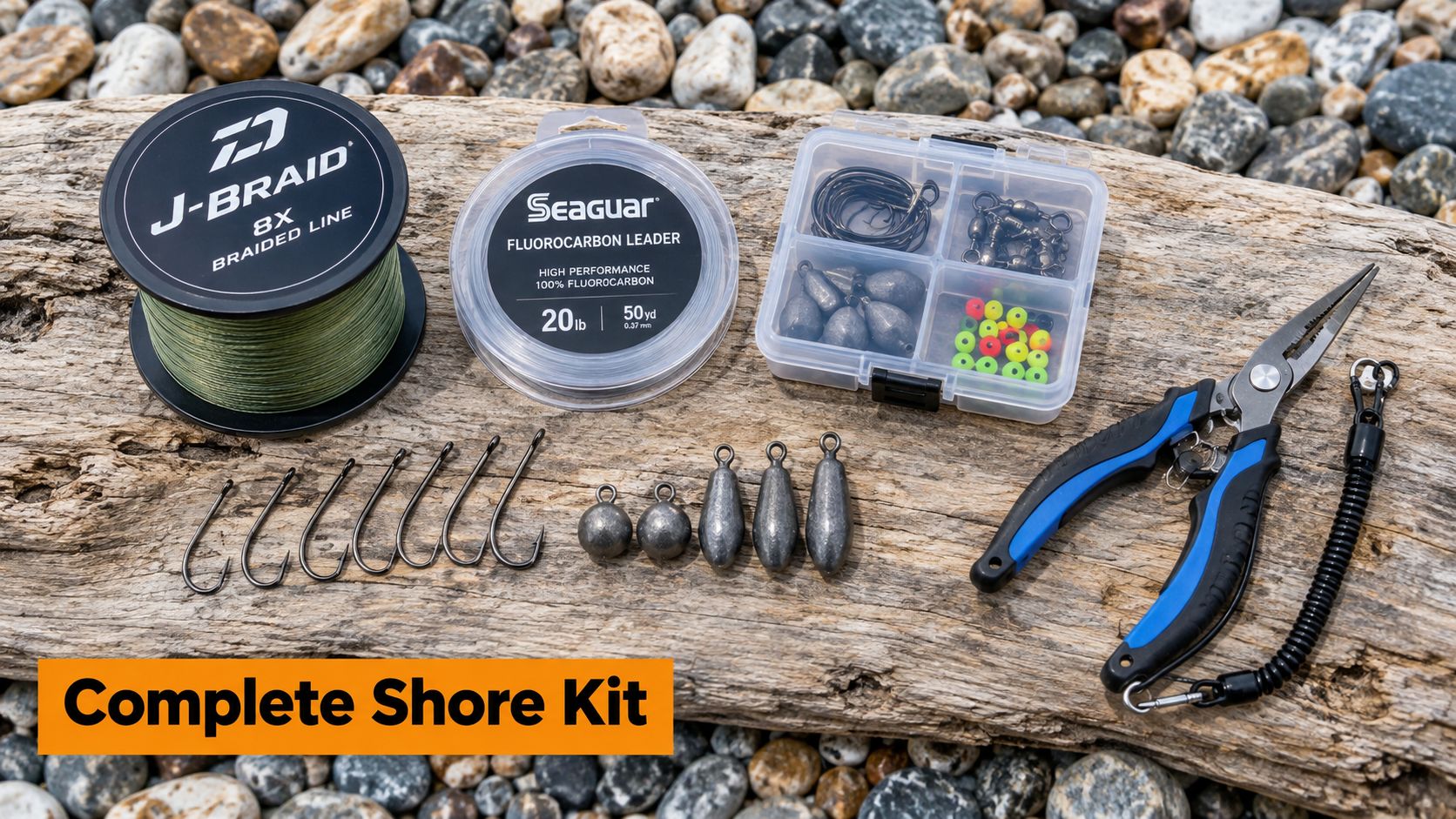
Line selection changes how the setup feels in your hands. Braid offers low stretch, which improves bite detection and hook-setting distance. One shore-fishing guide recommends 20- to 30-pound braid for inshore work and 30- to 50-pound braid for heavier surf. The trade-off is abrasion resistance, particularly around sand, rocks, jetties, and sinkers. Braided line and leader guidance
A leader protects the terminal section while preserving much of braid's sensitivity through the rest of the rig. That matters when the line brushes structure or a fish makes a hard run near shore. It also gives you a section that can be replaced without rebuilding the entire reel.
Lighter line can make a setup easier to carry and cast, but it leaves less margin around rough structure. For a quick comparison, find the best 10 lb fishing line and judge its behavior against your rod rating, target species, and surroundings. Line strength only works when the rest of the system is matched to it.
A clean cast does little if the reel is underfilled or the rod cannot load the weight being thrown.
Check the practical details before packing:
Match rod length to the casting job, while accounting for the distance and terrain between your vehicle and the fishing spot.
Match line strength to the environment, especially where rocks, pilings, or jetty edges can abrade it.
Keep reel capacity honest, because a shallow spool loses its reserve quickly during a long run.
Treat the leader as the abrasion buffer, and carry enough replacement material for the session.
That balance keeps the shore fishing setup manageable as a transport-and-work system. Gear that casts well but is awkward to carry, stage, or reset will shorten the day. For a packed list of shoreline tools, see indispensable fishing gear, then pack according to the access route rather than the idealized setup on paper.
Mastering Rigs and Reading the Water
Reach the beach with a workable plan: identify the water feature first, then decide where the rig, spare sinkers, and landing path will sit. Sandbars often appear as lines of breaking whitewater. Troughs look darker between the bars, while cuts create quieter gaps where moving water funnels bait. Those features give you a productive starting point and reduce wasted casts across flat sand.
Practical rule: start with the structure, then adjust the cast. Distance matters only when it places bait where fish are feeding.
A fish-finder rig is useful because it holds bottom while allowing the bait to move naturally. The practical setup uses 20- to 30-pound braided line, a 30- to 40-pound fluorocarbon leader about 3 feet long, and a sliding pyramid sinker above a swivel. Add an 18- to 24-inch leader ending in a circle hook around 1/0 to 4/0, selected according to bait size. Begin with 2 to 4 ounces of sinker and increase the weight only when current keeps shifting the bait. West Marine surf and jetty fishing guide
The setup should also work as a shore-based system. Keep replacement leaders and sinkers where you can reach them without unpacking everything, especially when fishing from a jetty or walking between spots. A rig that catches well but takes too long to reset costs fishing time.
Cast to the near edge of a trough, cut, or bar first. A bait in the right feature with a modest sinker can outfish a heavier rig thrown beyond the breakers into inactive water. If the first presentation fails, change one variable and watch the result.
Start with the casting zone. Move the bait if it lands on featureless sand. Adjust sinker weight when current drags the rig out of position. Change leader length if the bait looks stiff or unnatural, and alter bait size when the hook-up rate does not fit the water movement. Test the depth target when fish appear to be holding higher or lower in the water column.
Give the first 20 to 30 minutes a clear purpose. If the bait repeatedly settles in a flat, lifeless patch, move rather than casting harder. If current carries the rig, add enough sinker to hold it, but no more. Excess weight reduces bait movement and increases the chance of a snag.
You are not trying to cover the whole beach. Place one controlled presentation in the part of the surf that is active, then keep the rest of your shore fishing setup ready for the next adjustment.
Essential Gear, Bait, and Tools for the Shore
A dropped hook, a loose bait container, or buried pliers can interrupt a good shore session faster than a slow bite. Pack the working gear so it stays clean, reachable, and usable without emptying the rest of the load onto sand. That transport-and-work system matters as much as the tackle itself.
Keep pliers with a secure grip, a landing net, spare hooks and sinkers, bait storage, sun protection, and enough water close to the fishing position. Pliers should remain accessible for hook removal and cutting line. A net helps control fish at the edge, where uneven ground and waves can turn a landing into a scramble. Store bait in a sealed bucket or container, and keep food, sunscreen, and drinking water separate from wet terminal tackle.
Braided main line paired with a tougher leader remains a practical choice for shore fishing. Braid transmits bottom contact and tentative bites, while a harder leader handles abrasion around rough ground and structure. The combination protects the terminal end, but it does not replace checking the leader after contact with rocks, shells, or a snag.
Pack for the work, not the checklist
A compact kit should cover the interruptions that end sessions early:
Pliers with a secure grip, for controlled hook removal and line cutting.
A landing net, to reduce handling problems at the water's edge.
A bait bucket or container, to keep bait cleaner and easier to manage.
Spare terminal tackle, so one lost rig does not stop the session.
Sun protection and water, because exposed shorelines offer little relief.
Sort hooks, line, sinkers, and replacement pieces before leaving the vehicle. A labeled case or small pouch prevents the common beach routine of searching through a full bag with wet or sandy hands. For a workable storage layout, see this tackle organization system. Keep the items used after a snag or bait change in the outer pocket, not beneath the spare clothing.
A clean layout also protects equipment that is waiting its turn. Close extra line against sand, seal food before wind reaches it, and keep used hooks away from fresh bait. The goal is steady access and a clear work area, so each adjustment takes seconds instead of becoming another reason to repack the whole shore fishing setup.
The Lounge Wagon A Better Way to Haul and Sit
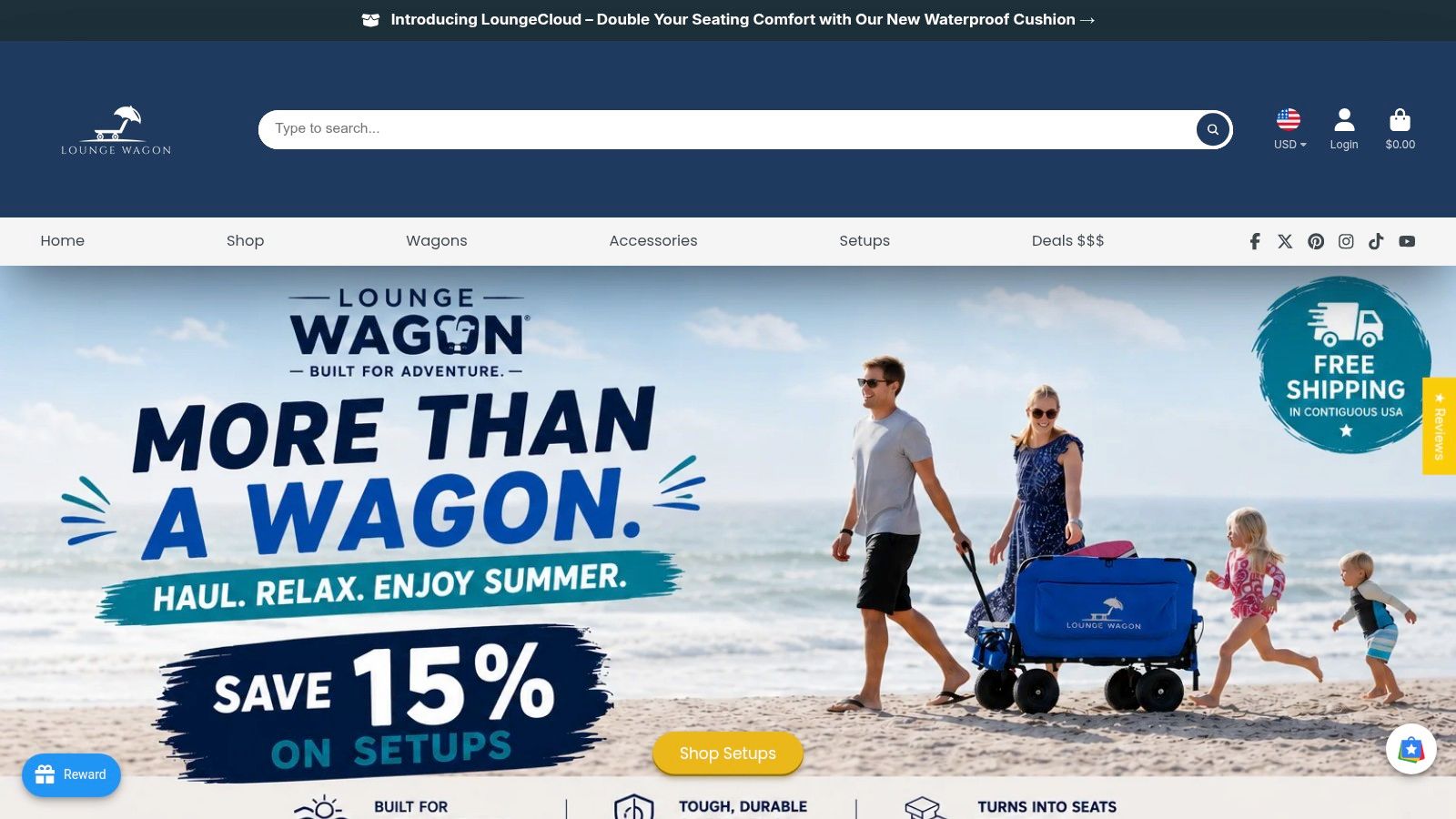
The walk from the car can be the hardest part of a shore fishing setup. Sand, gravel, rods, bait, a cooler, and loose tools quickly turn one fishing trip into several hauling trips. Lounge Wagon addresses that logistical problem by carrying the load and converting into a seat once you reach the water.
Its 500 lb capacity leaves room for rods, bait, a cooler, and the extra items that accumulate on a real outing. The 2-in-1 seating also removes a common choice: bringing either a cart or a chair. One piece of equipment handles both jobs, so there is less to load, carry, and keep track of.
At the shoreline, placement matters. Set the wagon where it stays clear of spray and incoming waves, then use it as a central staging point for the equipment you reach for repeatedly. Tackle, bait, and personal items remain together instead of spreading across sand or gravel. That makes breaks easier and reduces the work required when it is time to leave.
The benefit becomes clearer during a slow bite. Sitting between casts preserves energy for casting, tying knots, checking bait, and landing fish. On a long session, reducing unnecessary standing and repeated walks can matter more than replacing one piece of tackle.
A few design details support that routine:
All-terrain wheels help move the wagon across sand, grass, and gravel without constant dragging.
Integrated storage space keeps tools and bait within reach instead of buried beneath larger items.
Bench-style seating provides a place to reset without packing a separate chair.
Load consolidation reduces trips between the vehicle and the water, especially when the access path is uneven or crowded.
The best wagon for surf fishing gear page offers a useful way to compare how a gear hauler fits different shoreline situations. The important question is practical: can it carry the equipment you bring, reach the fishing spot without constant lifting, and give you a stable place to sit?
A hauler-and-seat system also fits the changing pace of shore fishing. You may wait for water movement, adjust the rig, then move when the tide or bite changes. Keeping the load organized makes those transitions quicker, while a seat lets you stay at the spot without treating every pause as wasted time.
Comfortable outdoor seating supports the same goal. A setup that makes resting easy is more likely to remain useful across a full outing, particularly when bringing enough gear requires a longer walk.
Why Comfort and Organization Matter for Participation
A shore fishing trip can fail before the first cast. If the walk from the vehicle is awkward, the gear is scattered, or there is nowhere to rest, the outing demands more energy than the fishing itself. A workable setup should support the full routine: carrying equipment, staging bait, managing pauses, and getting home without unnecessary trips.
Fishing is easier to repeat when those tasks stay manageable. In 2024, 5.1 million Americans tried fishing for the first time, while 16.6 million anglers left the activity, a 23% churn rate. Only 32% of participants fished at least monthly, down from 37% a decade earlier, according to the RBFF 2025 Special Report release.
Those figures make the logistics relevant to participation. A shore fishing setup that is difficult to carry, slow to stage, or uncomfortable during a long wait gives people another reason to stop returning. Keeping tools accessible and the load controlled helps families, beginners, and anglers fishing after a long week spend their effort on the water instead of on repeated hauling.
Who benefits most from a better setup
Families need gear that one person can manage without constant lifting. Older anglers benefit from conserving energy for walking, casting, and moving along the shoreline. Beginners need fewer obstacles between arriving, setting up, and making the first cast.
The same report recorded 21.3 million women fishing in 2024, the highest number recorded, while 22% of U.S. households with children fished compared with 16% of households without children. That pattern supports designing for accessible storage, comfortable breaks, and straightforward handling rather than tackle alone.
A setup built around usability can keep people on the shoreline longer and make another trip more likely. Guidance on comfortable outdoor seating connects directly to that practical need. A reliable place to rest is part of making shore fishing workable, not an optional extra.
Final Thoughts on Your Shore Fishing Setup
A strong shore fishing setup isn't just about rods, rigs, or hooks. It's a transport system, a work surface, and a place to rest while the water does its part. When you match the tackle to the surf and the hauling plan to the beach, the whole outing gets easier.
The angler who stays organized usually fishes better because they waste less energy. That's why a gear hauler with 500 lb capacity and 2-in-1 seating makes sense in this context, it solves the part of shore fishing most guides skip. Build for the walk, the wait, and the water, and the setup starts working before the first cast.
Ready to make your shore fishing setup easier to haul and easier to use? Visit Lounge Wagon to see how a gear hauler and bench in one can cut the carry, give you a place to sit, and keep your shoreline session more comfortable from start to finish.
Choosing a selection results in a full page refresh.
This pad is perfect for kids or dogs to be comfortable inside the moving wagon, and very nice after you set everything up and want to sit for extra padding.
Having the umbrella this summer has been easy to use and a must to make sitting and watching the parade so nice when there isn't any shade. My dogs laid on the wagon padding and enjoyed the day without getting too hot. I enjoyed the shade too.