The worst part of a family beach trip is usually not the beach. It's the parking lot, the sand carry, and the second or third sweaty walk back for the thing you forgot. A wagon that turns that chaos into one loaded trip changes the morning fast, and the Lounge Wagon is built around exactly that kind of carry.
Family beach trips work best when the logistics are quiet. If the wagon, shade, food, and towels are handled in one pass, the kids get to the shoreline calmer and sooner. For families who want the full setup ready to go, View the Beach Day Bundle, and if you want the gear hauler itself, see the Lounge Wagon before you start packing.
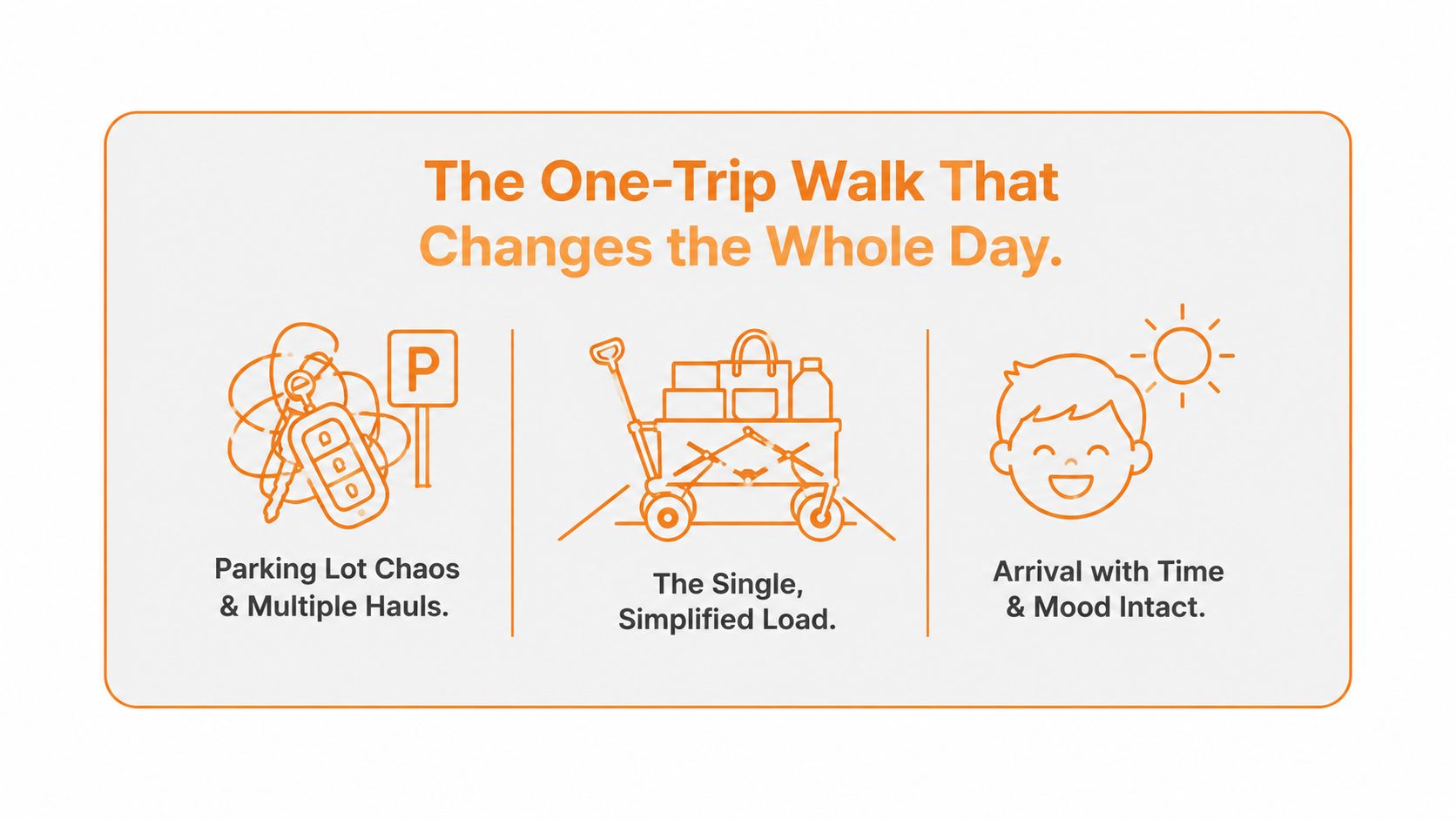
The One-Trip Walk That Changes the Whole Day
The morning usually falls apart at the car. One adult carries chairs, one carries the cooler, someone else is dragging toys, and the child you asked to “just hold the towels” is already unhappy. By the time you reach the sand, the day has already burned energy on the carry instead of saving it for the beach.
The best beach gear is the piece that consolidates a three-trip haul into one controlled load, with the heavy items low and the kid gear on top. That setup keeps cups from dropping, keeps smaller items from getting buried, and cuts down on the number of times you have to stop and reshuffle everything while everyone is watching you.
For families who want a wagon that also becomes a seat, the Lounge Wagon is the kind of tool that makes sense at the shoreline. It's a 500 lb capacity hauler with 2-in-1 seating, so the same load that gets you across the parking lot can turn into a place to sit once you arrive. For a fuller beach setup, View the Beach Day Bundle. If you want to see the gear hauler itself, read more about the large beach cart before you start packing.
Practical rule: if the carry from car to sand feels annoying in the parking lot, it is going to feel worse after everyone is hot, hungry, and half-buried in sand.
What Fits in One Lounge Wagon Load
Typical Items
Estimated Load
Shade
Umbrella, tent, clip-on shade
One grouped carry
Food and drink
Cooler, snacks, water bottles
One centered load
Comfort
Towels, foldable seat, dry clothes
One soft layer
Play
Toys, buckets, shovel, flotation extras
One top layer
A one-trip setup changes the tone of the whole day. You start organized instead of already irritated, and that matters when you are trying to keep kids steady in heat, glare, and sand. The advantage is not just convenience, it is keeping enough energy in reserve for the part everyone came for, the water.
Choosing a Beach That Works for Families
A family beach does not work because it looks good in photos. It works because the practical filters are right, and those filters are usually the boring ones. Lifeguards, water quality, shade, restrooms, parking, accessibility, and tide times matter more than a pretty boardwalk.
Families in Australia treat beach trips like logistics, not a casual outing. Domestic overnight beach travel there makes up a large share of beach visitors, and the beach profile shows how often children are part of the trip, along with the volume of nights and spending that go into it. That lines up with what parents already know, the site choice itself can remove a lot of friction before anyone reaches the sand. Tourism Research Australia beach visitor profile
What to check before you drive
A quick map check can save the day. I look for a posted lifeguard area, a nearby restroom, and parking that does not require a long haul across hot pavement. If the beach has a confusing access path, it is usually not worth it with small kids, grandparents, or a wagon full of gear.
Lifeguards first: a staffed beach gives you a clear safety anchor when kids want to get in the water fast.
Shade and restrooms second: if both are missing, you will spend half the day improvising.
Parking distance matters: the shorter the carry, the more likely your first hour feels relaxed instead of rushed.
Accessibility matters: stroller-friendly paths and easier entries help grandparents and younger siblings stay part of the day.
A good family beach is usually the one that makes the boring parts easier.
Beach flags and rip-current warnings also deserve a real look before anyone runs straight to the surf. The family-beach sites that do this well are the ones that combine calm water, visible safety cues, and low-friction access, not the ones with the fanciest snack stand. If your family already knows its preferred shoreline and just needs the rest of the setup solved, the Family Weekend Setup bundle keeps the planning tight.
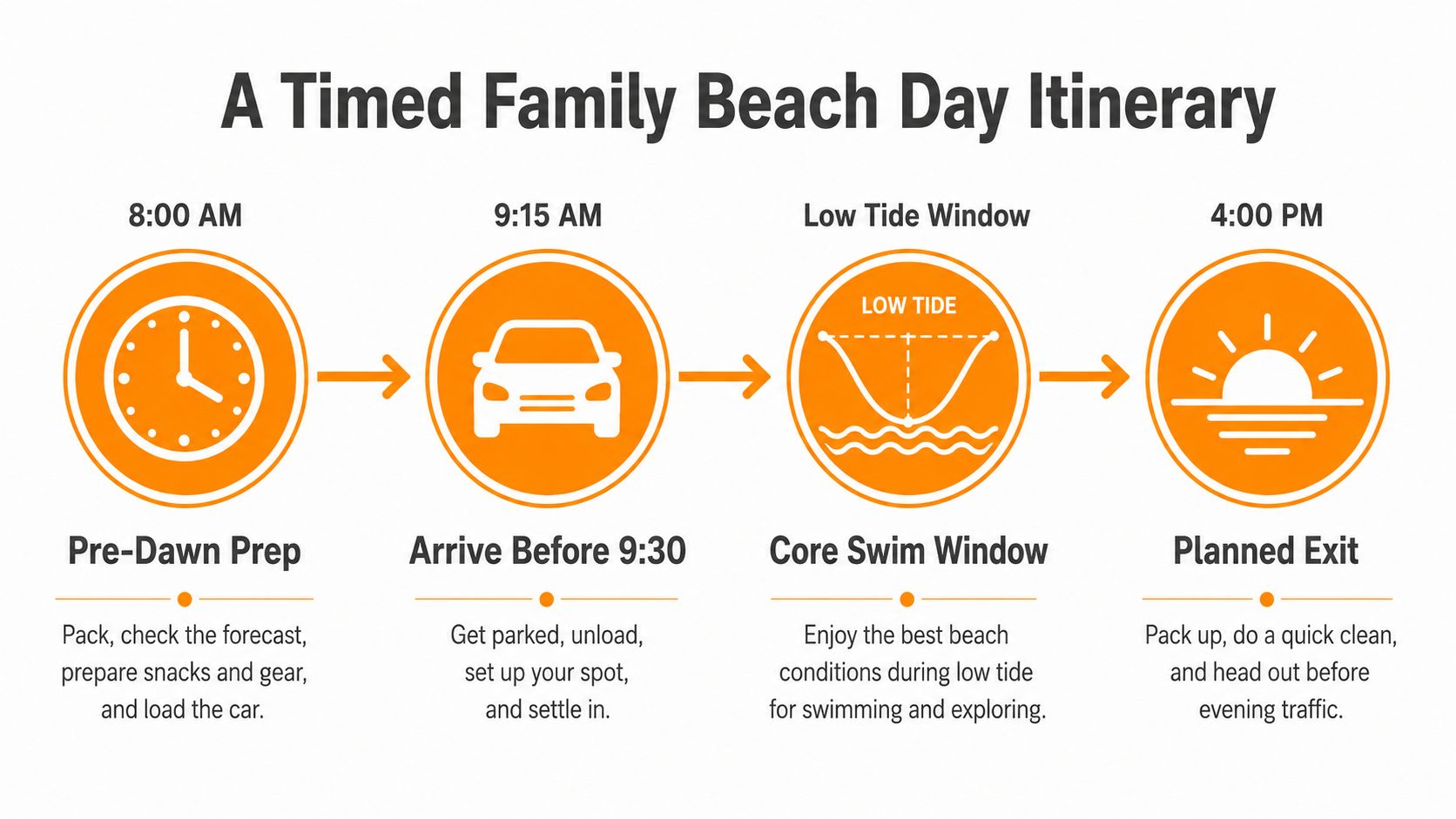
A Timed Family Beach Day Itinerary
A family beach day goes better when the clock does the heavy lifting. Get there early, use the safe water window while everyone still has energy, and head out before the sand turns into a slow grind. The calmest mornings usually start with prep before sunrise, arrival before the lot fills up, and an exit plan before the heat starts winning.
The strongest sun-safety guidance points away from peak UV hours from 10 a.m. to 4 p.m., recommends sunscreen 15 to 30 minutes before sun exposure, and says to reapply every two hours. Pediatric and family-travel guidance also says to keep children within arm's reach near water. PatPat family beach guidance Those guidelines keep the day manageable when kids are tired and the sand is hot.
A usable day plan
8:00 a.m. Pack the cooler, shade, towels, and change bag before anyone gets distracted. 9:15 a.m. Arrive, park, and unload in one controlled trip. Low tide window Use that stretch for the best kid-friendly water play and shoreline exploring. Lunch before the hottest hour Eat before the sun gets oppressive, then settle into shade. 4:00 p.m. Leave while everyone still has enough energy to get back to the car without a meltdown.
That rhythm fits real families because it reduces the worst friction point, the carry from car to sand. I use the ultimate travel packing list to keep the load organized before we leave, then I split the gear so nothing important ends up buried when we reach the shore.
If you've got a toddler, the wagon seat can become a shaded reset zone between bursts of play. School-age kids usually last longer if you alternate water time with snacks and sand tasks. Teens do better when they're given a job, like carrying the towel stack back or checking the tide app, instead of being told to “just have fun.”
The schedule works best when it stays simple enough to repeat without a morning debate. If your family's beach setup stretches past one day and turns into a longer shoreline stay, the Family Weekend Setup gives you a cleaner starting point than improvising each morning.
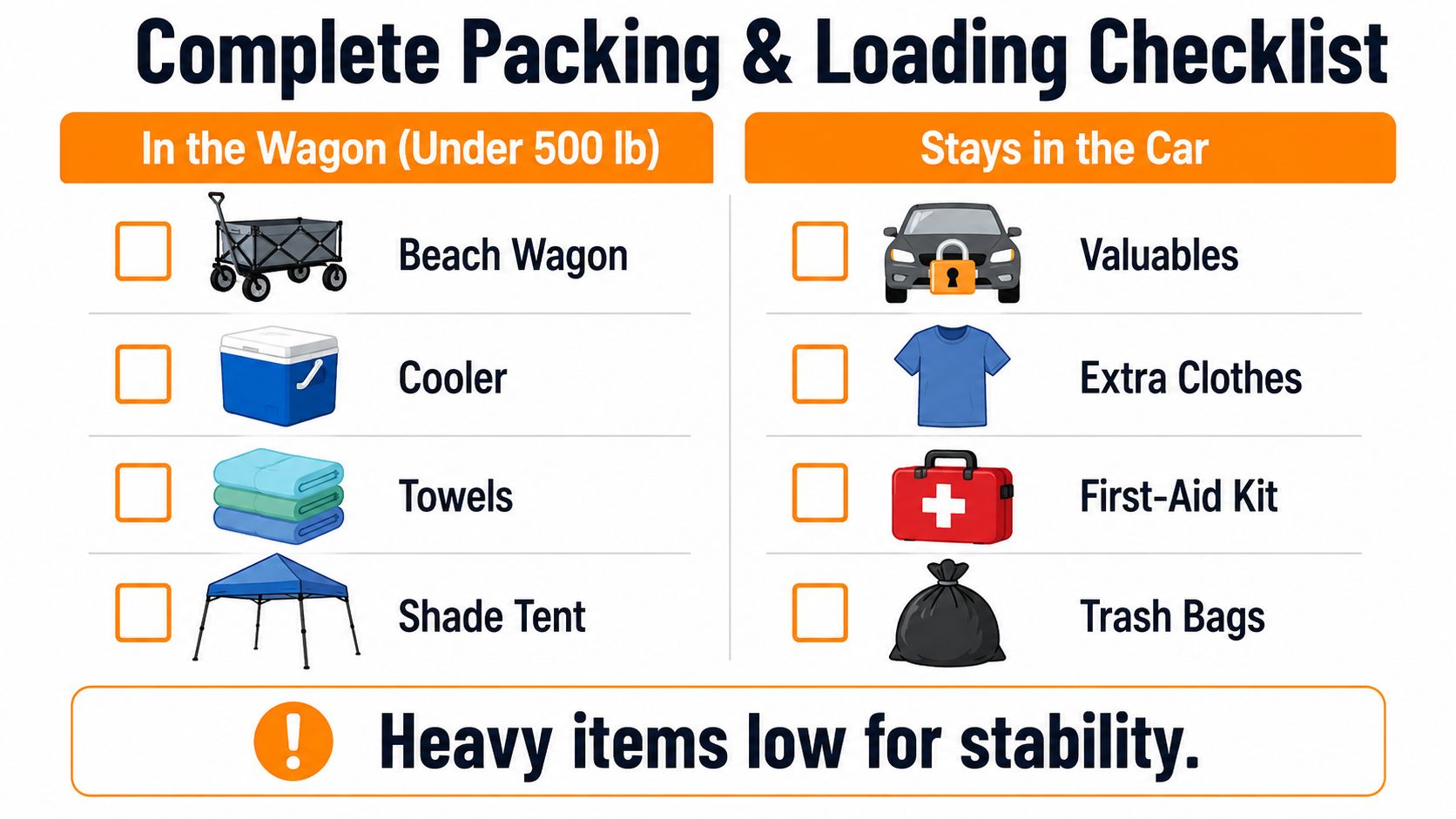
The Complete Packing and Loading Checklist
Beach packing goes smoother when you split what rides in the wagon from what stays in the car. That single choice keeps the load steady, keeps the heavy pieces low, and stops the usual pileup where the useful items disappear under random extras. Night-before prep matters here, because morning packing gets messy fast when kids are still half asleep and everyone is reaching for something different.
Wagon load and car load
The wagon should hold the items you need to reach the sand and settle in without a second trip. That usually means the shade shelter, cooler, towels, toys, and the folding pieces you'll want right away once you arrive. Heavy, flat items belong on the bottom, the cooler should sit centered, and soft goods can go on top.
The car should keep valuables, extra clothes, first-aid items, and trash bags. Those do not need to ride across the sand, and keeping them separate helps you avoid cramming the wagon with things you will not touch until departure. A common mistake is treating every item as equally urgent, which turns the load into a jumble and makes the first walk feel longer than it should.
In the wagon: umbrella or tent, cooler, towels, sand toys, dry bag, and the seating base.
In the car: valuables, backup clothes, first-aid kit, trash bags, and anything you only need at departure.
Loading order: heavy on the bottom, cooler in the middle, soft goods and toys on top.
Departure order: towel layer and cleanup gear should be the easiest to reach.
Beach advice tends to line up on a few points, bring a sun shelter, pack a cooler with hydrating snacks, and get the setup ready the night before so the morning does not become a scramble. A broader packing reference like the ultimate travel packing list helps when the beach day sits inside a larger vacation, while a beach-specific guide such as the Beach Day Packing List keeps the carry organized for a shorter outing.
If you want to skip sourcing every piece separately, the Beach Day Packing List is a practical shortcut for parents who want the load already mapped out.
Sun, Water, and Safety Protocols
A beach morning can look calm and still go sideways fast if sun care and water supervision stay improvised. Heat, glare, and sand all work against a parent's attention, so the better approach is a simple protocol the adult can run on autopilot. Sunscreen goes on before exposure, reapplication happens on schedule, and children stay close anytime they are near the water.
The timing still matters. Apply sunscreen 15 to 30 minutes before sun exposure, reapply every two hours, avoid the 10 a.m. to 4 p.m. UV window when you can, and keep children within arm's reach near water, according to pediatric and family-travel guidance. See the ProMed Certifications pediatric guide for a clear breakdown of those safety steps, and keep the routine steady instead of treating it like a reminder you hope to remember later.
What to do before the kids hit the water
UPF clothing cuts down the amount of skin you have to manage hour by hour, which matters once lotion wears off and kids start moving between sand and surf. A good watersports hat also earns its space quickly, especially for kids who refuse sunglasses, wipe their faces with sandy hands, or keep pulling at shade lines. The watersports hat benefits guide is useful if you want a practical look at why brim coverage helps more than a cute cap that blows off in the first gust.
Practical rule: if a child will not stay in the shade, set up the shade first, then bring the child to it.
Hydration needs the same kind of rhythm. Offer water before they ask, again after each swim stretch, and again before you start the walk back to the car. Families that wait for complaints are usually already behind, and the fix gets harder once kids are overheated and cranky.
A posted flag system should change adult behavior right away. Calm, supervised conditions are the goal, but anything suggesting stronger current or rough water means supervision needs to tighten immediately. Keep children within arm's reach near water, and if you want a shade setup that is easier to manage in wind, the DualShade umbrella gives you a cleaner option for quick beach setups.
Kid-Friendly Beach Activities by Age
The right beach activities fit the child's stage of development, not what looks good on a Pinterest board. A toddler needs short wins and shallow play. A school-age kid wants a mission. A teen usually wants some independence, a camera, or a game with just enough competition to keep attention.
Toddlers and younger kids
For little ones, keep the plan simple, shell hunts, shallow wading, and bucket filling. They do better with a safe patch of sand, one small goal, and a place to reset when energy drops. The wagon becomes the supply depot and the shaded rest stop, which keeps the day from falling apart when naps or snacks show up early.
One clean setup matters more than a packed itinerary.
School-age kids
Older children usually do better with sandcastle building, tide-pooling, and scavenger hunts. Give them a shovel, a bucket, and a challenge, then let them run with it. If your beach kid keeps collecting tools and treasures faster than you planned for, the outdoor toy ideas guide helps you sort through the options without overbuying.
The real payoff is ownership. When kids are building, searching, and carrying their own gear, they stay engaged longer and fuss less about the walk back to the blanket.
Teens
Teens usually respond to shoreline games, photo prompts, and a little freedom to roam within a set boundary. They still need structure, just not the same kind of structure younger kids need. If they can carry a towel stack, keep track of snacks, or shoot a few good beach photos, they stay more invested.
That age group also notices whether the day respects their independence. Give them a job with a clear finish line, and they are more likely to stay involved instead of disappearing into the background.
Rotate fast: when boredom starts, switch the task instead of arguing with it.
Use shade as a reset: a few minutes on the wagon seat can save the next hour.
Keep supplies together: the wagon should hold the tools so you don't spend time hunting for them.
The bored-then-meltdown pattern is what parents fight most often. The fix is usually plain, change the activity, then break for shade before frustration spreads. If your child collects shells like it's a serious sport, the Cargo Bag gives you a cleaner way to bring the haul back without stuffing every pocket full of sand, and the top snorkel equipment sets make sense for older kids who are ready to spend more time looking below the surface.
Comparing the Core Gear Pieces
Whether the gear solves the actual beach problem or just looks rugged in a product photo is the key question. A lot of wagons can handle pavement and packed gravel, but soft sand exposes the difference fast, especially when the load includes shade, food, toys, and a child who wants to sit down before the walk starts.
Feature
Lounge Wagon
Generic Wagon
Capacity
500 lb capacity
Usually marketed with less clear real-world carry planning
Seating
2-in-1 seating for two adults
Usually cargo only
Wheel size
10-inch puncture-proof wheels
Often smaller wheels that bog down more easily
Sand performance
Built to reduce drag on soft sand
Can struggle at the beach entry
Frame material
Reinforced steel frame
Varies by model
Use on arrival
Turns into a bench
Usually needs separate chairs
The 10-inch wheel size matters because the beach isn't a showroom floor. On soft sand, bigger wheels spread the load better and make the walk feel less like you're pulling dead weight behind you. That difference shows up the moment you hit the loose section near the waterline or the deeper sand by the path.
The 500 lb capacity matters for the same reason. Beach families do not carry one item at a time, they carry umbrellas, towels, cooler, toys, dry clothes, and whatever extra piece a child has decided is essential. A higher-capacity wagon removes the math problem and lets you pack for the day you have, not the one you wish you had.
The 2-in-1 seating changes the destination, not just the transport. Once you're set up, you've got a place to sit without unpacking separate chairs, which means fewer items to haul and fewer decisions to make once you're tired. That matters most at the end of the walk, when nobody wants to sort through a pile of gear just to find a dry place to sit.
If you want a closer look at wagon layouts before choosing one, this family-friendly wagon breakdown gives a useful side-by-side view. The point is simple, a wagon that handles sand and gives you a seat on arrival cuts down the friction between the car and the blanket.
For families who also like snorkeling or pier days, a good travel kit matters there too, and the top snorkel equipment sets article is useful context when you're building a broader coastal setup. The Adventure Backpack Cooler fits naturally into that kind of loadout, especially when you want cold drinks and snacks close without opening half the car.
The broader point is simple. The Lounge Wagon is the load-bearing piece, and the cooler, umbrella, and shade tent are supporting cast. If the wagon handles the carry, the rest of the kit can do its job without turning the morning into a gear shuffle.
Choosing a selection results in a full page refresh.
This pad is perfect for kids or dogs to be comfortable inside the moving wagon, and very nice after you set everything up and want to sit for extra padding.
Having the umbrella this summer has been easy to use and a must to make sitting and watching the parade so nice when there isn't any shade. My dogs laid on the wagon padding and enjoyed the day without getting too hot. I enjoyed the shade too.