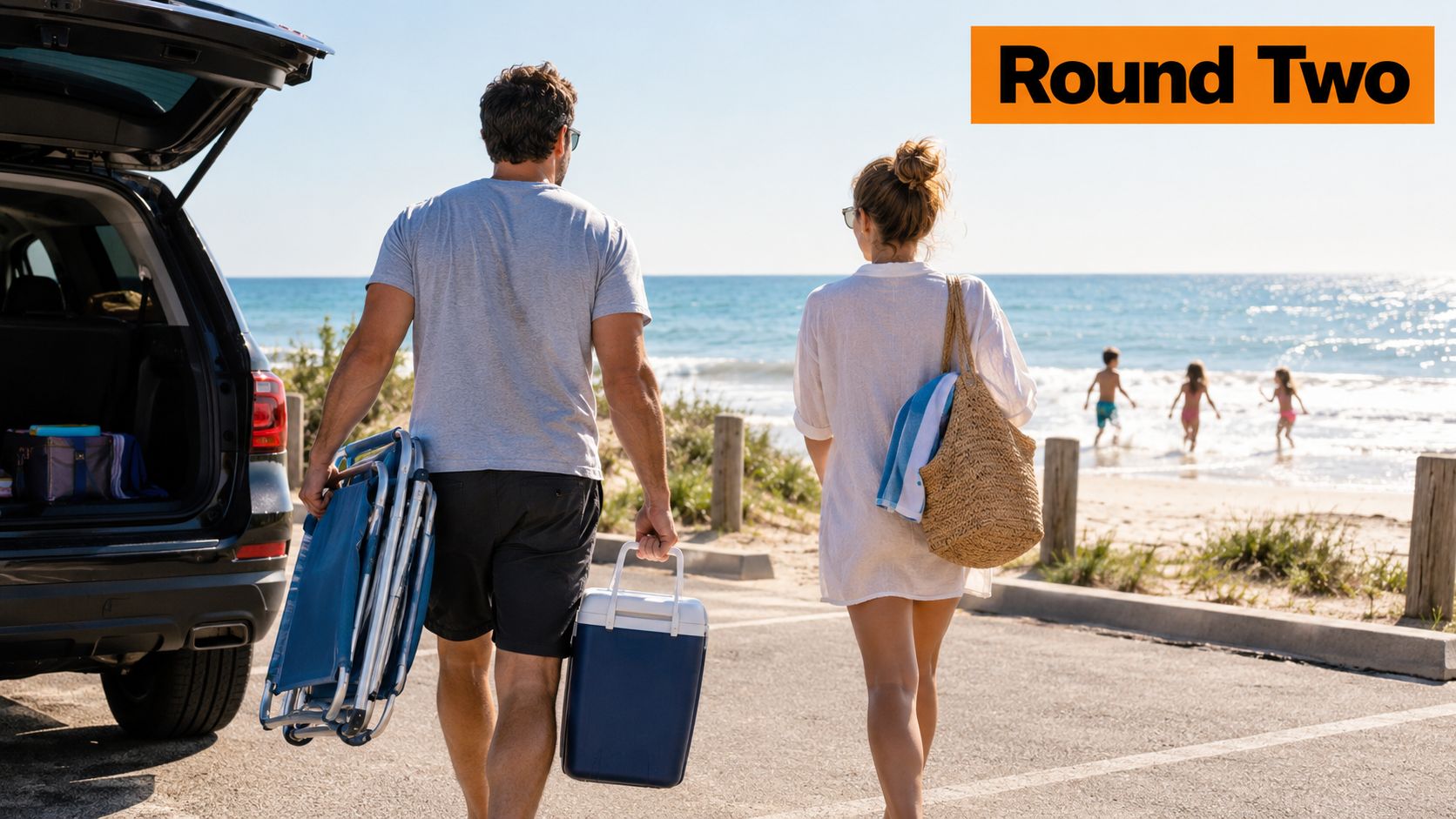
Saturday morning at a travel-ball complex, the assigned field sits a few hundred yards from the overflow lot, across grass still soft from overnight rain. Every family unloading a trunk runs the same calculation: what makes the first load, and what gets left behind. Beach days pose the same problem on sand, where chair legs sink an inch with every step and cooler handles bite into your palms.
That problem has a large audience. Outdoor recreation reached 57.3% of Americans aged six and older in 2023, and households with children recorded a 66% participation rate in 2024, according to the Outdoor Industry Association. Convertible outdoor furniture exists for exactly this gap: one piece that carries the load in, then becomes the place you sit.
After enough weekends on sidelines and shorelines, the trade-offs get familiar. A standalone folding chair saves trunk space, yet still has to be carried by hand. A wagon swallows the gear, then sits empty and useless once unloaded. A dual-purpose design handles both halves of the day. The Lounge Wagon pairs 2-in-1 seating with a stated 500 lb capacity, enough to hold two adults through a doubleheader. For more ideas on choosing pieces that earn their space, see Woodstock Furniture & Mattress Outlet tips.
The most useful test for convertible gear is whether it can get across the ground between your car and the place you want to sit. This guide to hauling heavy gear to the beach alone gets at the logistics: what you are carrying, how far you are moving it, and how many trips the setup demands.
The Multi-Trip Problem Most Outdoor Days Share
A beach day often starts with an optimistic load plan. The cooler goes first, then someone walks back for the umbrella, the towels, the bag of toys, the chairs. Soft sand turns each of those returns into real work, and the second trip to the car always lands right when the sun is climbing and everyone else is already settled.
Tournament families run the same pattern on grass and gravel. The tent and the equipment bag make the first pass; the chairs are still in the trunk when the next game starts. At a tailgate, separate seats and a side table fight for cargo space against food, bags, and everything else in the vehicle.
I've learned to count these days in trips rather than in gear. A normal family beach haul (a loaded cooler, two chairs, an umbrella, a small tent, towels, dry clothes) is more than one set of hands wants to move in a single run, and loose ground swallows wheels and ankles alike. Three loads means three round trips through that terrain before you've sat down once.
That repeated hauling is the problem convertible outdoor furniture solves. A dual-purpose wagon takes the whole pile in one pass, then sits you at the spot instead of rolling back to the car empty. The Lounge Wagon is built around that two-job logic, and the payoff shows up in trips you never make. Anyone who's had to do it alone will recognize the scenario in this walkthrough on how to haul heavy gear to the beach by yourself.
Family outings are hardly a niche case. Households with children, as noted earlier, are among the most active outdoor participants, and their loads reflect it. When supplies cover adults and kids at a beach, a tournament field, or a park, the pile grows fast. For more on picking pieces that earn the space they take up, these Woodstock Furniture & Mattress Outlet tips on multifunctional gear are worth a read.
Field rule: Decide whether your gear can reach the spot before you decide whether the seat looks comfortable. A bench you can't get across the sand doesn't solve the day's problem.
What Convertible Outdoor Furniture Actually Is
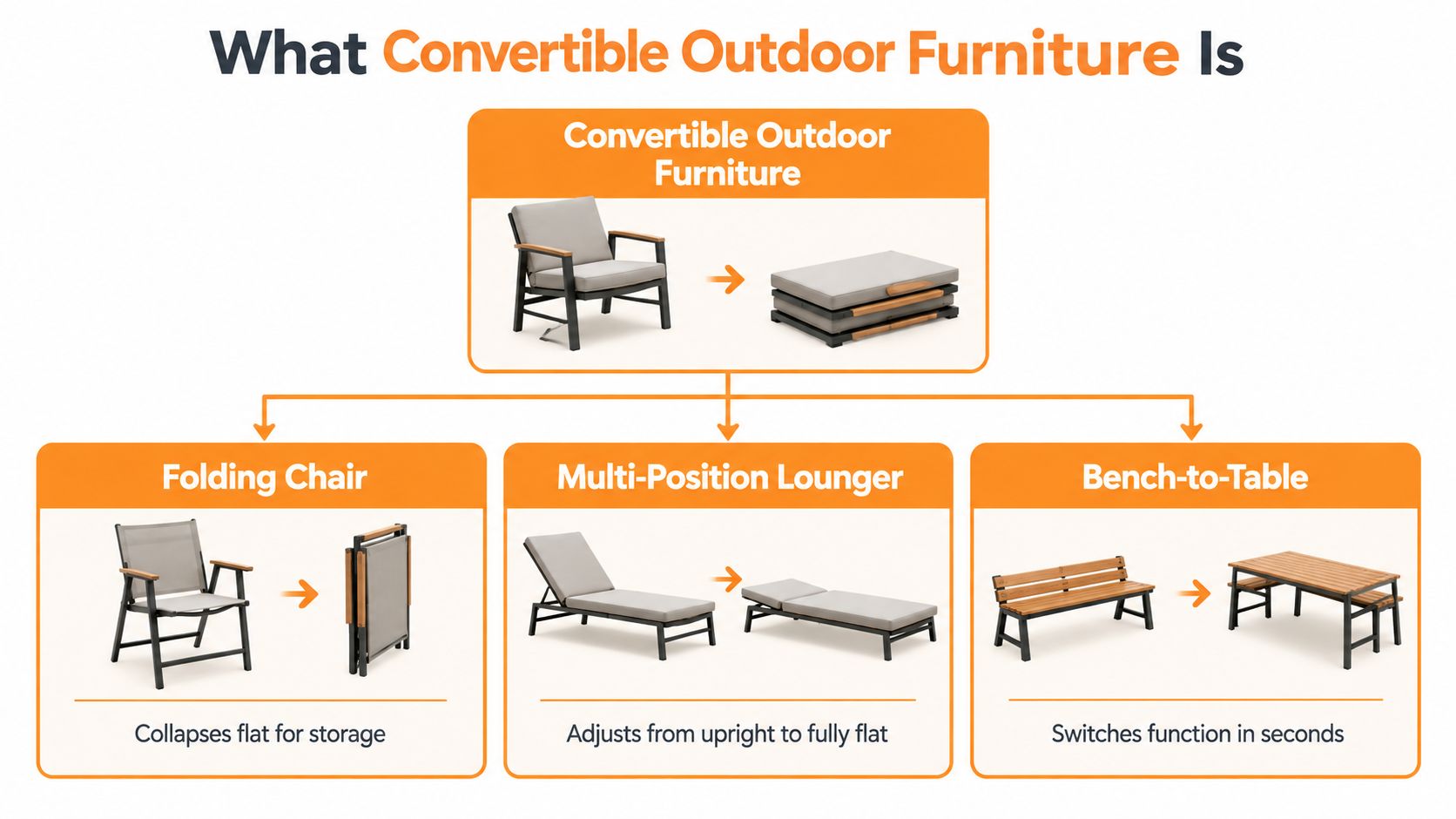
The simplest example is a folding chair. It changes from a full-size seat into a more compact shape for transport or storage, but it doesn't carry anything on the way to the destination. A multi-position lounger adjusts for different sitting or reclining positions, while a bench-to-table set switches between two functions.
The more useful definition depends on the outing: convertible outdoor furniture changes function to solve a real transport or seating need. For soft or uneven ground, that can mean a wagon that hauls bulky gear and then provides a stable bench, rather than furniture that folds away or changes shape for appearance.
Think of it as a tool that does the work of two products. A Swiss Army knife is useful because it combines functions you'd otherwise carry separately; a transport-to-seating unit applies that logic to outdoor gear. Wheels move the load, then the seating mode gives you a place to rest without unloading and setting up a separate chair.
When comparing designs, look beyond the conversion itself. Ask whether the frame supports the intended use, whether the seat feels stable when the unit is stationary, and whether the setup is easy to manage with the gear still nearby. For a different example of how outdoor furniture can change function, Lucas Furniture & Mattress's guide to outdoor daybeds offers useful context on convertible lounging.
Why Convertible Designs Earn Their Place
The strongest case for this category comes down to access, comfort, and logistics. Each matters most when an outing involves a long walk, a long wait, or more equipment than you'd like to carry separately.
Access across soft ground
Rolling a loaded unit can replace repeated hand-carrying. That matters on beaches, where loose sand makes walking harder: research on sand locomotion found that walking on dry sand requires approximately 2.1 to 2.7 times the mechanical work and metabolic cost of walking on firm ground at the same speed (study on the energetic cost of walking on sand). The practical takeaway is straightforward: beach gear that rolls can spare you some of the effort of making multiple trips by hand.
A useful place to sit
At an all-day tournament, parents may spend as much time waiting between matches as watching them. A seat that's already part of the gear hauler gives them a place to rest without bringing a separate bench or chairs. The same can help at a festival or fishing spot, where standing for long stretches isn't always appealing.
Less gear to coordinate
A wagon, separate chairs, and a small table all take space and require setup. Combining transport and seating can simplify what you pack, although the actual trunk-space benefit depends on the unit's folded size and the rest of your load. Check those details against your vehicle rather than assuming a convertible design will fit every setup.
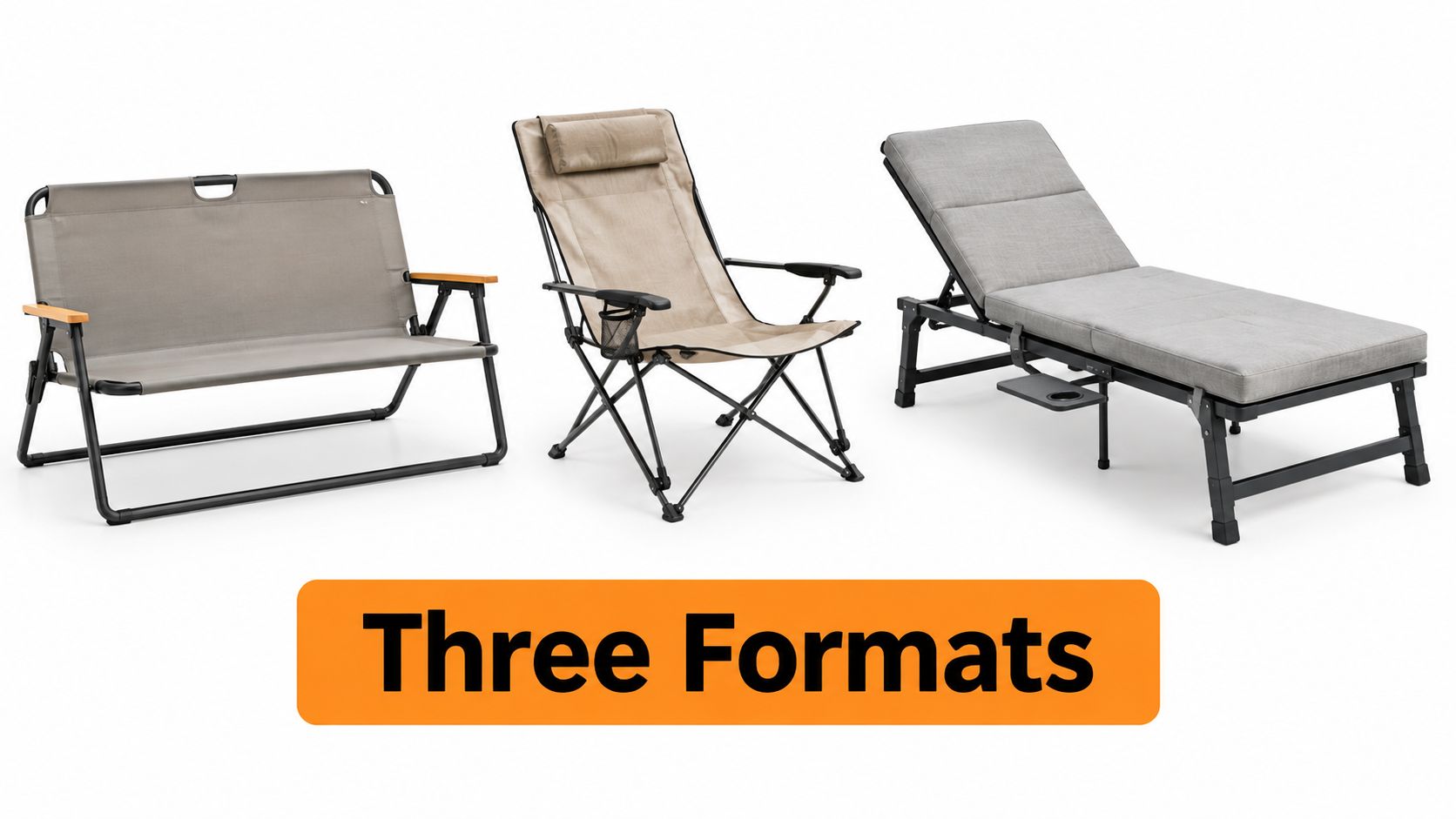
Most designs fall into a few recognizable groups, and each solves a different problem. The best fit depends on whether you need compact storage, flexible seating for a group, or a way to move gear over difficult ground.
Folding benches
A folding bench is a familiar, straightforward option. It folds down for storage and provides a simple place to sit, which can suit a balcony, backyard, or event where the walk from the car is short and the ground is firm. It doesn't solve the problem of transporting a large load.
Modular seating
Modular pieces can be rearranged to suit a gathering. That flexibility works well for a park picnic or a festival base camp, where people might want to sit together or shift the layout as the group changes. The trade-off is that multiple pieces may still mean more carrying, packing, and setup.
Dual-purpose wagons
A dual-purpose wagon combines a cargo-hauling mode with seating. It's the most direct choice when the challenge is getting supplies across a beach or field and having somewhere to sit at the destination. The Lounge Wagon, for example, is described as having a reinforced steel frame and a seat that converts from the hauling setup. Its 2-in-1 seating and stated 500 lb capacity are specific features to verify against the needs of your outing and the product's current specifications.
A compact folding bench may be enough for patio use, while modular seating gives a group more arrangement options. If you're carrying coolers, sports gear, or beach supplies across grass or sand, a wagon format puts transportation first and seating second.
The video below shows the Lounge Wagon's setup and conversion in context.
Materials and Build Choices That Hold Up Outside
Outdoor furniture lives with grit, moisture, sun, and repeated loading. The frame, fabric, wheels, and hardware determine whether a convertible design remains useful after the easy first outing.
Frame and fabric
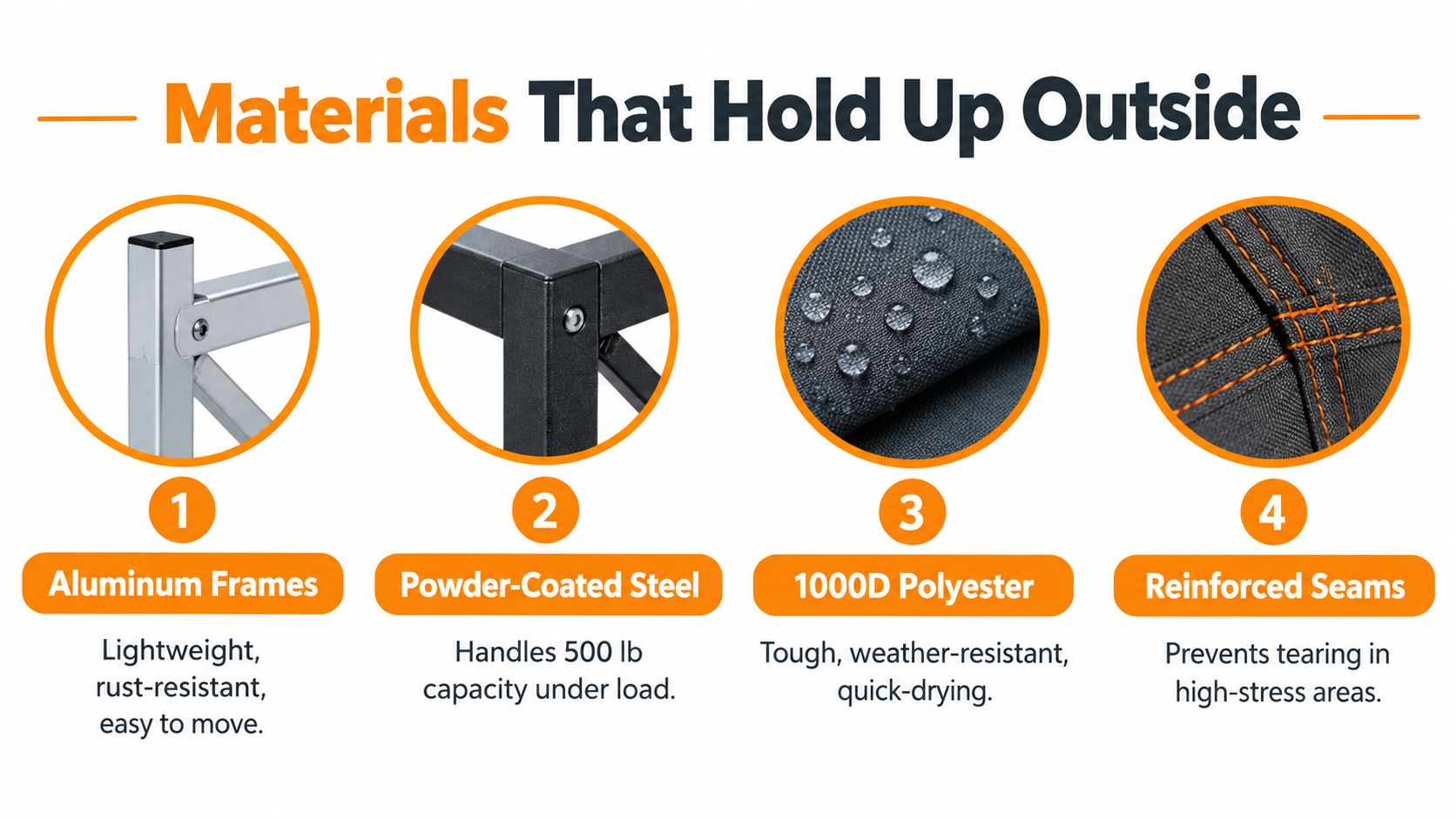
Aluminum can be appealing when keeping weight down matters, and it naturally resists rust. Steel is typically a sturdier choice for a heavily loaded frame, but look for a protective finish, especially if the gear will see damp conditions or coastal air. The material alone doesn't tell you how well a specific product performs; examine the frame construction and the maker's stated use and limits.
Fabric should suit the outing. A durable, quick-drying weave is practical around water, while a tougher surface can make cleanup easier after a muddy tournament or festival. Don't assume a fabric name guarantees that it will resist sunscreen, sand, or rain. Check the care instructions and how the seat is attached, since those details affect cleaning and drying.
Wheels and hardware
Wheel size and tread matter on soft surfaces. Larger, wider wheels can help spread a load rather than digging into loose ground, but the wheel design and the weight being carried also affect how a wagon handles. For gravel lots, consider puncture resistance; near salt water, rinse the frame and pay attention to hardware and joints after use.
Durability isn't a finishing detail for buyers. A report on outdoor living spaces found that cleaning and care were the largest nonfinancial barrier for 42% of surveyed U.S. consumers, while 67% prioritized practicality and durability over style (Furniture Today's coverage of the ICFA report). Choose materials with the cleanup you'll end up doing in mind.
Frame: Look for a suitable material and protective finish for the conditions you expect.
Fabric: Check whether it can be cleaned and fully dried before storage.
Wheels: Match the wheel design to sand, grass, gravel, or pavement.
Hardware: Inspect fasteners, joints, and moving parts after exposure to grit or salt.
Matching the Right Model to the Way You Actually Play
Start with where the unit has to go, not with a long feature list. A beach wagon needs to move over loose sand; a tournament hauler needs to handle equipment and offer somewhere to sit between games. Those are different jobs, even if both products are called all-terrain.
Match the design to the outing
At a youth sports complex, the useful combination is room for bulky supplies and a seat that makes waiting between matches easier. For a beach day, prioritize soft-surface mobility and a setup that reduces the number of hand-carried items. At a tailgate, compare the folded footprint with the space available in your vehicle.
Fishing brings another kind of trade-off: tackle and other supplies compete with anything you want to bring for sitting. At a festival, a bench can become a base for breaks, but consider how crowded paths affect maneuverability. For multigenerational visits to parks or parades, check the seat height and stability, especially if someone in your group finds low chairs difficult to rise from.
A study of older and younger adults found that force production and movement quickness during sit-to-stand decreased as seat height fell, with a pronounced effect when the seat differed from lower-leg length by roughly 20%, or about 6.2 centimeters (research on chair height and sit-to-stand performance). A higher seat may be worth considering, but fit varies by person, so check the product's dimensions and have the intended user try it if possible.
Spec
Lounge Wagon convertible
Standard wagon plus separate chairs
Capacity
Stated 500 lb capacity; check product specifications for the mode and limits
Check the wagon and each chair's separate limits
Seating
2-in-1 seating integrated into the wagon
Chairs must be carried and set up separately
Wheel size
Confirm the listed dimensions and design for your terrain
Compare the wagon's wheel dimensions and tread
Conversion
Check how the seating mode is set up and secured
No conversion, but more separate pieces to manage
Storage
Check the folded footprint against your vehicle
Account for the wagon and each chair individually
These comparisons are useful only when you confirm the current product specifications; don't treat a category label as a performance guarantee. If your outings also include a patio or backyard, Guynn Furniture & Mattress's outdoor living room ideas can help you think through the difference between stationary and portable seating.
The Hidden Test That Separates Real Gear From Pretty Gear
“All-terrain” doesn't mean a wagon will handle every surface equally. A design that rolls easily on pavement may feel entirely different on dry sand, and a seat that seems comfortable at home may wobble on uneven grass or gravel.
Soft sand is a demanding surface for people as well as gear. In an Australian survey of 350 people with disabilities or mobility limitations, 87% identified moving across soft sand as a barrier, and 68% said they couldn't visit beaches as often as they wanted (survey on beach access barriers). That makes mobility a real access consideration, not just a preference for an easier walk.
Ask before you buy
Will the wheels stay on top of loose sand? Look for the actual wheel dimensions and tread, then check whether the maker specifies soft-surface use. A broad tread may help distribute weight, but the whole loaded wagon matters.
Can one adult move the load? Consider how much gear you'll carry, the route, and whether you can control the unit on slopes or uneven ground. If possible, try it loaded rather than judging from an empty product demonstration.
Does the seat stay stable on grass or gravel? Check the seating setup and height, and let the person who'll use it test getting in and out. Comfort includes a stable seat and a manageable stand, not just padding.
A convertible design only helps if you can get it to the spot where you need the seat. Use this guide to understanding wagon towing capacity to think through loading limits before packing for the trip.
Care, Storage, and Buying With Confidence
A convertible piece earns its place when it replaces tasks and equipment without adding a fussy maintenance routine. After a beach outing, rinse off salt and grit, especially around the frame, wheel areas, and moving parts. Let the fabric dry before folding the unit away, and store it covered or indoors when practical.
Before the next trip, check the wheels, joints, and fasteners for grit, looseness, or wear. Follow the manufacturer's care guidance rather than guessing about lubricants, cleaning products, or repairs. A quick inspection makes it easier to catch a problem before you load the wagon for a long walk to the field or shore.
Buying confidence comes from matching the design to the jobs you'll use it for. A combined hauler and bench may replace a separate wagon and seats, but only if the capacity, folded size, seating fit, and terrain performance make sense for your household. Count the pieces you can leave behind, then compare that practical value with the unit's maintenance needs and storage footprint.
Before ordering, check:
Capacity and modes: Confirm the limits for hauling and seating.
Folded size: Make sure it fits your vehicle and storage space.
Terrain: Match the wheels to the surfaces you regularly cross.
The best choice is the one you'll be willing to load, move, clean, and use again. That's what turns convertible outdoor furniture from an appealing idea into a reliable part of a beach day, tournament weekend, or tailgate.
Ready to cut down on separate gear and make the walk to your spot simpler? Lounge Wagon combines hauling with seating for outdoor outings, so you can bring supplies and have a place to rest when you arrive. Explore the options at Lounge Wagon and choose a setup that fits the ground you cover.
Choosing a selection results in a full page refresh.
This pad is perfect for kids or dogs to be comfortable inside the moving wagon, and very nice after you set everything up and want to sit for extra padding.
Having the umbrella this summer has been easy to use and a must to make sitting and watching the parade so nice when there isn't any shade. My dogs laid on the wagon padding and enjoyed the day without getting too hot. I enjoyed the shade too.