TL;DR: The best 2 seater bench with storage for outdoor use is a mobile 2-in-1 hauler that carries equipment, rolls across grass, gravel, and sand, then becomes a stable seat for two adults. Look for a reinforced frame, 500 lb capacity, all-terrain wheels, washable fabric, and practical moisture control.
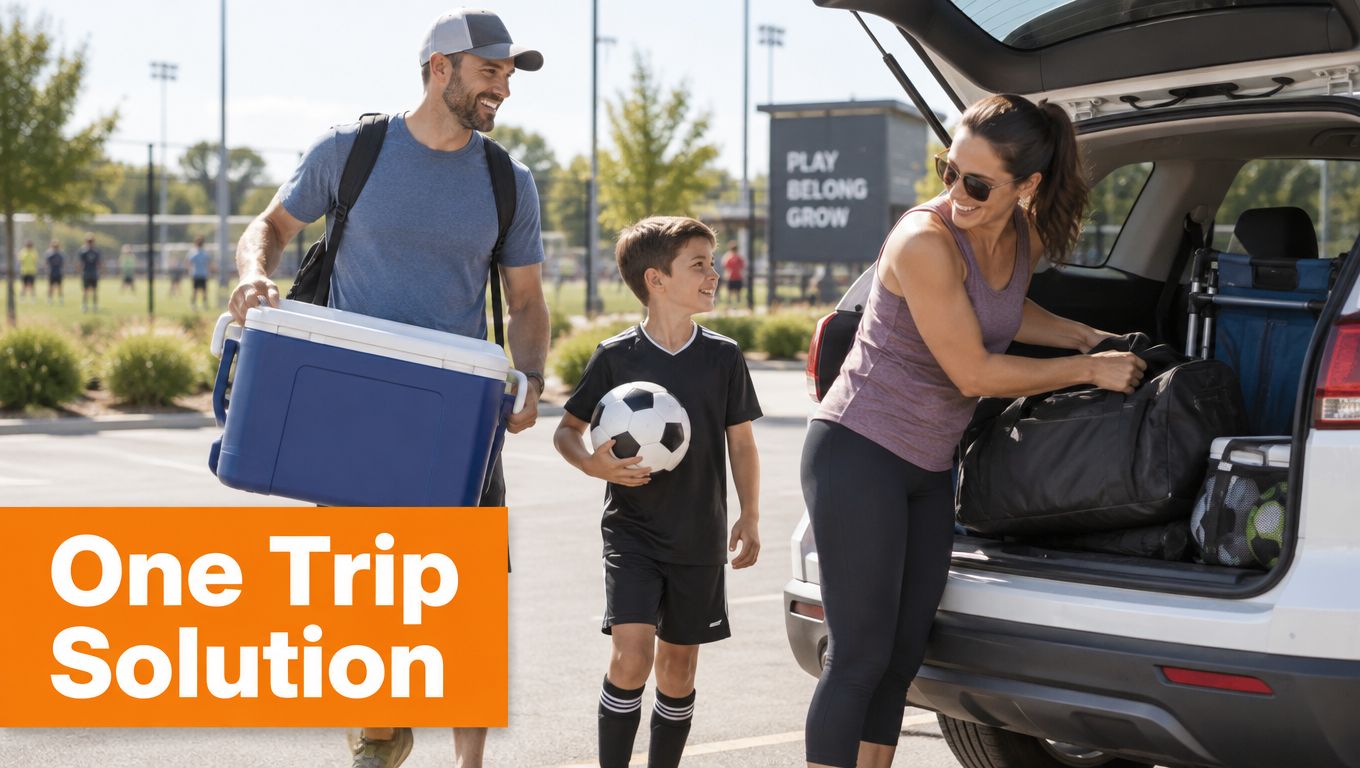
The third trip from the car is usually the one that breaks the morning. You've carried the cooler, returned for chairs, gone back for the umbrella, and then discovered that the best patch of shade has disappeared at the youth soccer complex or shoreline. By the time everyone sits down, the day already feels like work.
A mobile 2-in-1 bench changes that equation. One unit carries the equipment and then becomes a double seat, so you're not choosing between a gear wagon and a place to rest. For a closer look at the format, the Lounge Wagon design overview shows how a utility wagon can combine transport, storage, and seating in one footprint.
The One-Trip Solution for Outdoor Gear and Seating
A conventional garden bench stays where you put it. That works on a patio, but it doesn't help when the destination is a crowded sports field, a sandy access path, or the far end of a festival lawn. Outdoor families need furniture that moves with the day, not a fixed box that waits at home.
At a tournament, the cargo may include a team cooler, folding canopy, balls, blankets, and personal bags. At the beach, it may be an umbrella, towels, sand toys, and refreshments. A 2 seater bench with storage earns its space by handling the first job, then serving as the second.
Why the mobile format works
The useful distinction isn't just “bench” versus “wagon.” It's whether one product can carry the load without forcing you to pack separate seating. A wagon with a padded sitting mode creates a small base camp wherever the group stops, whether that's beside a lacrosse field or near the waterline.
The history of bench seating supports this combination. Historical references trace benches to simple planks and storage chests, and one overview describes early benches as multipurpose furniture for sitting and keeping goods protected during medieval times. Span Seating's bench history describes that long relationship between seating and storage.
Field rule: If a product needs a separate chair to become comfortable, it hasn't solved the full outdoor problem.
The value becomes obvious during the pauses between activities. Parents can keep essentials inside the cargo area, pull the wagon into position, and give two adults a defined place to sit rather than balancing on a cooler or dropping onto damp grass. The same compact footprint handles transport and downtime.
Key Features of a Heavy-Duty Storage Bench Wagon
A true outdoor storage bench wagon needs more than a lid and a seat cushion. It has to carry awkward equipment, tolerate uneven ground, and remain useful after exposure to grass, grit, and wet gear. The frame, wheels, textiles, and restraint system each affect how much effort the user spends moving and managing the load.
Start with the frame and load rating
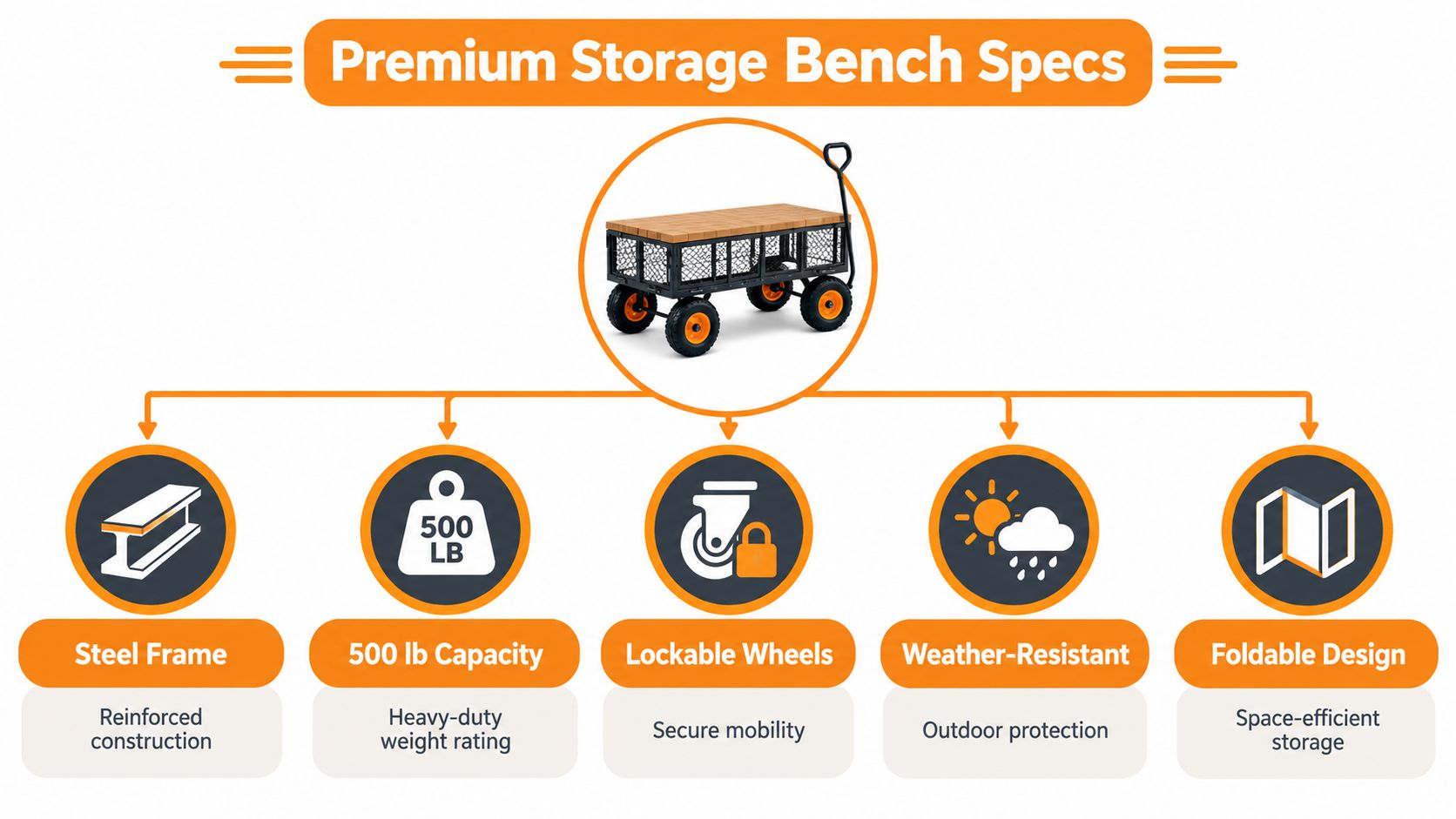
A reinforced steel frame gives the wagon a structural backbone when the cargo is dense or unevenly distributed. The stated 500 lb capacity on the Lounge Wagon matters because a tournament load rarely consists of one neat item. Coolers, water, tents, bags, and equipment all shift as the wagon moves.
That rating describes the product's listed capacity, not a recommendation to ignore balance or manufacturer safety guidance. In practice, pack heavier items low, keep the load centered, and make sure the seating configuration is used only as intended.
Wheels determine whether the wagon is useful
Small hard wheels can work on smooth pavement and fail as soon as the route reaches gravel, thick grass, or soft sand. 10-inch puncture-proof all-terrain wheels provide more clearance and a broader contact profile, which means less dragging over uneven surfaces and fewer interruptions caused by flats.
The wheel benefit is practical rather than decorative. Larger wheels help the person pulling maintain forward movement across rough ground, while puncture-proof construction removes one common failure point from a long outing.
Fabrics and accessories affect daily handling
A 1000D Polyester body is selected for demanding outdoor use because the fabric needs to resist abrasion from equipment and repeated folding. Integrated cup holders keep drinks off the ground, while storage pockets make small items easier to reach without unpacking the main cargo area.
A cargo net also matters when the load includes loose or tall items. It helps contain equipment during movement, reducing the chance that a ball, towel, or lightweight bag shifts out of the wagon when the path becomes uneven. The heavy-duty wagon guide for 500 lb capacity provides a product-focused reference for evaluating this type of construction.
Ergonomic Dimensions and Load Capacity Requirements
A bench can technically seat two people and still be unpleasant after a short wait. Adult comfort depends on the relationship between seat height, depth, width, cushion behavior, and the pressure created by hardware or hard edges. Outdoor users should evaluate those details with the same care they give the wheels and frame.
For an adult-oriented integrated storage bench, a seat height of about 18 to 20 inches, a seat depth of 15 to 17 inches, and roughly 24 to 30 inches of clear space in front are practical ergonomic targets, according to entryway bench ergonomics guidance. Those dimensions support easier sitting and standing while leaving room for knees and feet.
Compare the furniture brief with the outdoor brief
Indoor benches usually prioritize appearance, fixed placement, and a clean storage compartment. A mobile outdoor model has to balance those concerns against rolling stability, load distribution, folding, and exposure to dirt.
Feature
Standard Indoor Bench
Heavy-Duty Wagon Bench
Primary job
Stationary seating with concealed storage
Gear transport that converts to seating
Seat height target
About 18 to 20 inches for adult use
Should remain within a comparable adult-comfort range while supporting a mobile base
Seat depth target
About 15 to 17 inches
Should provide usable support without interfering with cargo or folding
Front clearance
About 24 to 30 inches
Must be preserved wherever adults sit and stand
Load consideration
Seated occupants and light stored items
Occupants plus outdoor gear, with the manufacturer's rating followed
Mobility
Usually absent
All-terrain wheels and a pull or push mechanism
Storage access
Hinged lid or drawer
Cargo cavity, pockets, and restraint features designed for transport
The table reveals the key compromise. A wagon bench must remain low and stable enough to haul equipment, but its seat can't be so low that older adults struggle to stand. Seat width also matters. “Seats two” should mean two adults can share the surface without sitting on hinges, latches, or raised handles.
Treat capacity as a system, not a headline
The 500 lb capacity should be read alongside frame construction, wheel performance, and how the load is arranged. A large rating doesn't make an overloaded or top-heavy wagon easy to pull. Place dense gear on the floor, keep the seating surface clear, and use cargo restraints when the route includes slopes or rough transitions.
The wagon towing capacity guide is useful when comparing the rated system with the type of gear you regularly move. Comfort and hauling strength are separate buying questions, and a credible product has to address both.
Top Environments for a Mobile Seating and Storage Unit
The right use case exposes a wagon bench's strengths quickly. A product that feels unnecessary on a paved walkway becomes valuable when a family has to cross deep sand, a coach has to move supplies across a field, or a tailgater needs to reduce the number of items in an SUV.
Youth sports complexes
Tournament parents often work from a moving checklist. The cooler needs to stay upright, the canopy must remain accessible, and personal bags shouldn't end up scattered across the sideline. A 2-in-1 wagon handles those items in transit and then gives two adults a defined viewing position between matches.
At crowded soccer complexes, mobility also affects where you can settle. A compact seating-and-storage unit is easier to reposition than a collection of loose chairs, coolers, and bags. It creates a home base without turning the sideline into an obstacle course.
The best configuration depends on the field surface. Grass and compacted gravel are forgiving, while rutted areas demand careful loading and steady pulling. The all-terrain wagon with seats is the relevant product reference for this outdoor seating format.
Deep beach sand and coastal paths
Beach access exposes weak wheels immediately. Soft sand increases rolling resistance, and a narrow wheel can dig in rather than travel forward. Larger puncture-proof wheels don't eliminate the effort of pulling a loaded wagon, but they address the mechanical problem that causes many standard carts to struggle.
The storage cavity also needs sensible packing. Keep towels and clothing separated from wet or sandy items when possible, and don't close damp gear into an unventilated space for long periods. The wagon should carry the bulky equipment, but users still need a routine for drying and cleaning it.
For families planning a complete outdoor setup, guidance on how to choose a patio table for can help coordinate the wagon with the eating and gathering area once the gear arrives.
Here's a closer look at the mobile bench format in use:
Tailgates, festivals, and multigenerational outings
At a tailgate, the main advantage is packing efficiency. One unit can carry chairs, blankets, food supplies, and event equipment, then provide a seat without consuming the cargo space required by another chair set. At a festival or market, the seating mode gives adults a raised rest point instead of forcing them onto the ground.
Grandparents and children also benefit from a predictable rest stop during zoo visits, parades, and park days. The wagon still has to be pulled within its handling limits, but combining transport with seating reduces the amount of equipment a family has to carry separately.
Overcoming Comfort and Moisture Management Flaws
Storage benches often sound better in a product listing than they feel after a long outdoor session. A seat may technically fit two adults while a latch, handle, or other piece of hardware creates a pressure point. Independent reviews have highlighted how protruding hardware can make dual-purpose benches uncomfortable in actual use, as reported by Wirecutter's storage bench review.
Inspect every contact point
Sit on the product before treating “two-seater” as a comfort claim. Check whether the cushion spreads pressure evenly, whether the front edge presses into the legs, and whether two adults can sit without one person occupying a hinge or latch area.
A padded surface helps, but padding alone isn't enough. The support underneath, the seat depth, and the backrest angle determine whether the bench remains usable during a long wait rather than only during a quick stop.
Comfort test: Sit in the actual position you'll use outdoors, with both feet on the ground and the storage hardware closed. A short showroom impression can miss the pressure that appears during an extended sideline break.
Manage water before it becomes an odor problem
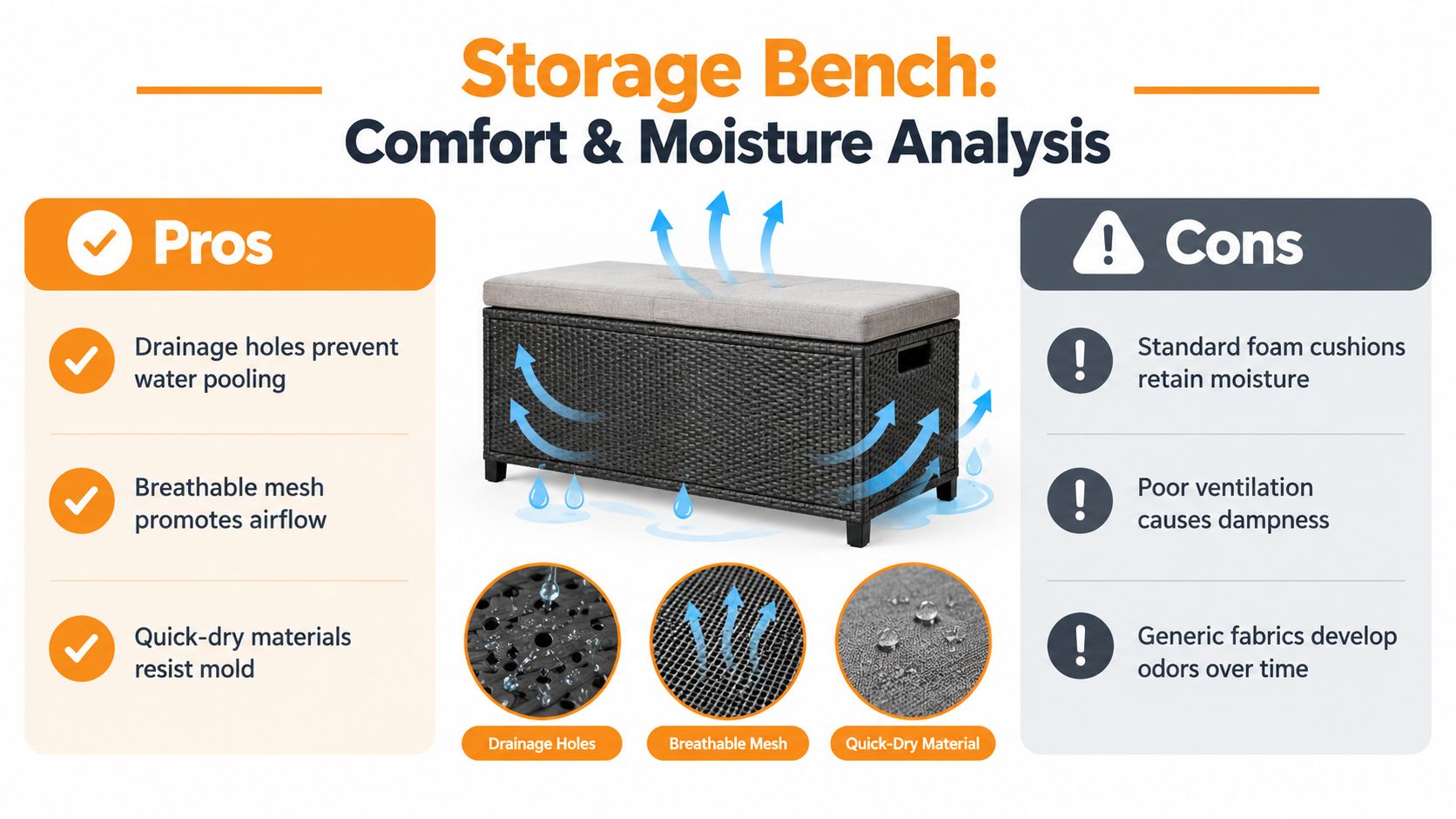
Outdoor storage has two competing needs. A sealed cavity can help protect contents from outside moisture, while ventilation helps damp towels, swimwear, and sports clothing dry instead of sitting in trapped humidity. Buyers should decide which problem matters more for their normal load.
Look for materials and construction that are washable, quick to dry, and resistant to corrosion. Powder-coated steel can help protect the frame, while breathable mesh, drainage paths, or a removable liner can make cleanup less frustrating after sand and wet gear come home.
The most practical routine is simple:
Separate wet items: Keep damp clothing and towels from dry valuables whenever the design allows.
Empty promptly: Remove wet or sandy gear rather than leaving it in the closed cavity.
Rinse the dirty surfaces: Wash away salt, sand, and mud before they work into seams and hardware.
Dry before folding: Store the wagon only after fabric and interior surfaces have had time to air out.
A waterproof seat cover can protect the seating surface during messy outings. The waterproof seat cover guide is a useful accessory reference, but no cover replaces drying discipline.
The Ultimate Buyer Checklist for Your Next Gear Hauler
Before buying a 2 seater bench with storage, match the specification sheet to the places where you spend most of your time. A decorative patio bench may suit a dry garden, while a tournament parent or beach family needs mobility, load control, and fabrics that tolerate repeated handling.
Use this checklist at the product page:
Frame: Look for reinforced steel or another clearly described structural material, not an unspecified lightweight frame.
Capacity: Confirm the manufacturer's load rating and distinguish cargo capacity from the safe seating arrangement.
Wheels: Prefer puncture-proof all-terrain wheels when your route includes grass, gravel, uneven paths, or sand.
Seat comfort: Check padding, seat depth, front-edge pressure, back support, and whether hardware intrudes into the sitting area.
Storage access: Make sure the opening is practical for coolers, bags, towels, and awkward equipment.
Moisture control: Check for washable materials, airflow, drainage, removable liners, or a clear method for drying the cavity.
Restraints: A cargo net, pockets, or attachment points help keep loose items contained while moving.
Packing: Confirm that the folded footprint fits your closet, trunk, or SUV cargo area.
Use environment: Decide whether the priority is a youth soccer complex, Florida Gulf Coast beach access, a festival, a tailgate, or general garden use.
The strongest buying decision comes from combining the requirements rather than chasing one impressive feature. A large capacity is less useful without wheels that roll over your route, and comfortable seating is less useful if wet gear stays trapped underneath it.
For outdoor families, the 2-in-1 seating concept solves a real logistics problem. The 500 lb capacity and mobile design let one unit carry equipment and then support two adults, provided you follow the manufacturer's operating guidance and pack responsibly.
Lounge Wagon combines a heavy-duty gear hauler with a padded double seat, so you can transport the cooler, canopy, towels, and field equipment without packing separate seating. Visit Lounge Wagon to turn your next sideline, beach, tailgate, or market trip into a simpler one-trip outing.
Choosing a selection results in a full page refresh.
This pad is perfect for kids or dogs to be comfortable inside the moving wagon, and very nice after you set everything up and want to sit for extra padding.
Having the umbrella this summer has been easy to use and a must to make sitting and watching the parade so nice when there isn't any shade. My dogs laid on the wagon padding and enjoyed the day without getting too hot. I enjoyed the shade too.