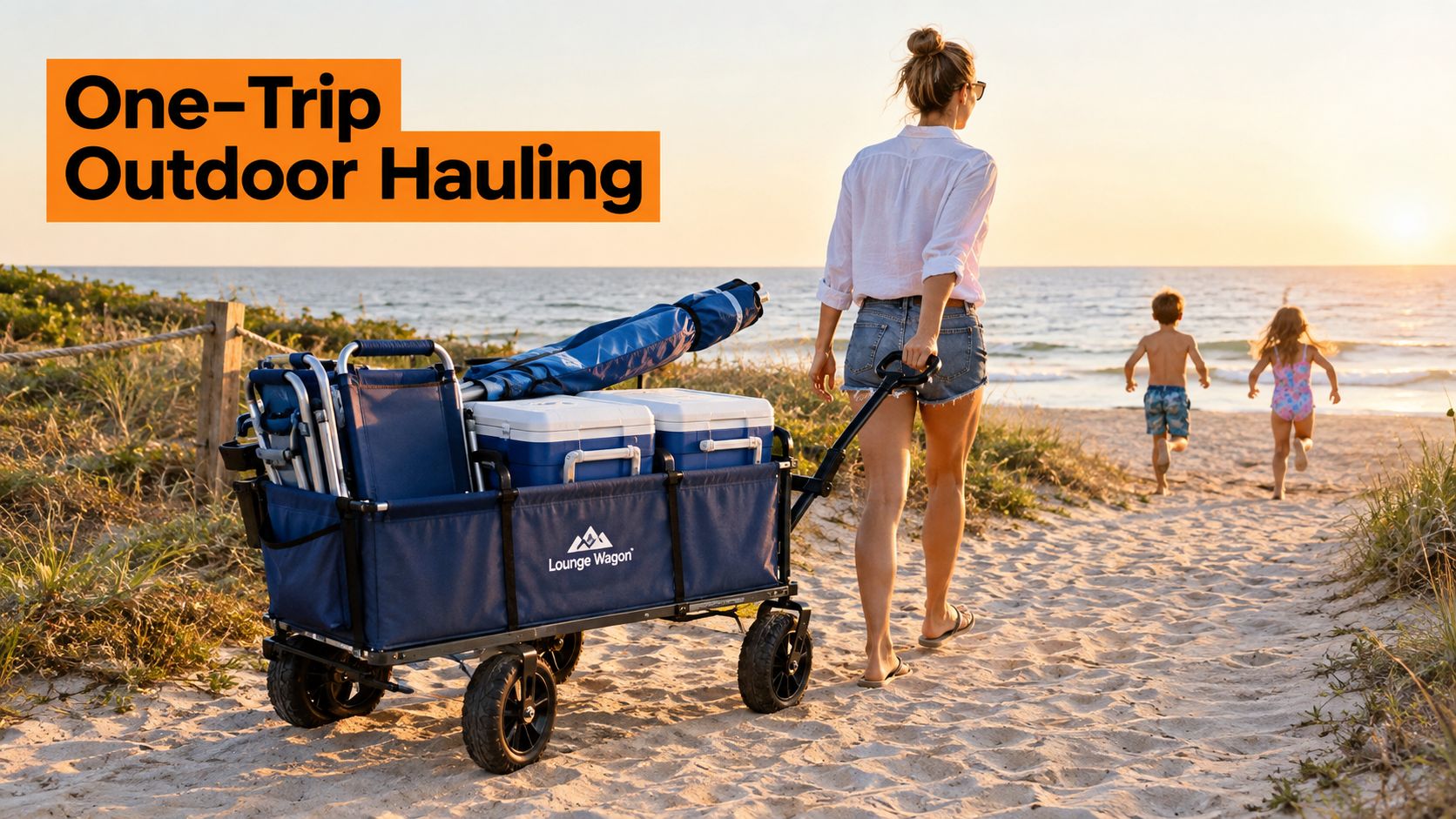
The worst part isn't the sand, it's the second trip. You drag chairs, cooler, towels, and a bag of half-forgotten extras across hot ground while the kids sprint ahead, then you do it again because the first load was never enough. A 2 seat wagon fixes that grind by hauling gear and giving two adults a real place to sit.
If you want the broader use case before you choose a setup, start with the Lounge Wagon blog's large beach cart guide. For a lot of families, the difference between a frustrating arrival and a good day is whether one cart can do both jobs.
The One-Trip Solution for Outdoor Adventures
A beach day or sideline afternoon often falls apart before the first chair comes out of the car. One adult carries the cooler, another grabs folding seats, a kid drops a toy in the parking lot, and everyone starts the walk already working harder than they should.
A 2 seat wagon changes that load pattern. One rig handles the gear, then gives two adults a place to sit once you reach the sand, grass, or gravel. That matters for older parents and multigenerational families because the strain is not just about weight, it is about repeated lifting, uneven footing, and the extra energy spent standing around with nowhere to rest.
The demand for outdoor gear keeps growing too. In 2023, 175.8 million Americans aged six and older participated in outdoor recreation, or 57.3% of the eligible U.S. population, and there were 7.7 million first-time participants as well, according to the Outdoor Foundation participation report.
Practical rule: if the day includes seating, storage, and a long walk over soft ground, a convertible wagon usually makes more sense than carrying chairs and gear by hand.
For families comparing one-trip setups, a guide to choosing a large beach cart for family trips is a useful place to start. A setup that moves cargo and gives people a place to sit reduces the stop-start fatigue that shows up long before the game, swim, or cookout begins.
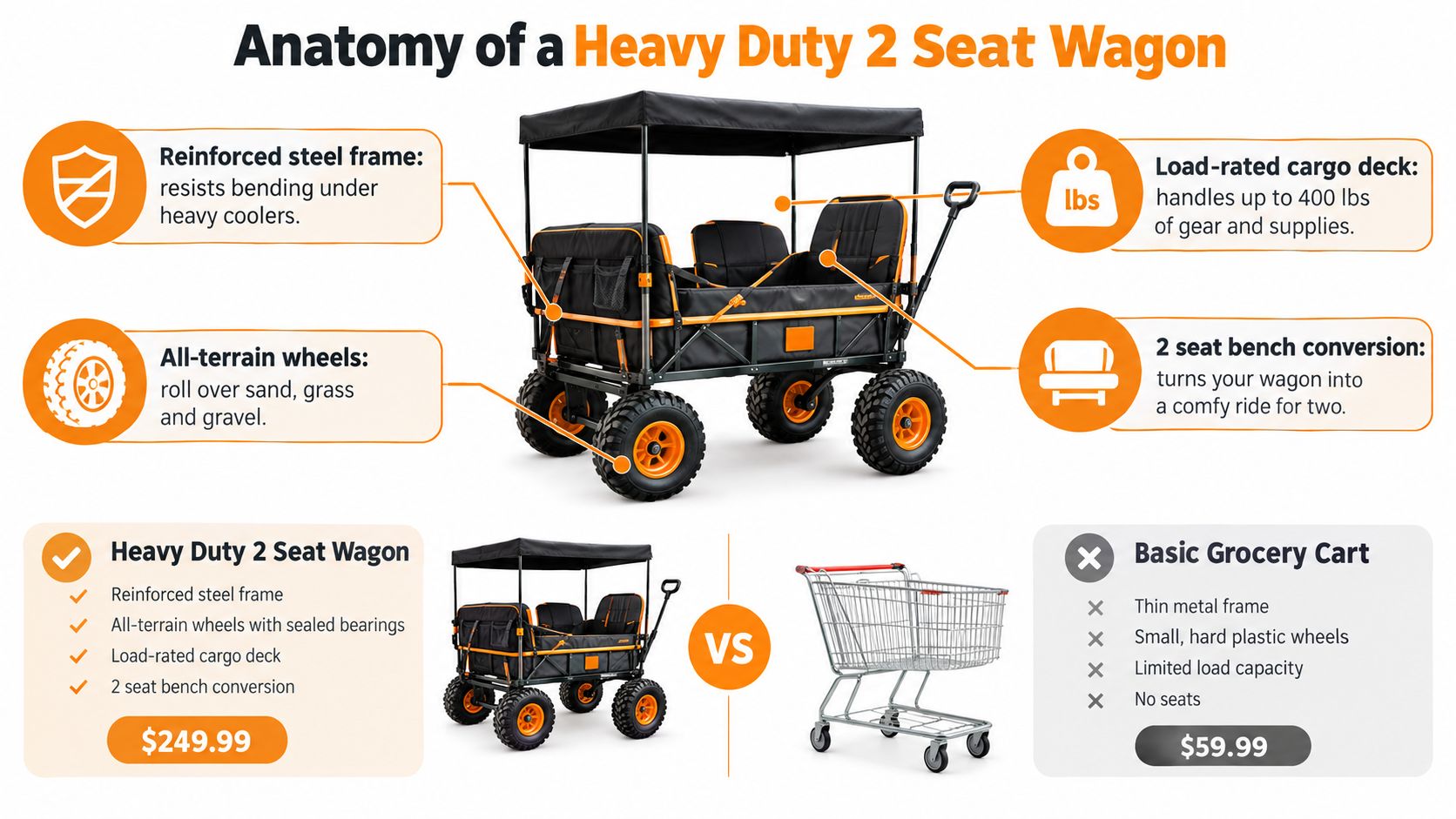
Anatomy of a Heavy Duty 2 Seat Wagon
Cheap carts fail in the same ways every time. The frame flexes, the fabric sags, the wheels chatter in sand, and the handle feels fine until the cart is fully loaded and moving uphill. A serious outdoor hauler has to solve all of that at once, because a cart that only works when it's empty doesn't count.
What matters in the frame and fabric
The backbone is the reinforced steel frame. A frame built for 500 lb capacity matters because it keeps the wagon stable when the load shifts, which is what happens when a cooler, a tent, and a couple of beach bags all move at once. That capacity isn't just a bragging point, it's what keeps the wagon from feeling nervous under real-world loading.
Fabric choice matters just as much. High-denier 1000D Polyester resists abrasion better than thin utility cloth, so sharp corners on tackle boxes, shovel handles, and sandy toys are less likely to tear the compartment over time. If the fabric fails, the wagon becomes a nuisance fast, because loose seams and stretched panels make loading slower and cleanup harder.
A wagon built for outdoor abuse should feel overbuilt when empty. That's the point, because real use starts once it's packed.
What the 2-in-1 conversion should do
The useful version of this product isn't just a tub with wheels. It converts from cargo mode into a 2-in-1 seating setup, so the same body becomes a padded bench with back support, integrated cup holders, and storage pockets. That matters on long tournament days and beach afternoons, when a place to sit is almost as valuable as the ability to carry the cooler.
A clean conversion should feel obvious, not fiddly. If you have to fight the mechanism every time you switch modes, you'll stop using the seat and treat it like a cart, which wastes the whole design.
Mastering Soft Sand and Rough Terrain
Dry sand punishes bad wheel design. It's not just soft, it deforms under load, which means the cart sinks, the pull force climbs, and every turn takes more effort than it should. That's why a wagon can feel fine in a parking lot and miserable five minutes later on a beach path.
Controlled cart testing found that the minimum push or pull force rises with load, but falls as wheel diameter increases, with tested diameters of 51, 102, and 153 mm. The same study found that wheels aligned in the direction of travel produced the lowest starting force, while wheels set at 90 degrees produced the highest, which is a good reminder that geometry matters as much as material cart force testing study.
Why sand changes everything
Walking on dry sand already requires about 2.1 to 2.7 times more mechanical work and metabolic energy than walking on firmer ground at the same speed, because sand shifts under every step and absorbs energy biomechanics review. A loaded wagon faces the same problem in wheel form, which is why small “all-terrain” wheels often disappoint once the surface stops being firm.
Beach-access conditions back that up. At Padre Island National Seashore, beach wheelchairs require a second person to operate and can't be used to transport belongings, and Sleeping Bear Dunes warns that some routes require visitors to cross up to 100 feet of hilly, uneven sand NPS beach wheelchair page. In other words, shoreline mobility is a terrain problem, not a marketing label.
What works better on sand and grass
Large-diameter wheels: They roll over small obstacles more easily and reduce the feeling of dragging a dead cart.
Low-friction bearings: They help the wagon start moving under load instead of lurching in place.
Proper wheel alignment: Straight tracking lowers scrub, which matters when the wagon is loaded and the path isn't perfect.
Load placed low and near the axle: That reduces pitching and helps keep traction when the surface shifts.
One more practical point, if you're comparing beach-ready designs, check the soft sand cart guide before you trust a generic “all-terrain” claim. The label is cheap. The roll quality is what saves your shoulders.
Seating That Supports Multigenerational Comfort
The seating question gets ignored too often. A wagon can carry gear all day, but if grandparents, tired coaches, or injured parents cannot use the seat comfortably, the product solves only half the problem. The better version works as a mobile rest stop, not just a box on wheels.
Outdoor seating research points to the features that matter during long visits, including material comfort, shade, orientation, ease of sitting and standing, and proximity to activity areas outdoor seating research. In practice, older adults usually gravitate toward seats with back support because getting up is the hard part. Backrests and armrests also give people a steadier place to rest, talk, and wait between innings or beach walks.
Why the bench matters at games and parks
A raised bench gives you sightlines over sidelines, damp grass, and low beach setups. That sounds minor until you have spent three games crouched beside a cooler, then tried to stand up without grabbing someone's shoulder for balance.
The same logic helps families at parades, zoos, and festivals. A supported seat near the action cuts the need to haul a separate camp chair, and it keeps adults engaged instead of parked in the grass like they are waiting for a flight.
If you are comparing seating for grandparents or anyone who needs easier sit-down and stand-up support, the heavy-duty folding wagon for seniors guide is a useful reference point. A good setup reduces strain without turning the outing into a project.
Comfortable seating is not a luxury add-on when the outing runs for hours. It keeps people present, and it spares them the extra effort of rising from low, soft ground every time they want to join the action.
Real World Scenarios for Sports and Beach Days
The wagon earns its keep when the venue changes. A sideline, a shoreline, and a festival lawn all ask for different things, but the same cart can handle each one if the wheels, frame, and seating are built with those use cases in mind. That's where the 2-in-1 idea becomes more than a novelty.
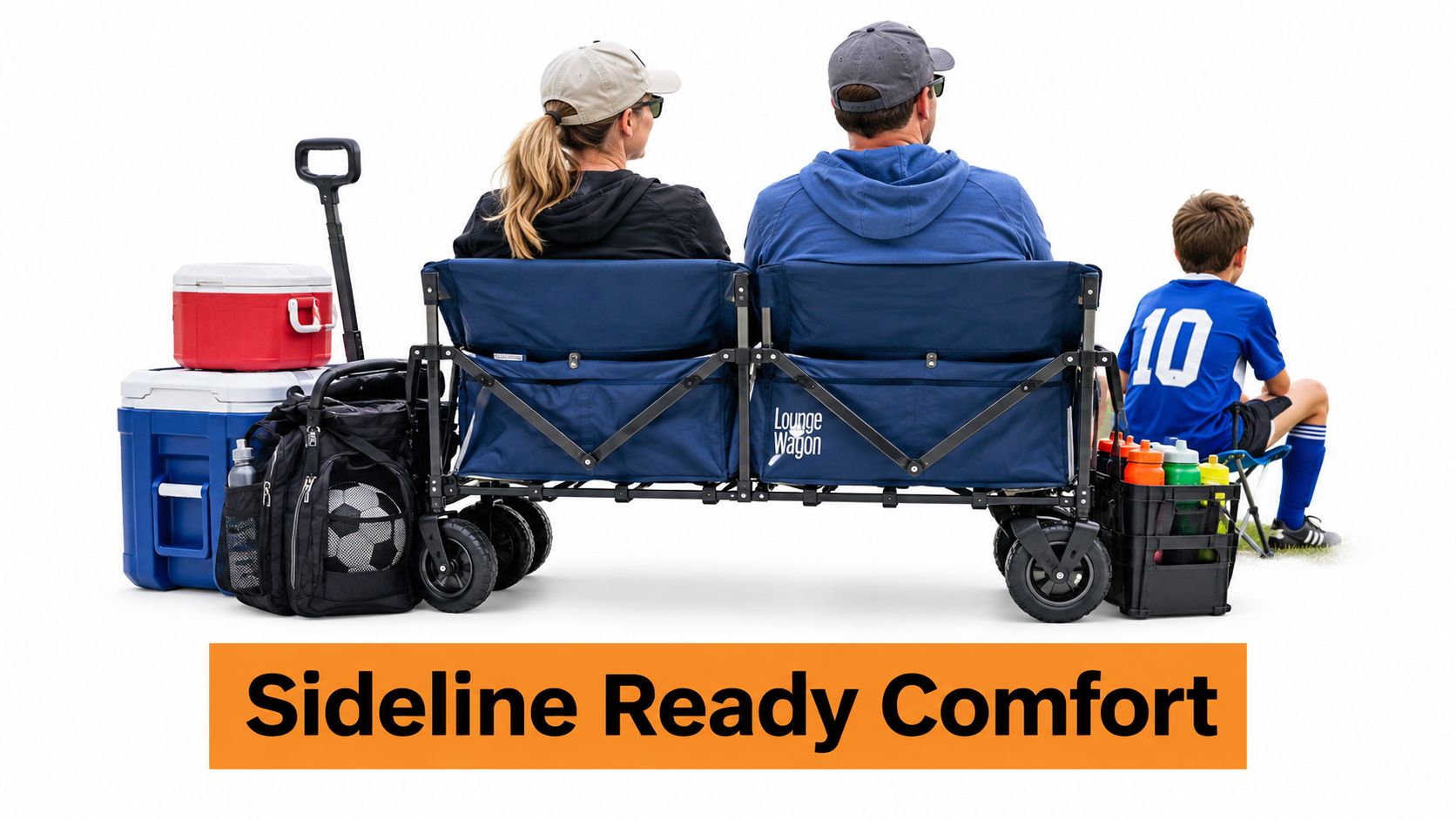
At a youth sports complex, the load is usually cold drinks, a tent, folding stools, and a bag of extras that somehow multiplies every weekend. Once the gear is unloaded, the bench becomes the best place to sit between matches, especially when the fields are crowded and every folding chair is already claimed.
At the beach, the job changes. Umbrellas, sand toys, towels, coolers, and bags all need to get across soft ground without becoming a dragging exercise. That's where a wagon with real wheel clearance and sensible load placement matters more than a generic cart that only looks sturdy in a driveway.
Here's the part many people underestimate. A seated bench also changes how long families stay, because the adults aren't forced to pack up just to get off the ground. That's especially useful for grandparents and caregivers who want to keep up with the group without committing to a full folding-chair setup.
What to pack for each outing
Sports days: cooler, tent, sideline bag, and rain layer.
Beach days: umbrella, towels, sand toys, drinks, and a low, compact load.
Festival or market days: blanket, snacks, purchases, and a backup layer for shade or wind.
If you want a practical packing reference, the sports wagon gear guide is a useful starting point. And if you need the broader family-outing perspective, the middle ground between cargo and seating is exactly why a 500 lb capacity wagon with 2-in-1 seating gets attention from more than one type of user.
Comparing the Lounge Wagon to Standard Carts
A standard utility cart plus separate chairs can look cheaper at checkout, but the actual cost shows up later in the lift count, the clutter, and the trunk space it consumes. A combined setup cuts those handoffs down. That matters on a long tournament day or a beach day, when every extra trip from car to sideline or shoreline adds strain.
The difference is felt in the body, not just the budget. With one unit to roll, load, and convert, you spend less time carrying awkward pieces through sand or across grass. For parents who already feel the pull in their shoulders and lower back, that reduction in handling is more than a convenience.
Feature
Premium 2 Seat Wagon
Standard Cart + Chairs
Weight capacity
500 lb capacity in a single system
Split across separate items
Seating
2-in-1 seating with bench conversion
Separate folding chairs
Wheel size
Designed for larger outdoor wheels
Often smaller utility wheels
Trunk space efficiency
One convertible item
Multiple pieces to store
Setup time
One load, one conversion
Unload cart, open chairs, carry both
The 2-in-1 wagon and chair setup page shows why some families move away from the old cart-plus-chair setup. The core advantage is less handling and fewer separate pieces to keep track of.
What to check before you buy
Frame stiffness: It should stay steady when fully loaded and not twist on uneven ground.
Wheel clearance: Small wheels may look tidy, but they usually perform poorly off pavement.
Seat support: A real bench needs support you can sit on for a sideline stretch or a slow afternoon at the beach.
Storage layout: Pockets and cup holders should make the wagon easier to use, not just nicer to look at.
For families comparing seating, hauling, and comfort, that mix matters. A wagon can carry gear, but the better designs also reduce the strain of repeated lifting and give older parents or grandparents a place to sit without adding another chair to the pile.
Maintenance and Smart Packing Strategies
Sand and salt wear gear down fast if they sit on it. After a beach trip, shake out debris, rinse the exposed parts, and check the moving pieces before the wagon goes back into the garage. That habit matters more than keeping the fabric spotless, because wheel performance is what you feel on the next outing.
Load placement matters just as much. Put the heaviest cooler and dense bags low, near the axle, so the wagon pitches less and keeps better traction on soft ground. Stack everything high, and the wagon feels top-heavy, steers worse, and asks more of the person pulling it.
A good packing rhythm keeps the load steady and easier on the body. Heavy items go first, with cooler, water, and boxed gear placed low. Light items, like towels, hats, and blankets, fill the upper space. Shake out toys and mats before loading them back in, and remove grit from the wheels before storage.
For families who also need sun and skin protection, the Misaj travel skincare checklist is a useful reference when the wagon is carrying more than chairs and snacks.
The simplest upkeep plan is the one you will follow. Keep the load balanced, keep the wheels clean, and the wagon stays ready for the next shoreline, sideline, or festival lawn.
Choosing a selection results in a full page refresh.
This pad is perfect for kids or dogs to be comfortable inside the moving wagon, and very nice after you set everything up and want to sit for extra padding.
Having the umbrella this summer has been easy to use and a must to make sitting and watching the parade so nice when there isn't any shade. My dogs laid on the wagon padding and enjoyed the day without getting too hot. I enjoyed the shade too.